Strategies, frameworks, and field notes on CRM automation, AI agents, and operational systems.
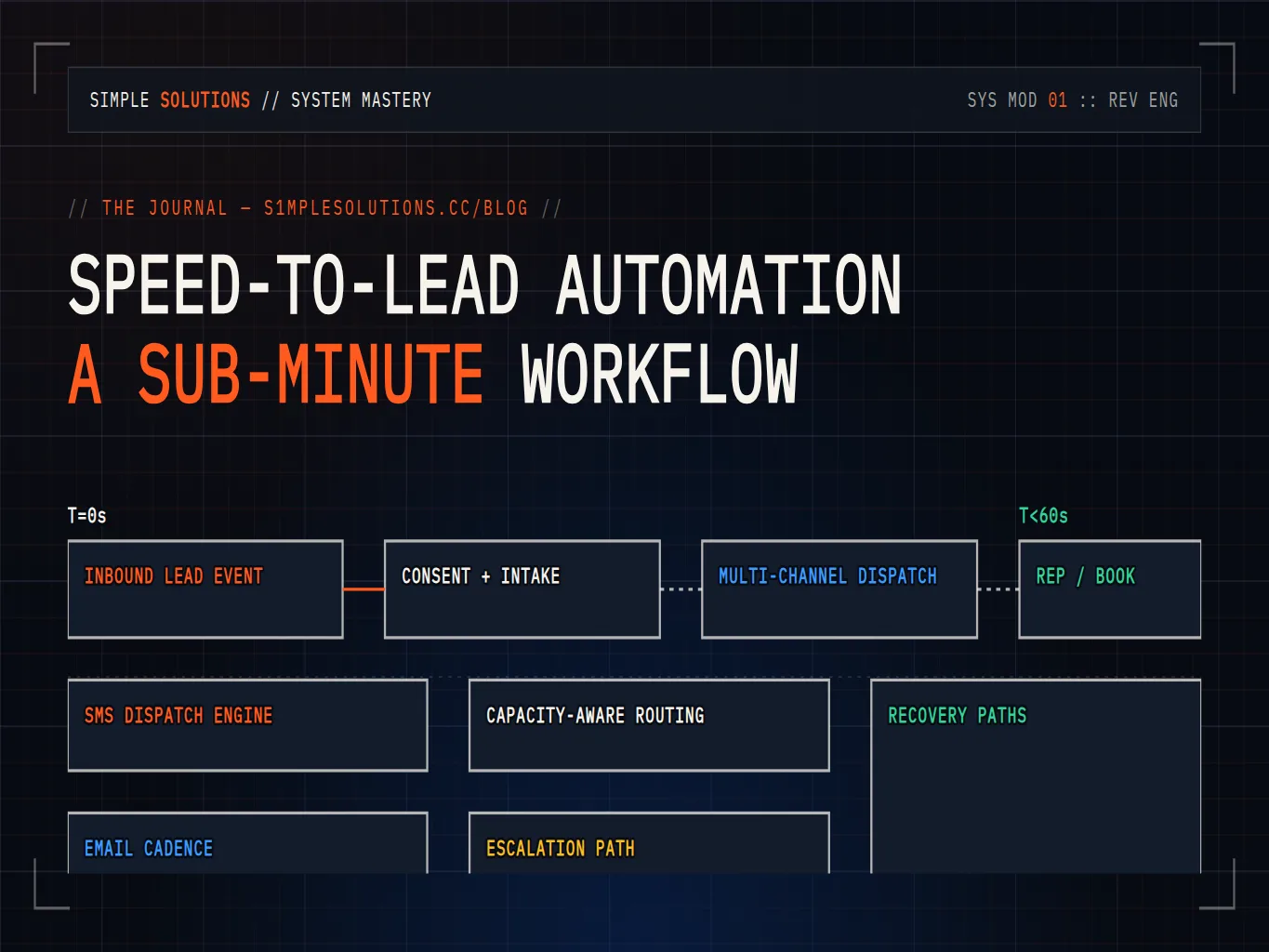
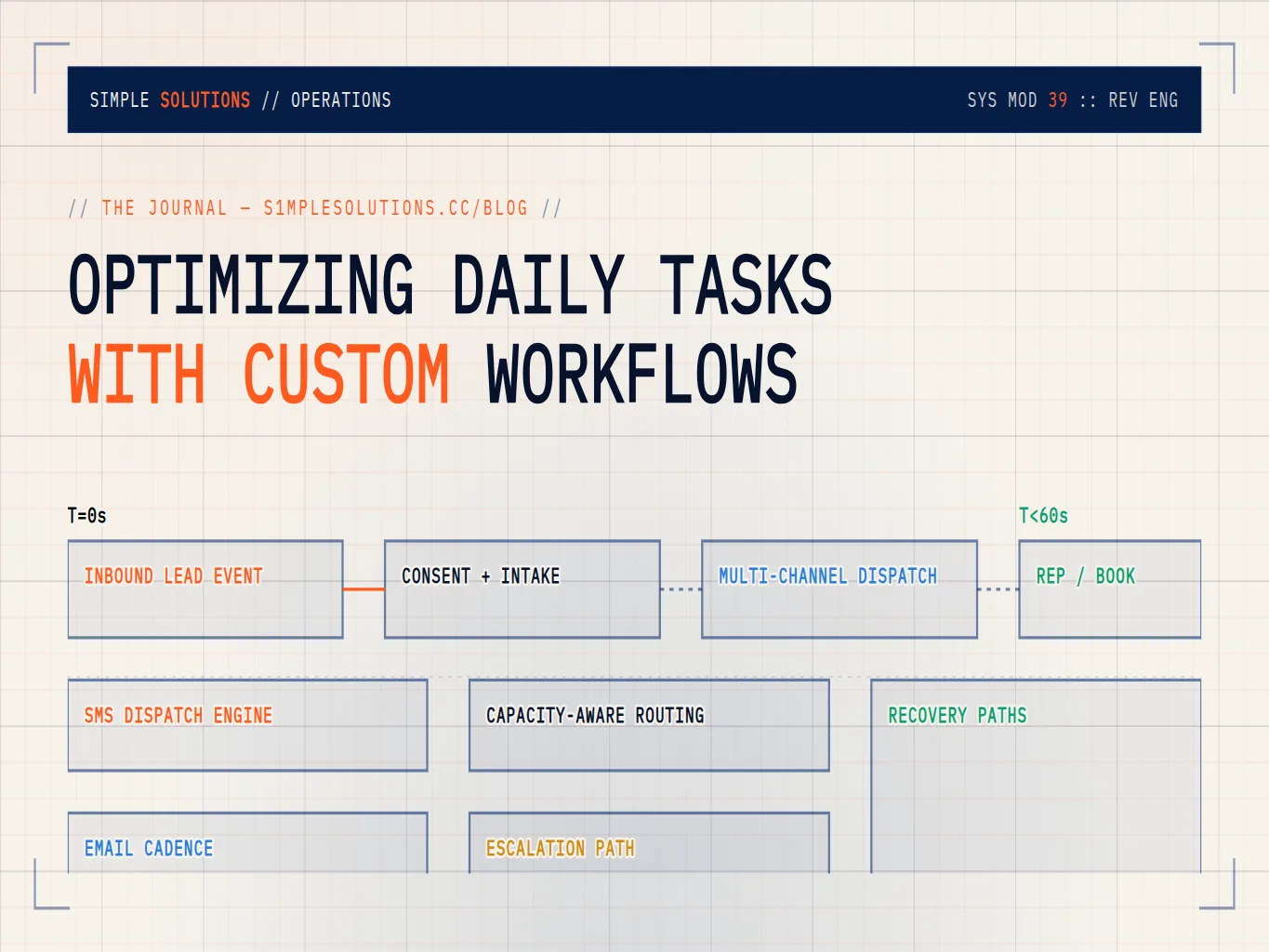
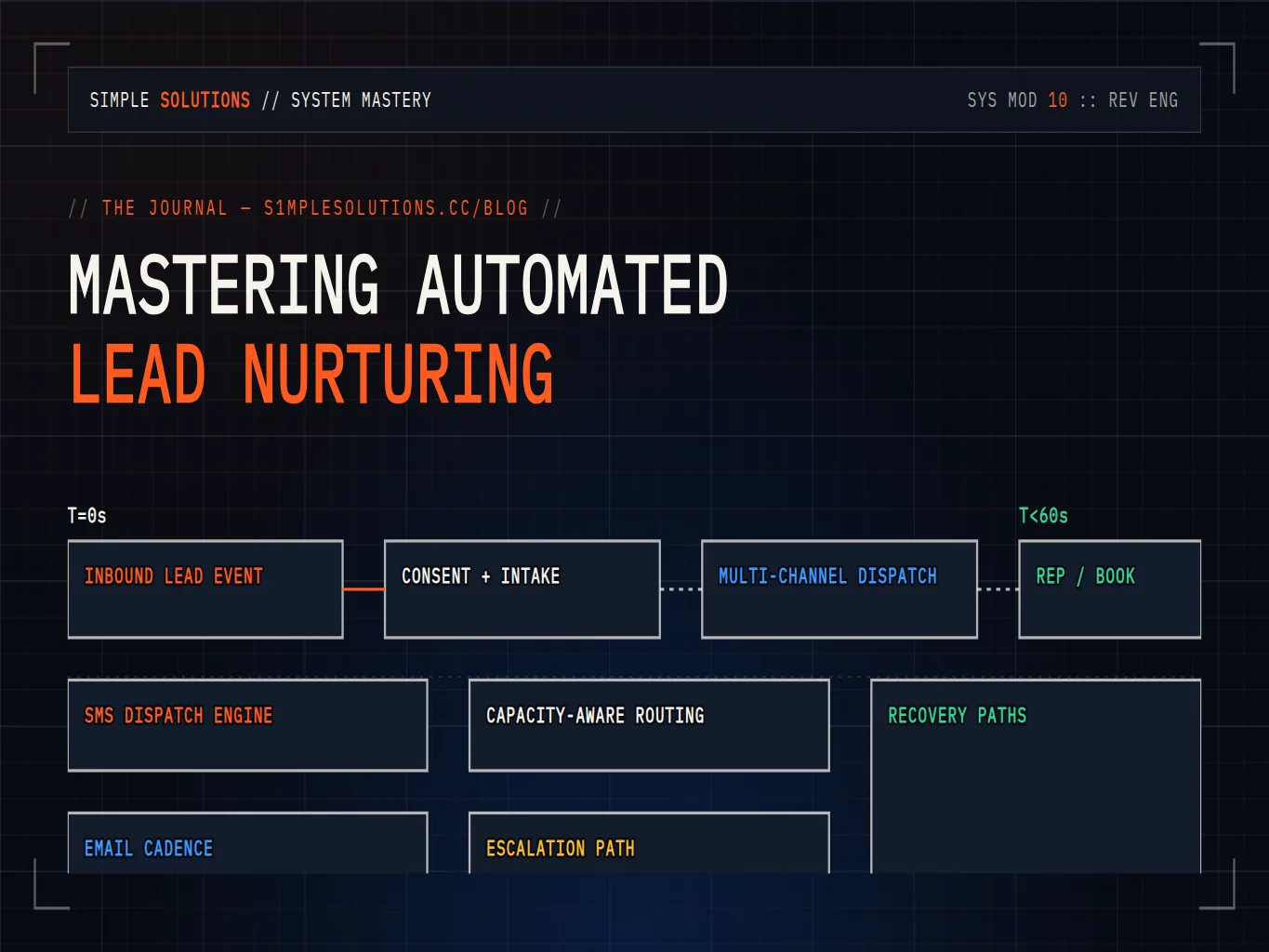
Design a fast lead-response workflow with consent checks, idempotent intake, capacity-aware routing, escalation, and measurable recovery paths.
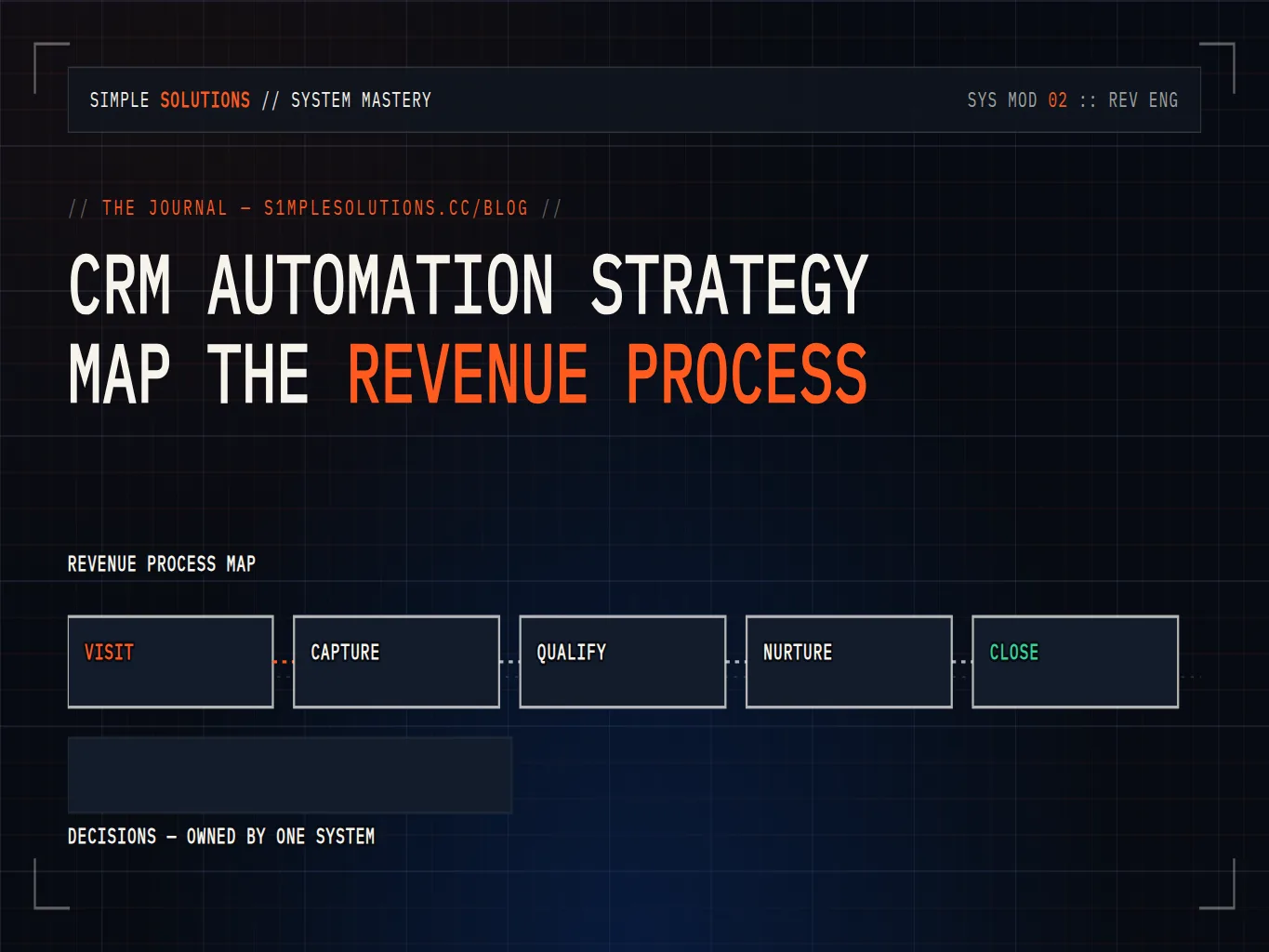
A practical framework for designing CRM automation around real revenue operations instead of accumulating disconnected workflows.
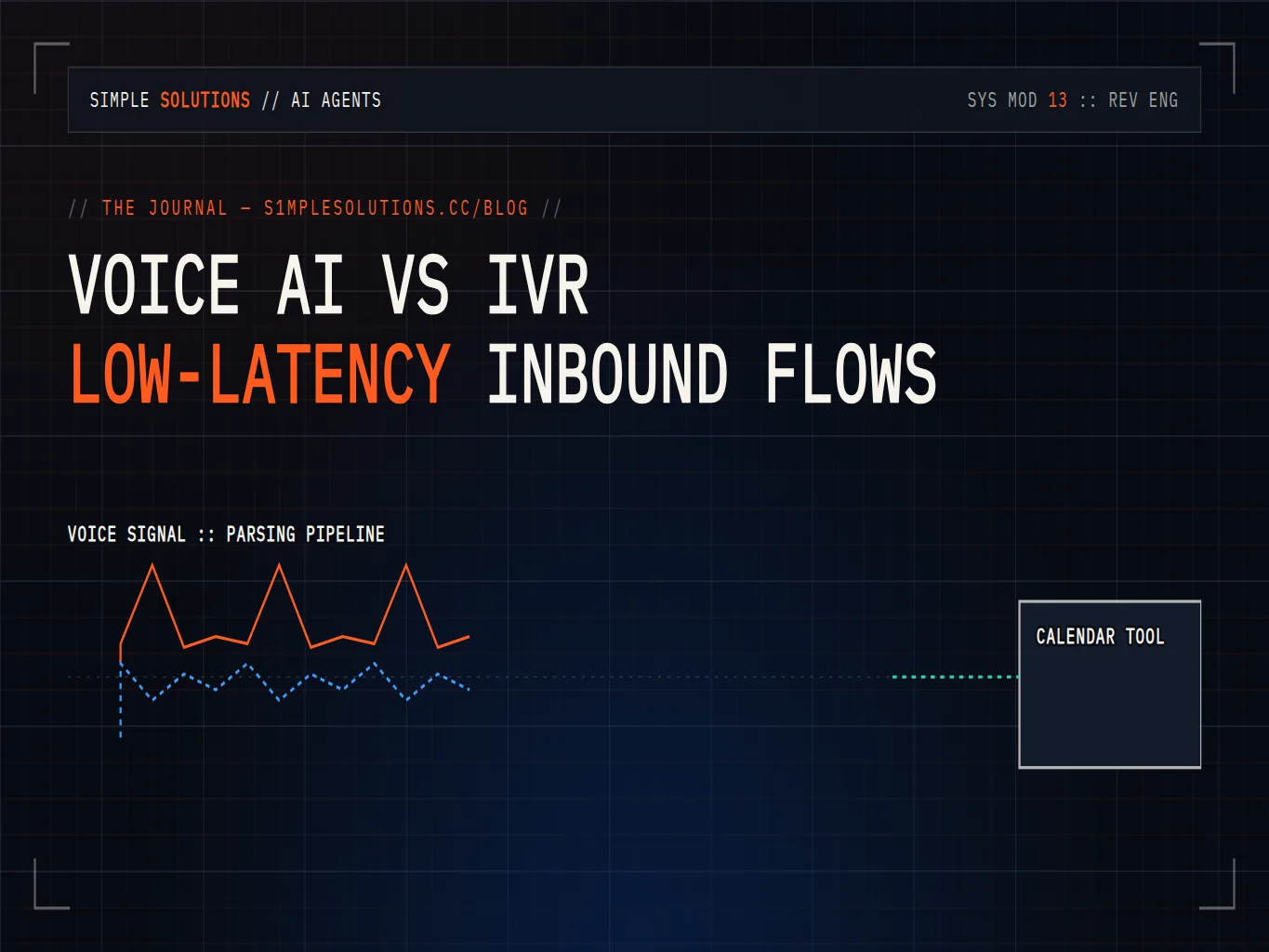
Choose between IVR and voice AI, then engineer turn-taking, tool calls, transfers, and recovery around a measured call-experience budget.
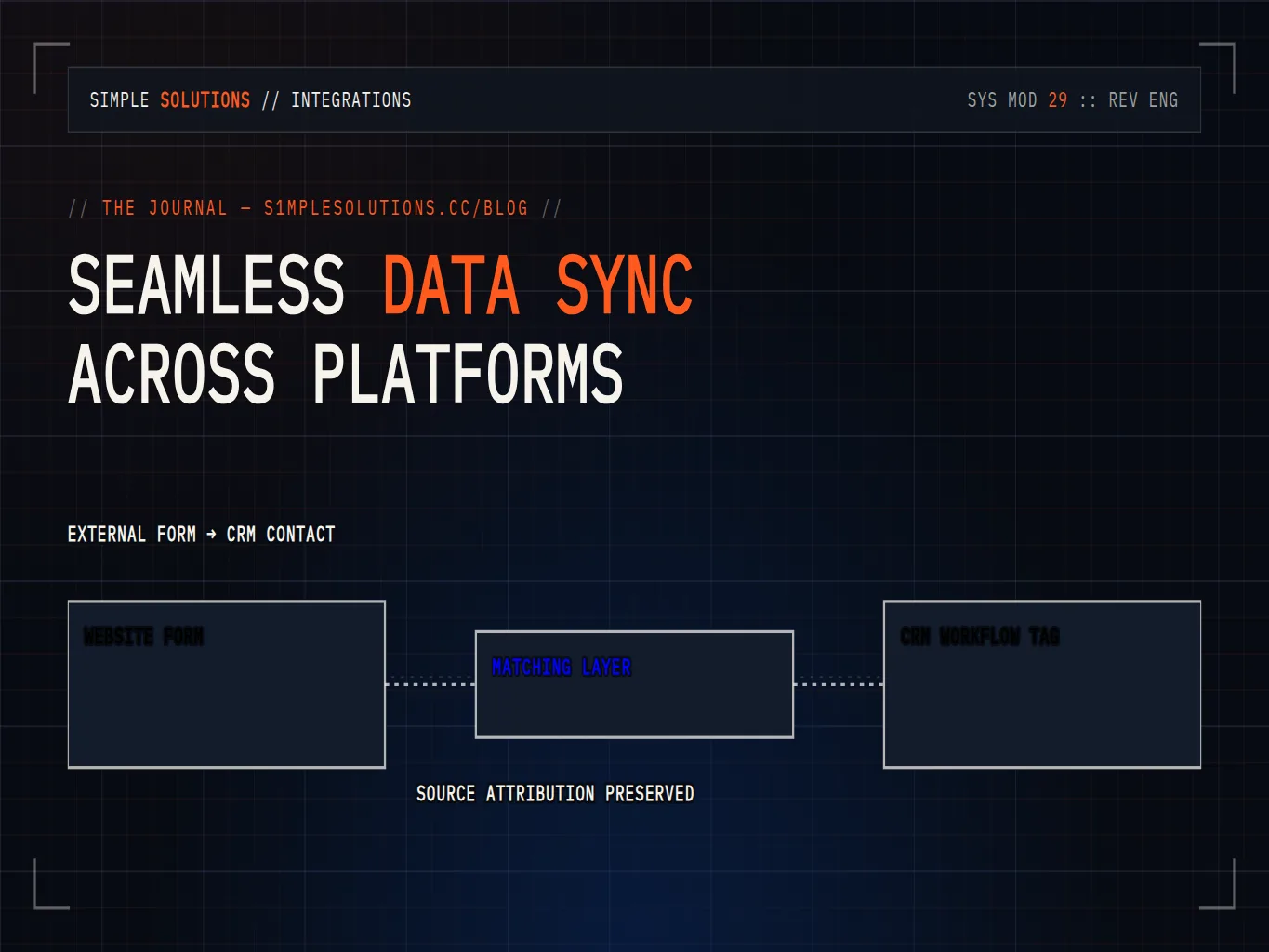
How to preserve contact matching, source attribution, form submissions, and workflow tagging when connecting an external website to GoHighLevel.
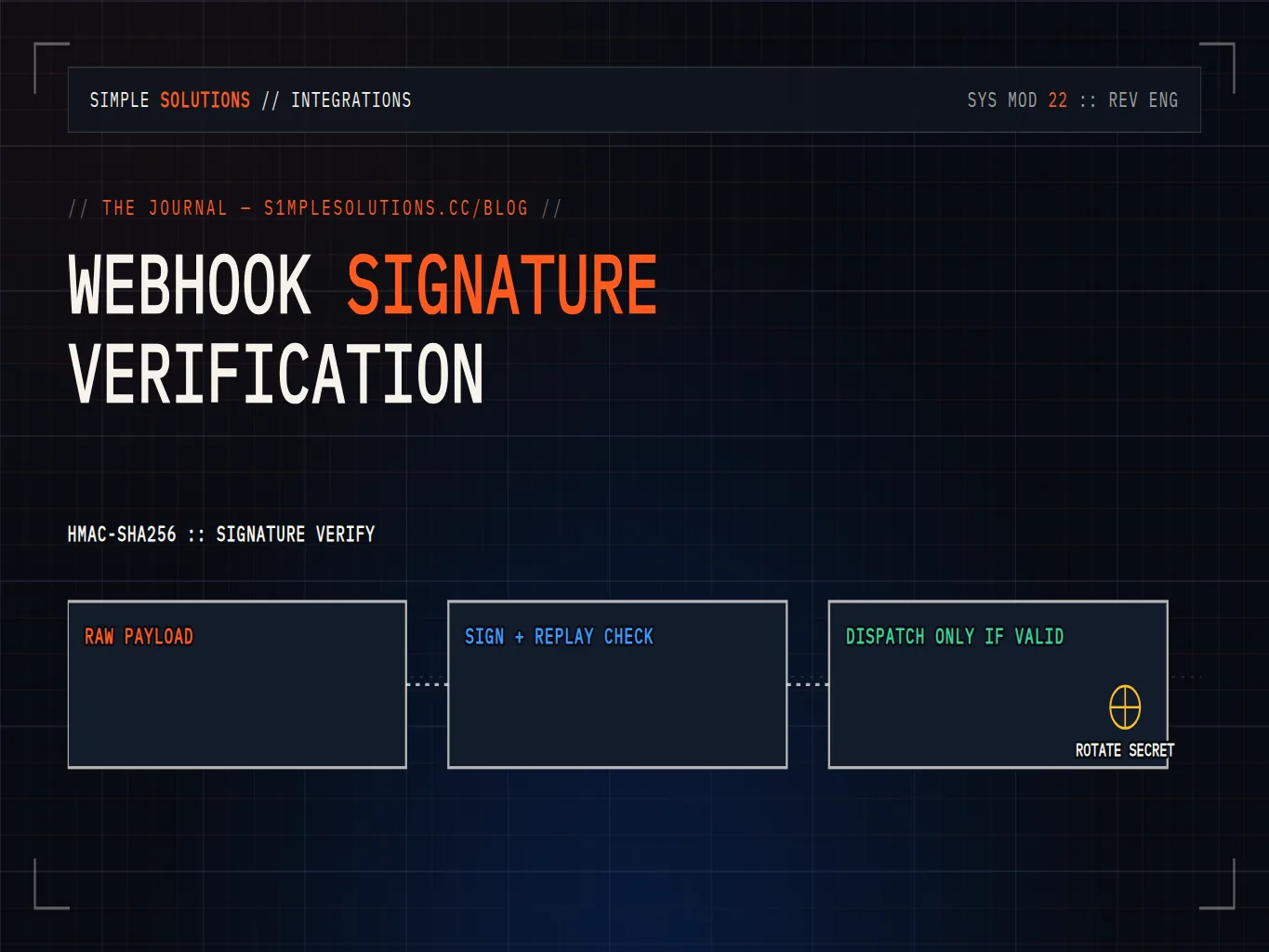
Verify provider-specific signatures over raw bytes, enforce replay controls, rotate secrets safely, and test failures before dispatching webhook work.
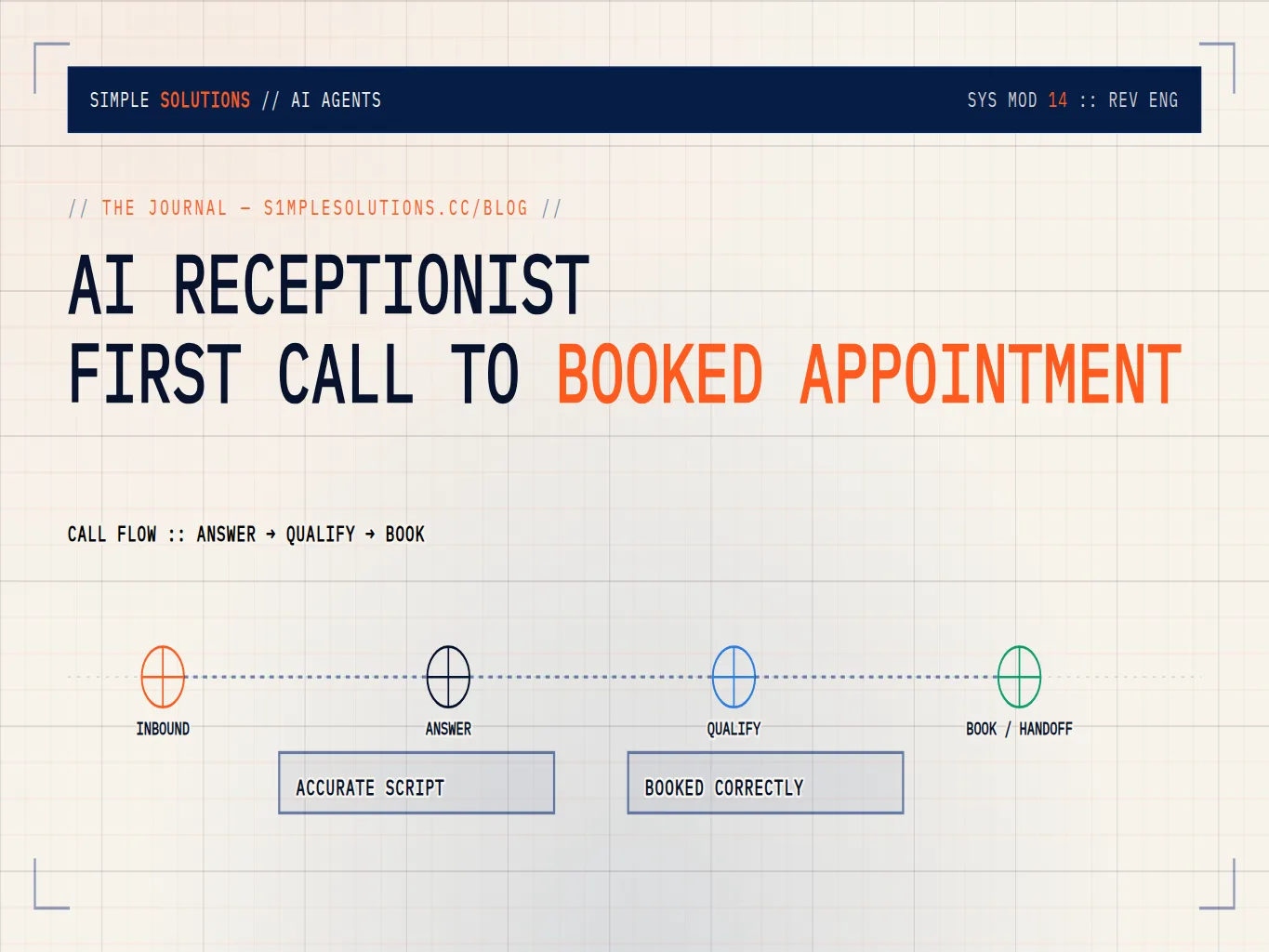
A deployment blueprint for an AI receptionist that answers accurately, qualifies consistently, books correctly, and hands off safely.
A complete 2026 price comparison of AI receptionists, virtual receptionist services, and human hires: per-minute rates, monthly totals at real call volumes, and the decision math that actually chooses between them.
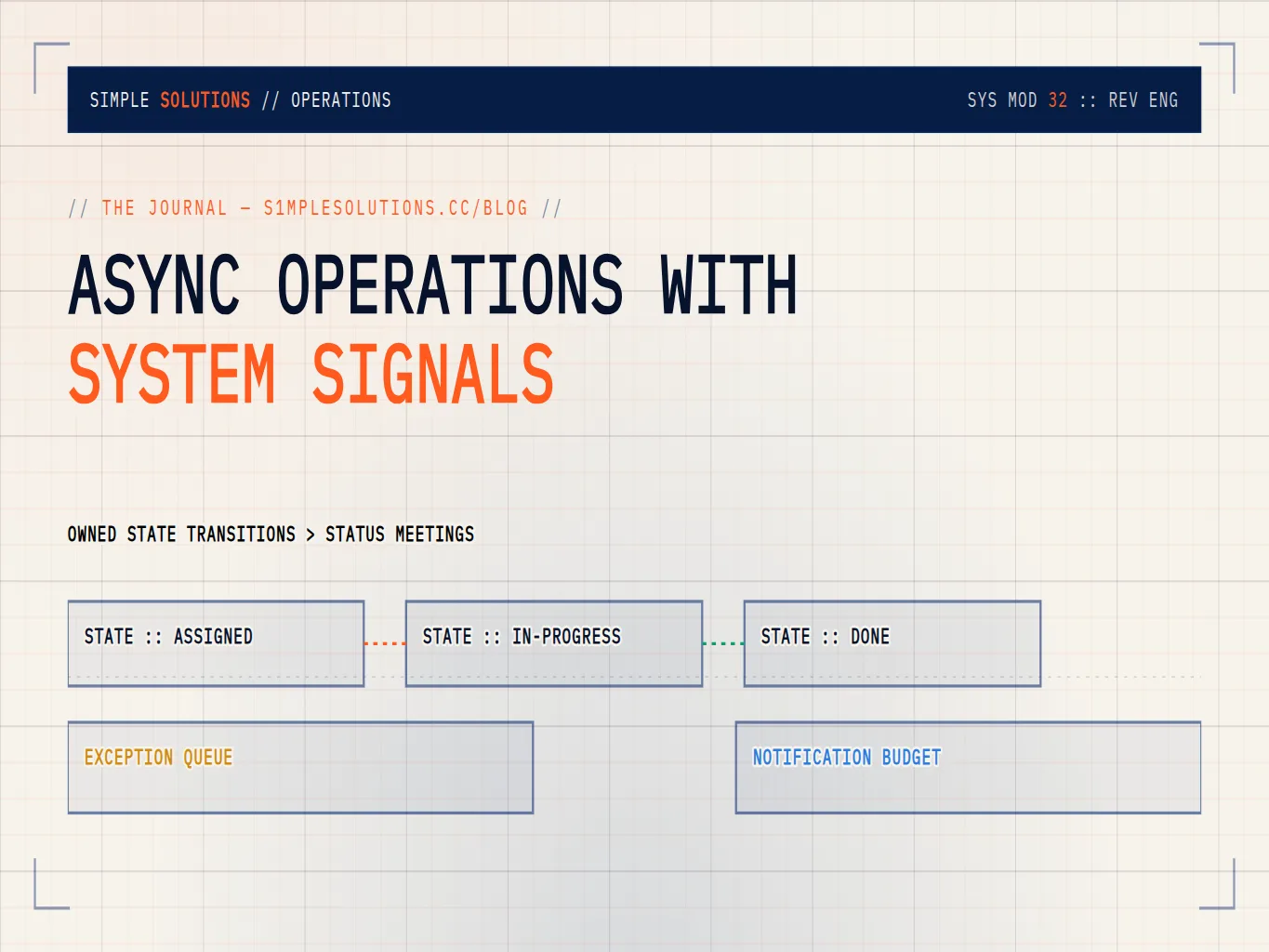
Replace routine status collection with owned state transitions, exception queues, notification budgets, and explicit rules for when a meeting is needed.
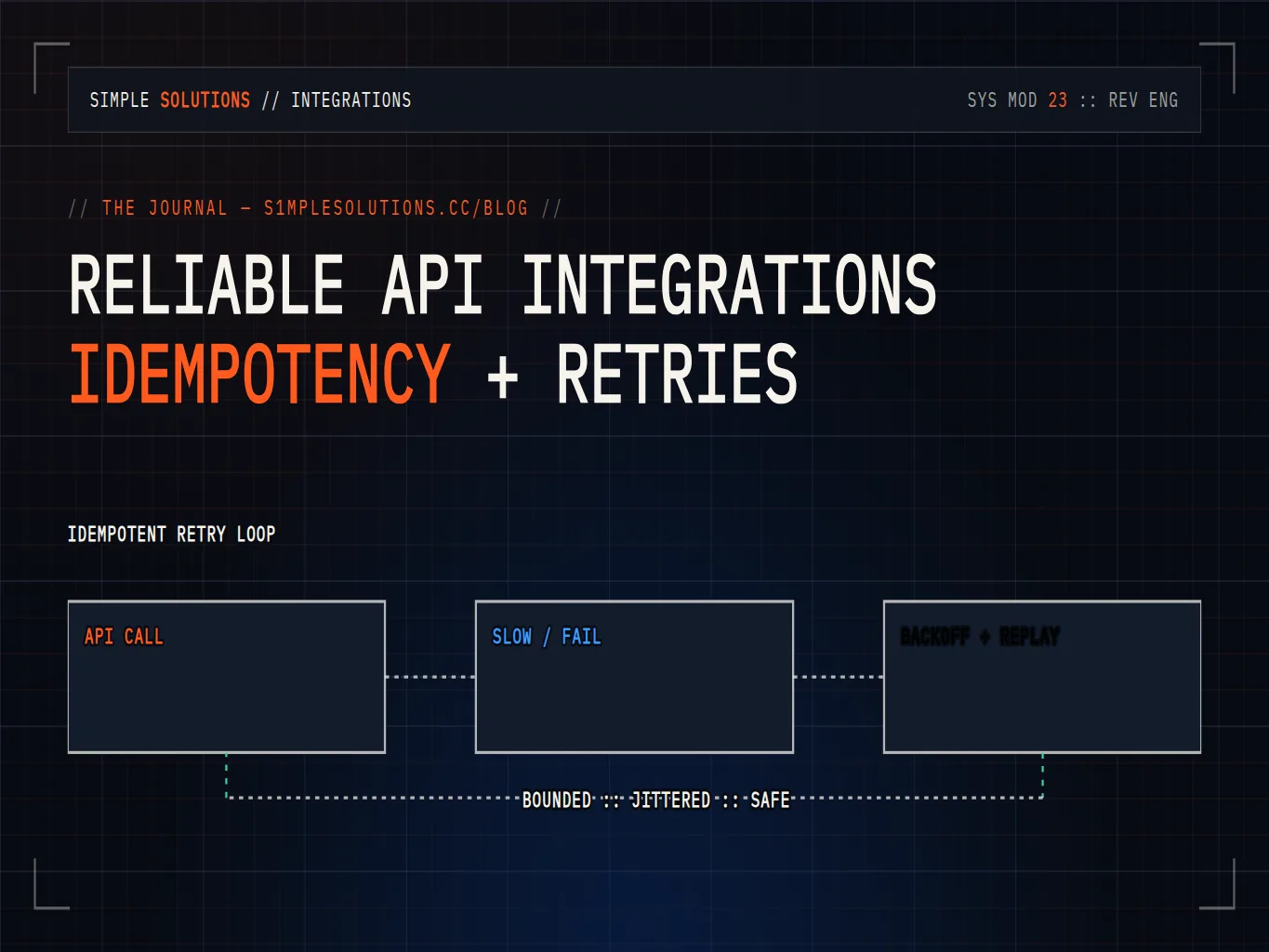
The engineering controls that turn a fragile automation into an integration the business can trust when APIs slow down or fail.
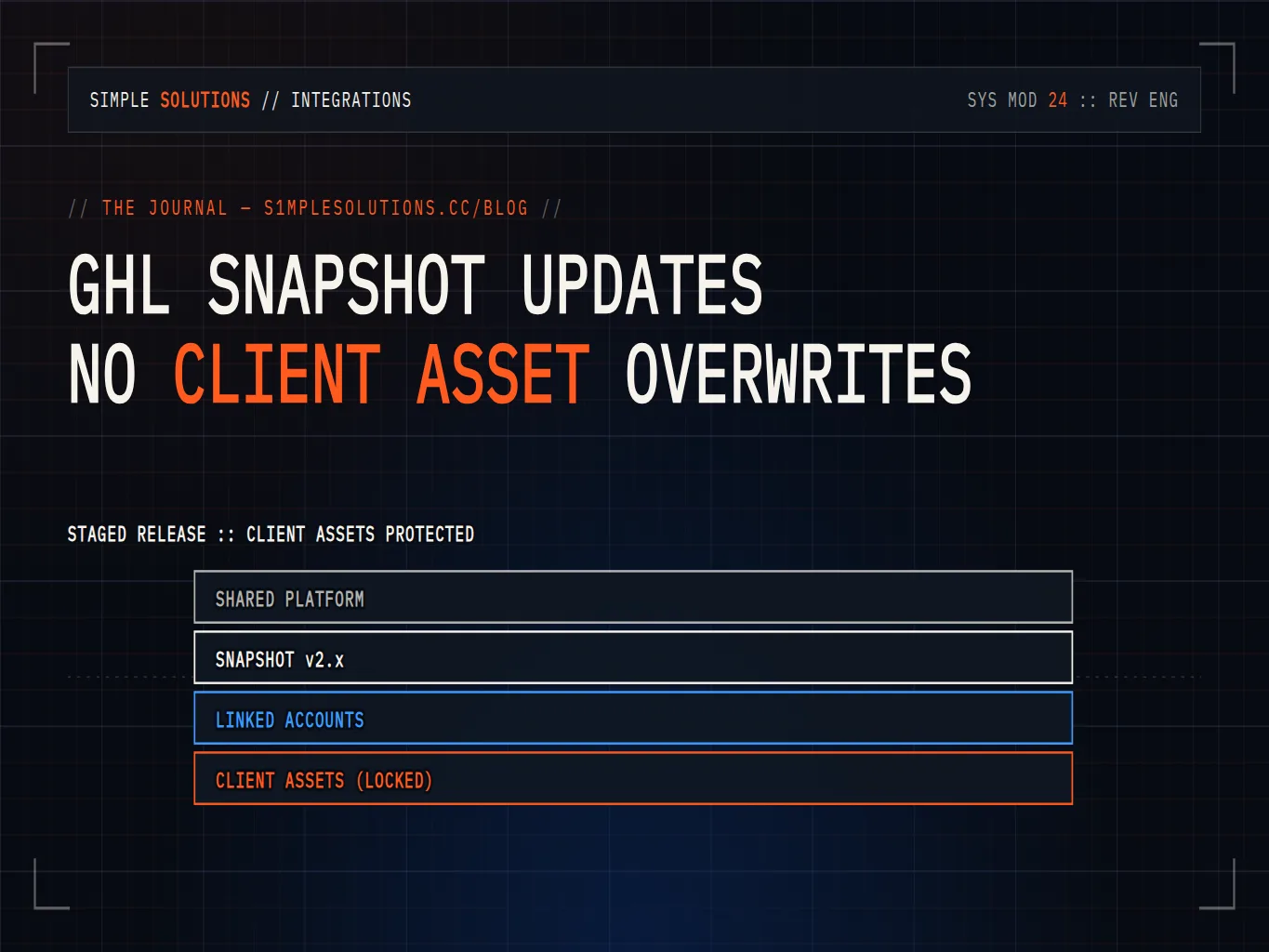
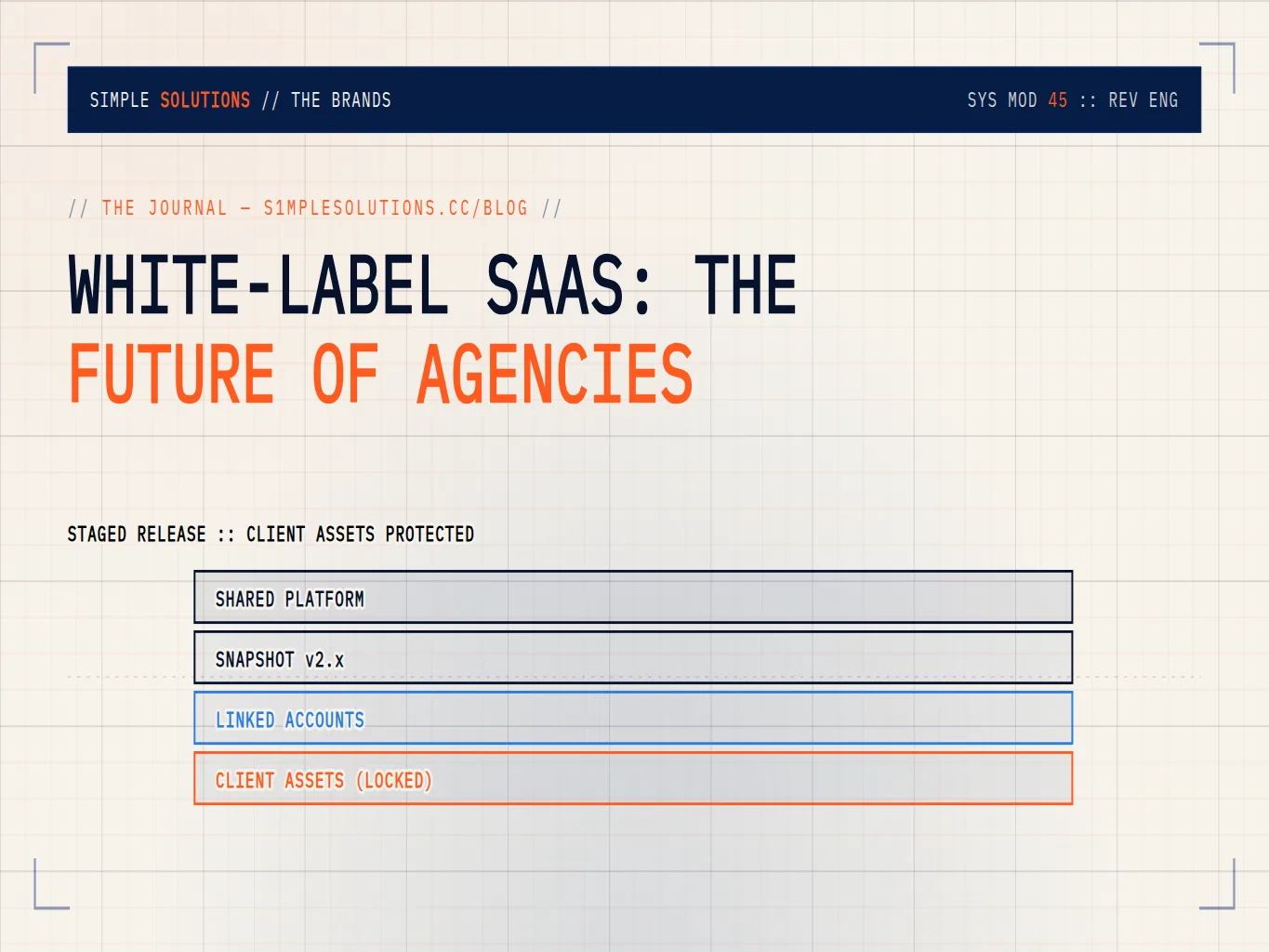
Structure selective GoHighLevel snapshot releases, protect client-owned assets, stage linked-account pushes, and recover safely from conflicts.
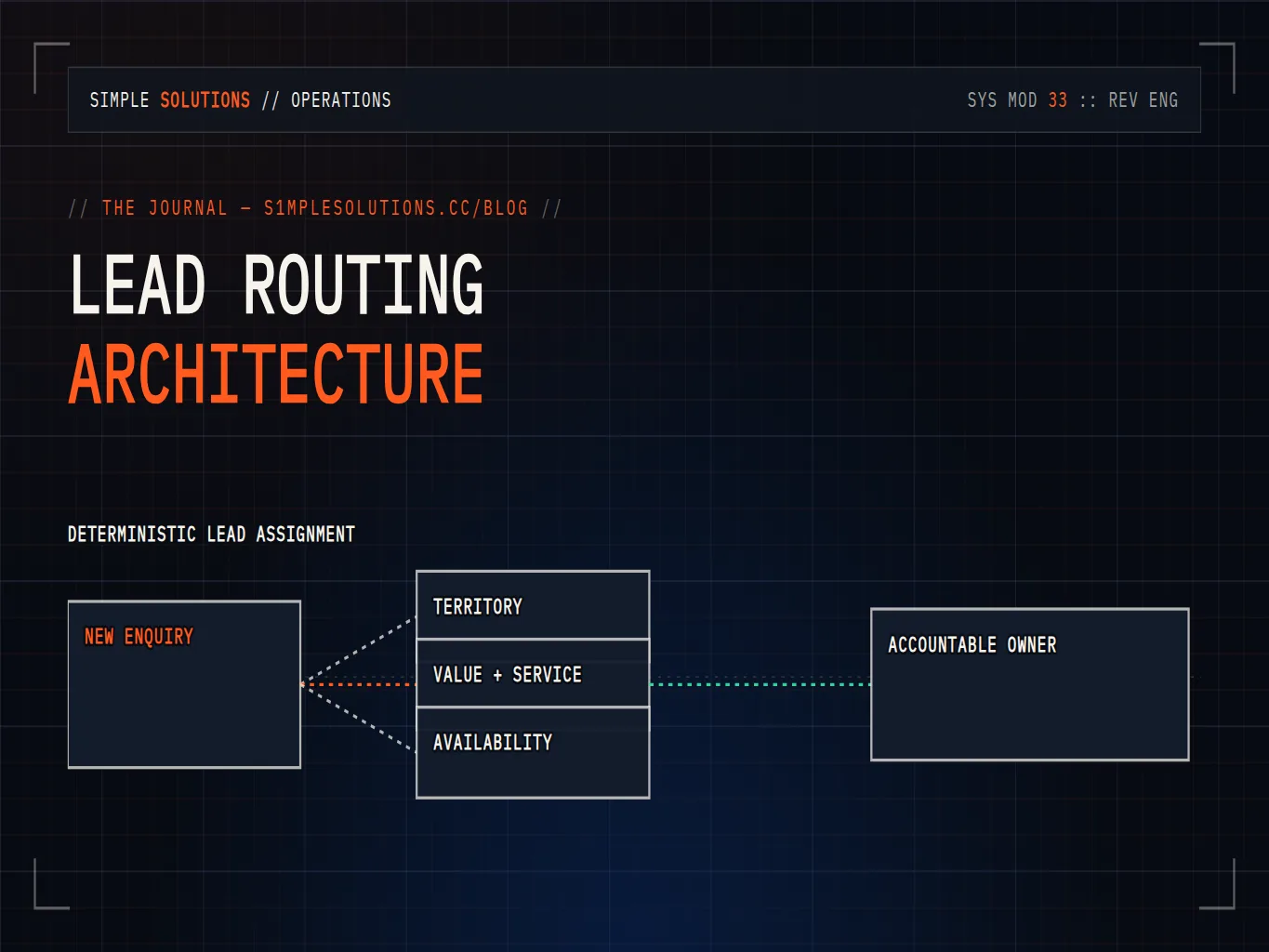
How to design deterministic lead assignment, capacity controls, service levels, and fallback routing without creating a maze of rules.
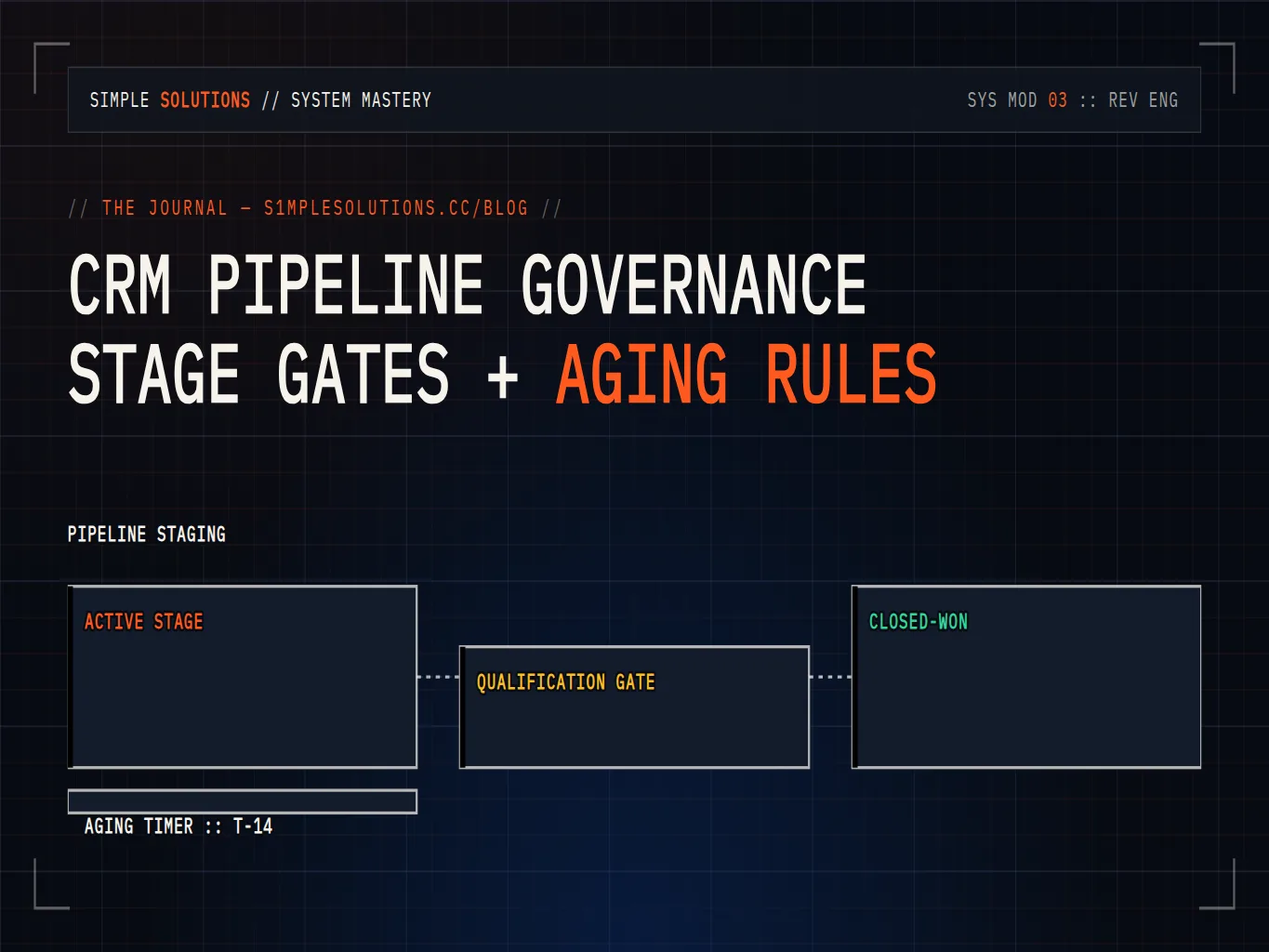
Define auditable stage transitions, required evidence, aging policies, exception paths, and forecast rules without hiding uncertain deals.
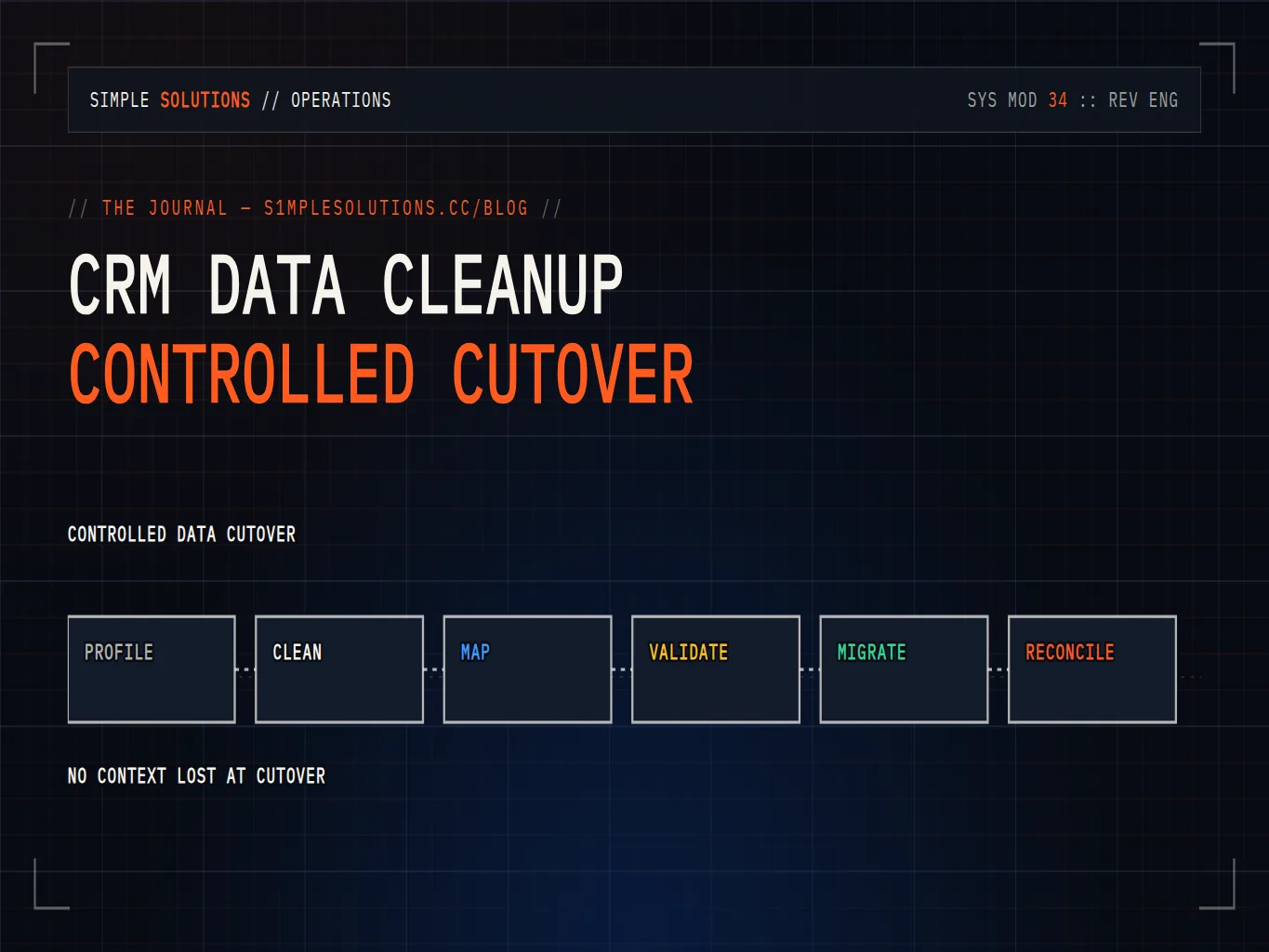
A step-by-step approach to profiling, cleaning, mapping, validating, migrating, and reconciling CRM data without losing operational context.
A defensible method for baselining automation work, measuring adoption and outcomes, and separating real value from optimistic estimates.
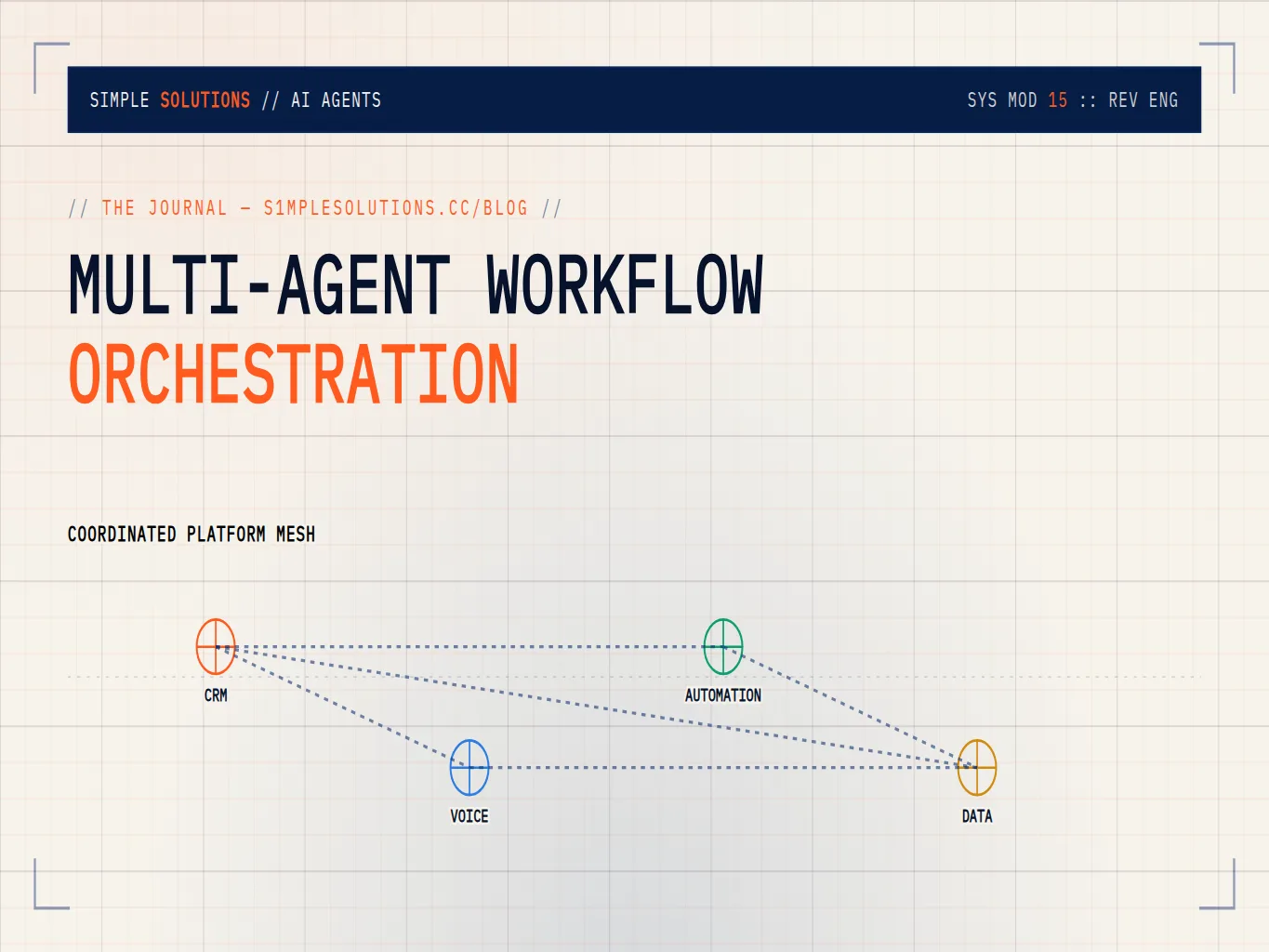
Decide when specialists are justified, choose manager or handoff ownership, and control state, tools, retries, approvals, and evaluation.
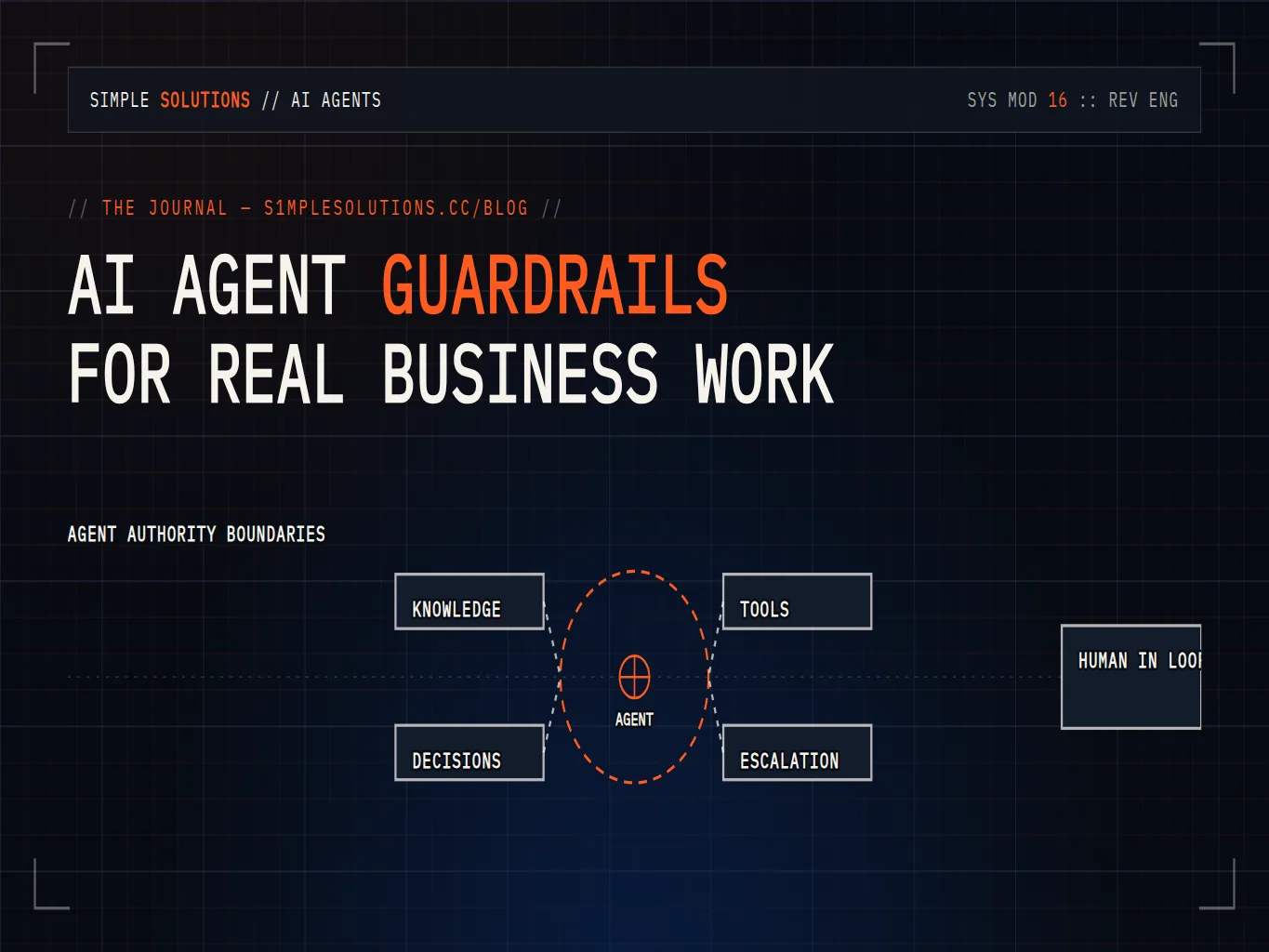
How to constrain knowledge, tool access, decisions, and escalation so an AI agent can act usefully without exceeding business authority.
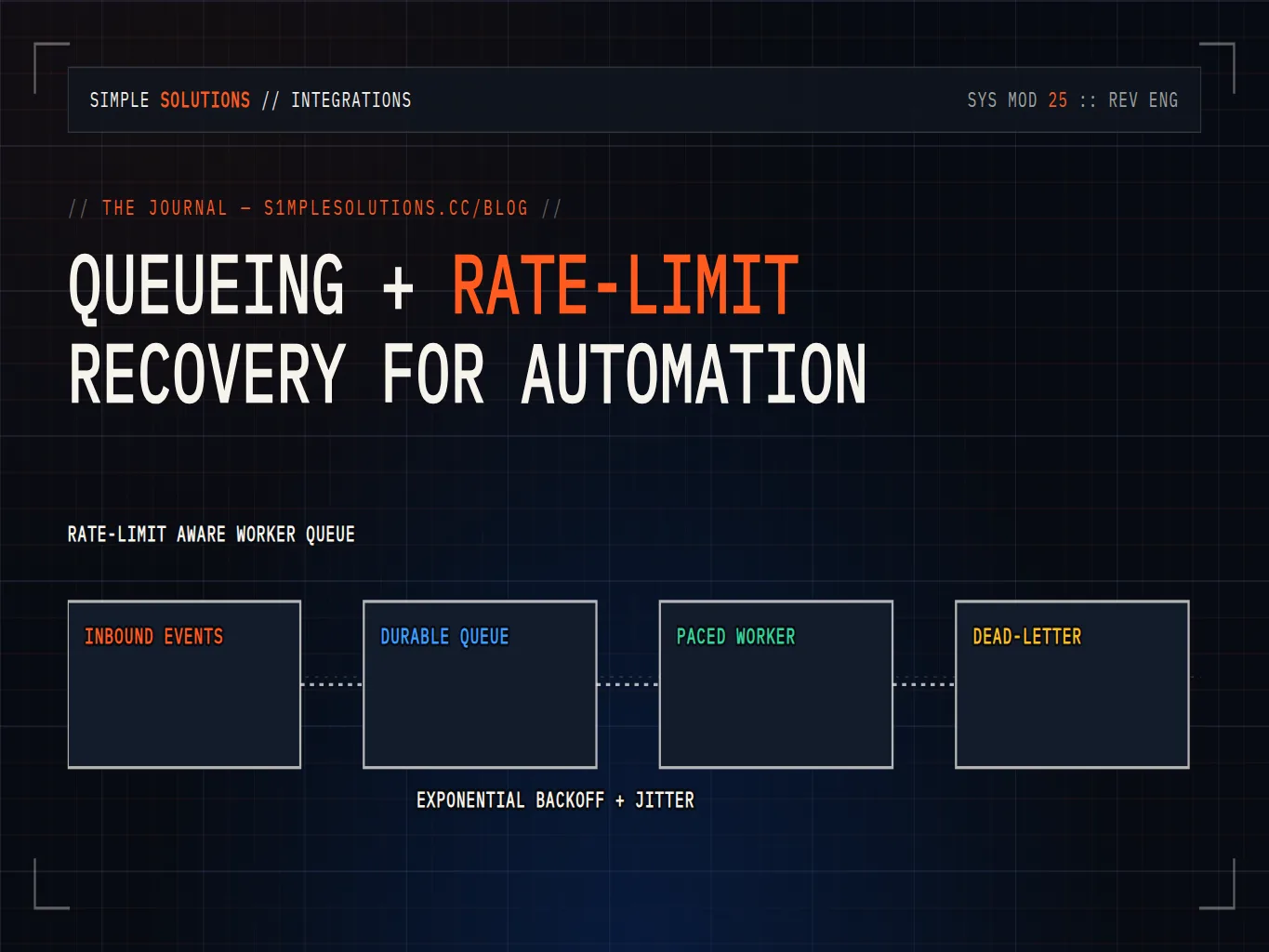
Control API demand with durable queues, provider-aware pacing, idempotent workers, bounded jittered retries, and safe dead-letter replay.
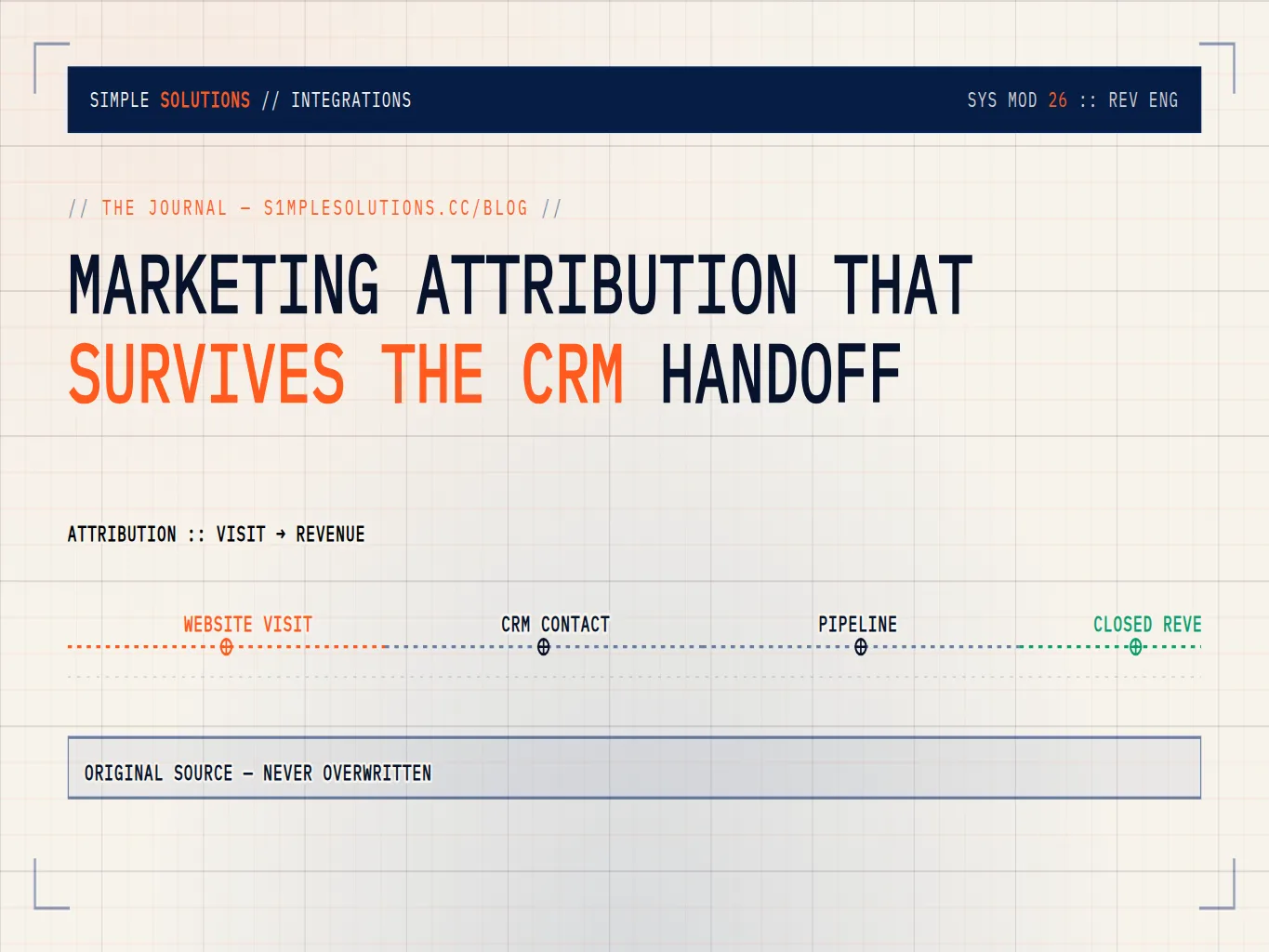
A durable attribution model for carrying original source, campaign context, and conversion events from website visit to closed revenue.
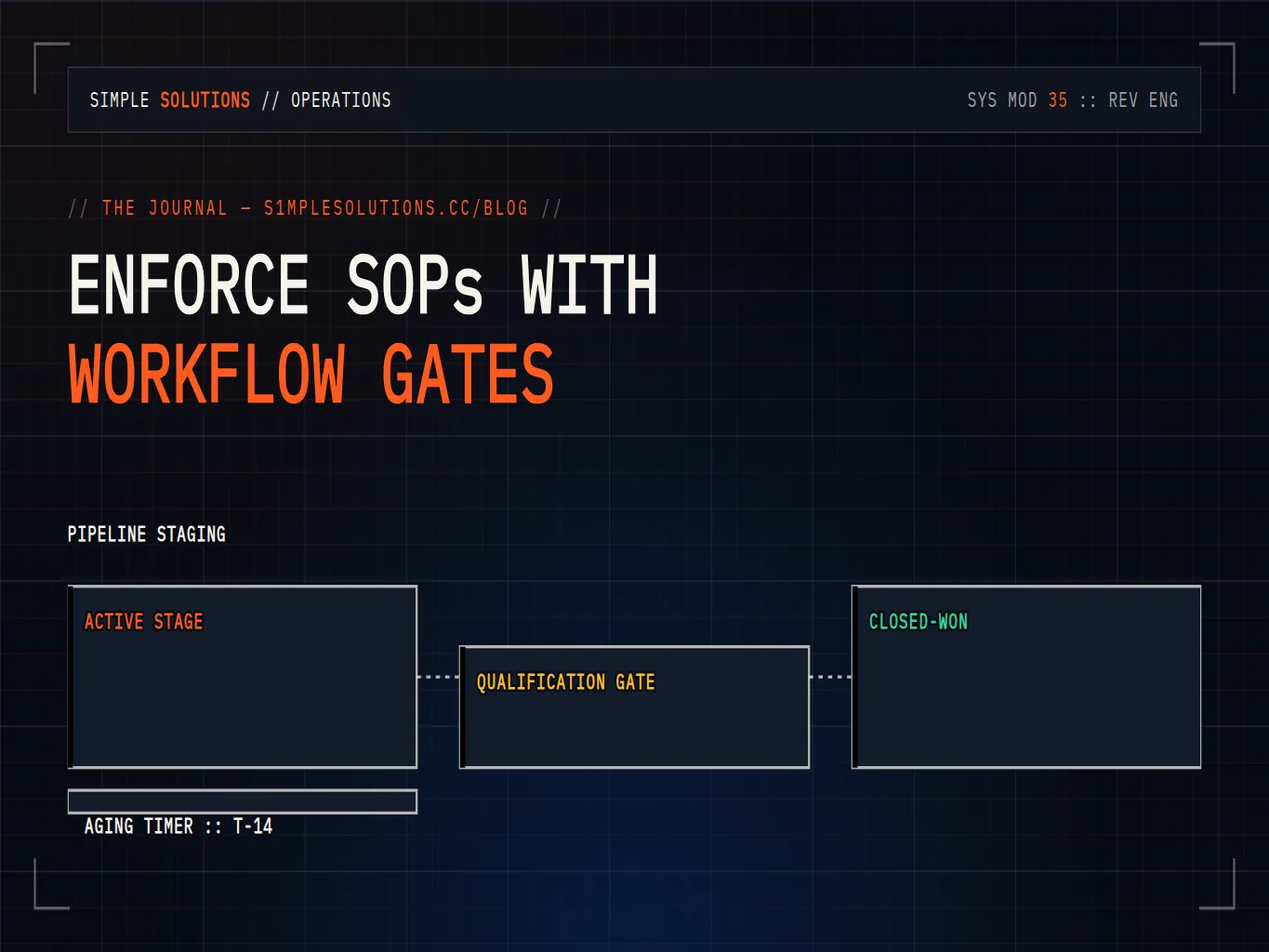
Convert critical SOP steps into proportionate validation gates, evidence records, controlled overrides, and measurable exception handling.
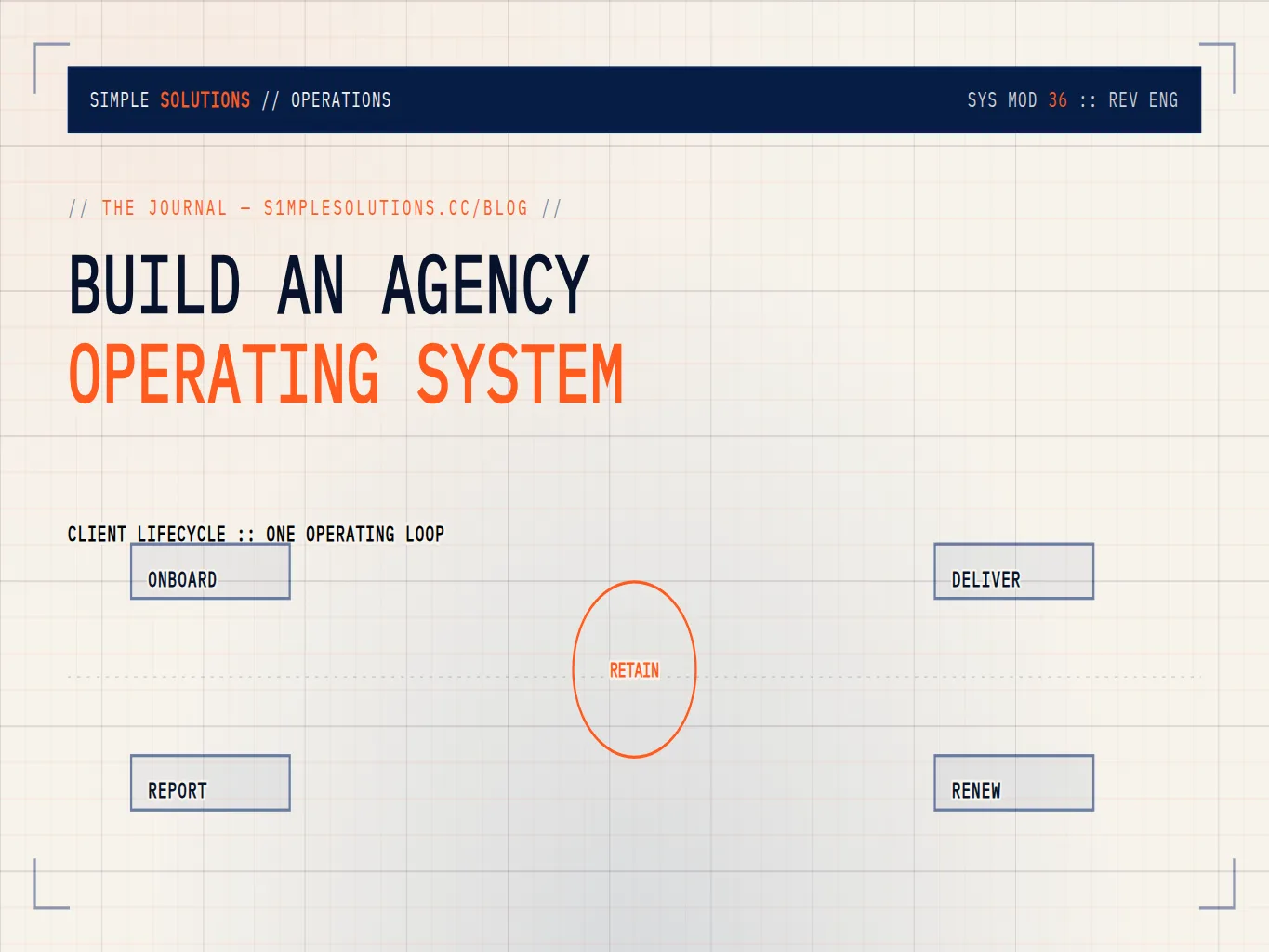
How agencies can standardize the client lifecycle without turning complex service delivery into inflexible automation.
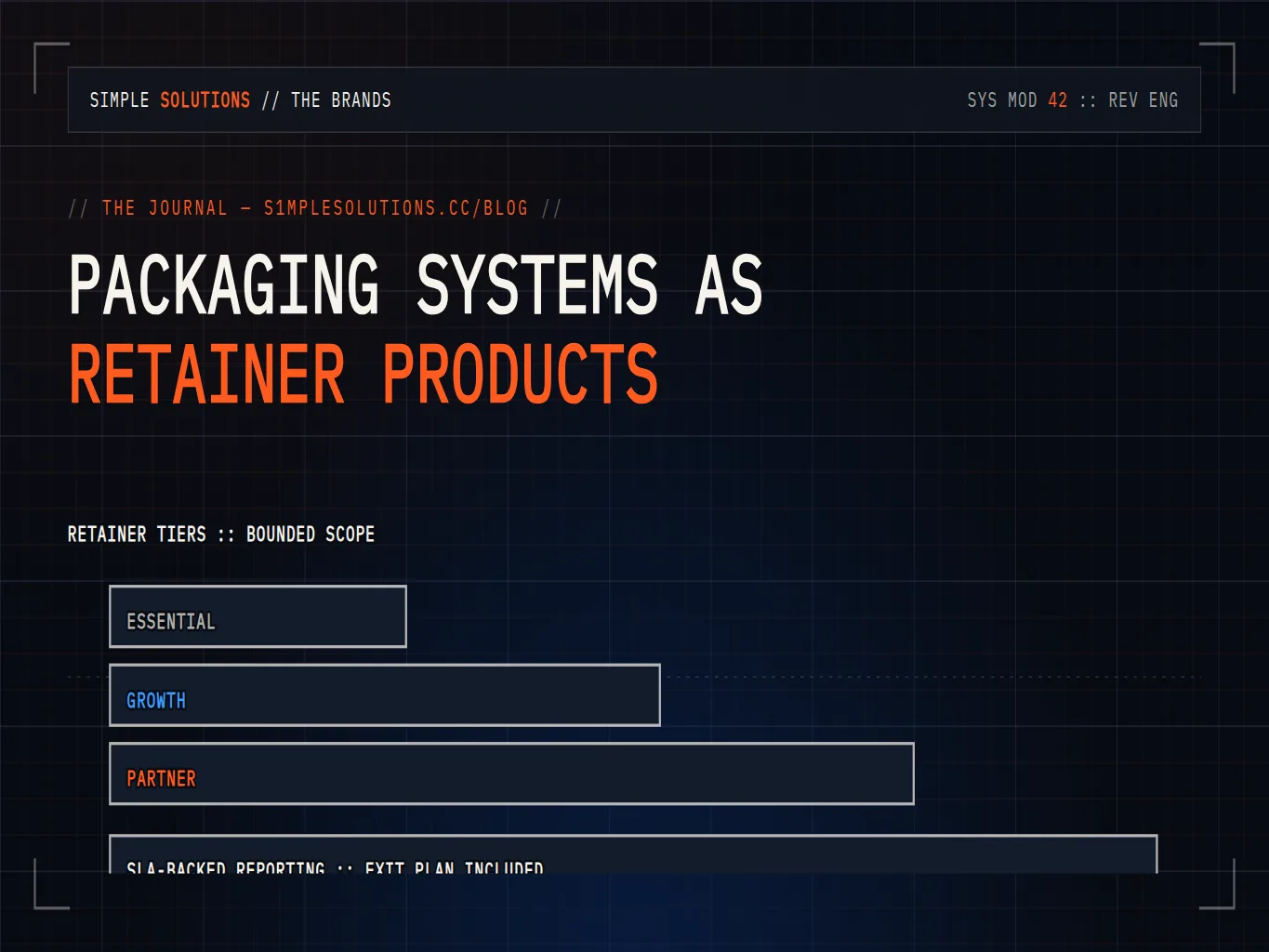
Turn one-off system builds into bounded managed services with an asset register, service tiers, response objectives, capacity rules, and exit plans.
Implementation-first guidance for an idempotent CRM webhook intake with retry queues, deduplication, dead-letter handling, and reconciliation.
Implementation-first guidance for designing an AI agent human handoff contract: thresholds, context transfer, ownership, consent, fallback, and verification.
Implementation-focused guidance to build deterministic match keys, review queues, merge precedence, and rollback controls for CRM data deduplication without losing history.
Concrete architecture and operational steps to implement calendar availability sync, locking, timezone handling, cancellations, and reconciliation across CRM and calendars.
A concrete implementation guide to classify agent actions by risk and add approval, audit, timeout, and rollback states for safe autonomous behavior.
A practical checklist for implementing SaaS onboarding automation that ties product events to CRM stages, owner tasks, lifecycle messages, and exception queues.
A practical runbook for integration monitoring: health signals, correlation IDs, freshness checks, alert routing, replay and post-incident reviews.
A practical implementation guide to customer renewal automation that assembles dates, usage signals, owners, risk states and human review without sending premature messages.
Implementation-first guidance for a lead source attribution model that separates original source, latest source, campaign touch, and opportunity attribution with clear overwrite rules and verification.
Practical automation change management: ownership, versioning, test fixtures, staged rollout, change logs, and rollback plans for production automations.
A practical security model for exposing business tools through MCP without turning an agent into an unrestricted operator.
Design human checkpoints that preserve agent speed while keeping irreversible business decisions accountable and reviewable.
Build a consent model that keeps channel eligibility, source evidence, opt-outs, and message suppression synchronized across CRM workflows.
Engineer availability checks, temporary holds, confirmation, and recovery so automated booking does not create double commitments.
Define versioned field contracts, validation, ownership, and compatibility rules before CRM integrations turn into silent data drift.
Use targeted feature flags, kill switches, and exposure logs to release business automations without losing rollback control.
Design an onboarding workflow that collects the right inputs, assigns ownership, exposes blockers, and preserves customer context between teams.
Build tenant-aware authorization for SaaS products with explicit roles, resource scope, support access, and audit-ready policy decisions.
Connect billing state to product access through explicit entitlements, reconciliation, grace periods, and auditable change events.
Turn workflow logs into actionable operating signals with ownership, severity, runbooks, and recovery tests for business automation.
Design a useful memory layer for business AI agents with explicit retention, provenance, retrieval, and deletion rules.
Create a transparent lead scoring workflow that combines fit, intent, freshness, and human review without turning the CRM into a black box.
Use an integration error budget to decide when a workflow can ship, when it needs repair, and when reliability work must outrank new features.
Build a customer health score that changes the next account action instead of producing another dashboard nobody reviews.
Evaluate a business AI agent with task fixtures, policy checks, tool-use assertions, and human review instead of relying on a few successful demos.
Design a churn-prevention workflow that combines product behavior, support context, billing state, and accountable human intervention.
Plan API version changes with compatibility windows, contract tests, field ownership, and a rollback path that protects business workflows.
Automate capacity planning around actual work-in-progress, service windows, skills, and exceptions instead of optimistic headcount assumptions.
Automate CRM activity capture with event rules, meaningful summaries, source labels, and safeguards against duplicate or misleading records.
Govern a business AI knowledge base with ownership, source precedence, review dates, access boundaries, and a clear path for corrections.
Design a practical permission matrix for business AI agents so every tool call has a bounded scope, owner, audit trail, and safe fallback.
Build an explainable CRM forecasting workflow that separates pipeline state, rep judgment, deal evidence, and forecast confidence.
Create a repeatable integration sandbox that tests payloads, state transitions, permissions, retries, and real downstream side effects before release.
Automate the operational steps that move a new customer from signed agreement to a verified first outcome without removing human ownership.
Set up AI agent observability around decisions, tool calls, policy outcomes, latency, and human corrections instead of counting conversations alone.
Design an expansion workflow that connects product usage, account roles, support context, and commercial timing to a useful next action.
Build a pagination-aware sync that checkpoints progress, handles inserts and updates, respects rate limits, and can resume safely.
Automate operational incident escalation with severity, ownership, service windows, evidence, and recovery states that people can actually use.
Automate parent-child account relationships with ownership, matching rules, exception review, and safe updates that preserve sales context.
Convert scattered SOPs into AI-ready process documentation with states, evidence, permissions, exceptions, and review ownership.
Build a CRM enrichment workflow that adds useful context while preserving source provenance, confidence, ownership, and correction paths.
Design an AI agent context strategy that separates durable facts, task state, retrieved evidence, and disposable conversation history.
Create a webhook versioning strategy that lets producers evolve payloads while consumers migrate safely and operations retain replay control.
Build a usage-based billing workflow that reconciles events, entitlements, pricing rules, exceptions, and invoice readiness before money moves.
Design a sales-to-delivery handoff that carries customer outcomes, scope, commitments, risks, and ownership into execution without duplicate data entry.
Test AI agents against untrusted instructions, tool misuse, data leakage, and policy bypasses before connecting them to business systems.
Build an operations workload balancer that considers demand, skill, availability, priority, service windows, and human override.
Govern integration field mappings with ownership, transformation rules, validation, change review, and evidence that prevents silent drift.
Route customer feedback into owned, prioritized work by separating sentiment, topic, urgency, account context, and requested outcome.
Create an agency reporting workflow that joins delivery evidence, business outcomes, exceptions, and next actions into a clear client narrative.
Map CRM contacts to buying roles, influence, evidence, and ownership so account teams can act on relationship context instead of flat contact lists.
Set practical confidence thresholds for AI agents so low-evidence decisions pause, escalate, or request better inputs before creating business side effects.
Build a rate-limit backoff workflow that preserves work, respects provider signals, and resumes safely without turning retries into a second outage.
Design a trial workflow that uses readiness, product behavior, customer intent, and human context to guide accounts toward a verified first outcome.
Automate procurement intake with structured requirements, budget context, risk checks, approvals, and a clear path for exceptions.
Create a tool-selection policy that helps AI agents choose the right system, avoid unnecessary access, and explain why a tool was used.
Build a shift handoff workflow that carries active work, decisions, risks, evidence, and next actions across teams without relying on memory or chat history.
Design deduplication keys that survive retries, source differences, and partial updates without collapsing legitimate records into one.
Route customer-success risk with evidence, account context, urgency, intervention ownership, and a verified recovery state instead of a score alone.
Qualify agency leads against fit, need, timing, budget context, delivery capacity, and evidence before the opportunity consumes scarce attention.
Normalize CRM lead-source values across forms, imports, referrals, and campaigns so attribution remains explainable and operationally useful.
Design an AI agent memory policy that separates durable facts, temporary context, and sensitive data while keeping retrieval useful and reviewable.
Build webhook replay protection with signatures, timestamps, event identities, durable receipts, and safe reprocessing controls.
Create a renewal forecast workflow that connects usage, value evidence, stakeholder context, commercial dates, and an owned next action.
Manage approval queues with explicit owners, aging states, escalation rules, and evidence so important decisions do not vanish in an inbox.
Detect integration schema drift with contract snapshots, compatibility checks, sampled payloads, and an owned response path before downstream workflows fail silently.
Build an escalation matrix that routes AI-agent uncertainty and high-impact actions to the right reviewer with enough context to decide quickly.
Define CRM stage exit criteria that connect evidence, owner actions, customer commitments, and forecast changes without turning the pipeline into a paperwork exercise.
Route onboarding blockers by cause, customer impact, urgency, and owner so delays become managed work instead of status-meeting surprises.
Forecast agency utilization with scheduled work, delivery constraints, skill coverage, and pipeline confidence so new sales do not quietly create delivery risk.
Route pricing, legal, security, and commercial exceptions through a visible deal-desk workflow without turning every opportunity into a manual review.
Design explicit agent states, transitions, checkpoints, and recovery behavior so a long-running AI workflow can pause, resume, and explain what happened.
Implement idempotency keys for APIs that create or change business records so retries remain safe after timeouts, worker restarts, and uncertain responses.
Build a product-qualified lead workflow that turns meaningful usage signals into owned, contextual follow-up rather than noisy alerts.
Operationalize policy changes with versioned rules, affected-work detection, owner acknowledgements, and evidence that teams adopted the new behavior.
Create a dead-letter workflow that preserves failed event context, separates transient errors from data defects, and makes replay a governed action.
Set cost budgets, action limits, escalation rules, and stop conditions that keep autonomous agent work economically and operationally bounded.
Govern CRM duplicate resolution with match evidence, survivorship rules, review thresholds, and an auditable recovery path.
Design a renewal-risk escalation workflow that connects evidence, severity, executive visibility, and a concrete recovery plan.
Detect scope creep using approved deliverables, change signals, effort evidence, and an owned commercial decision before margin disappears.
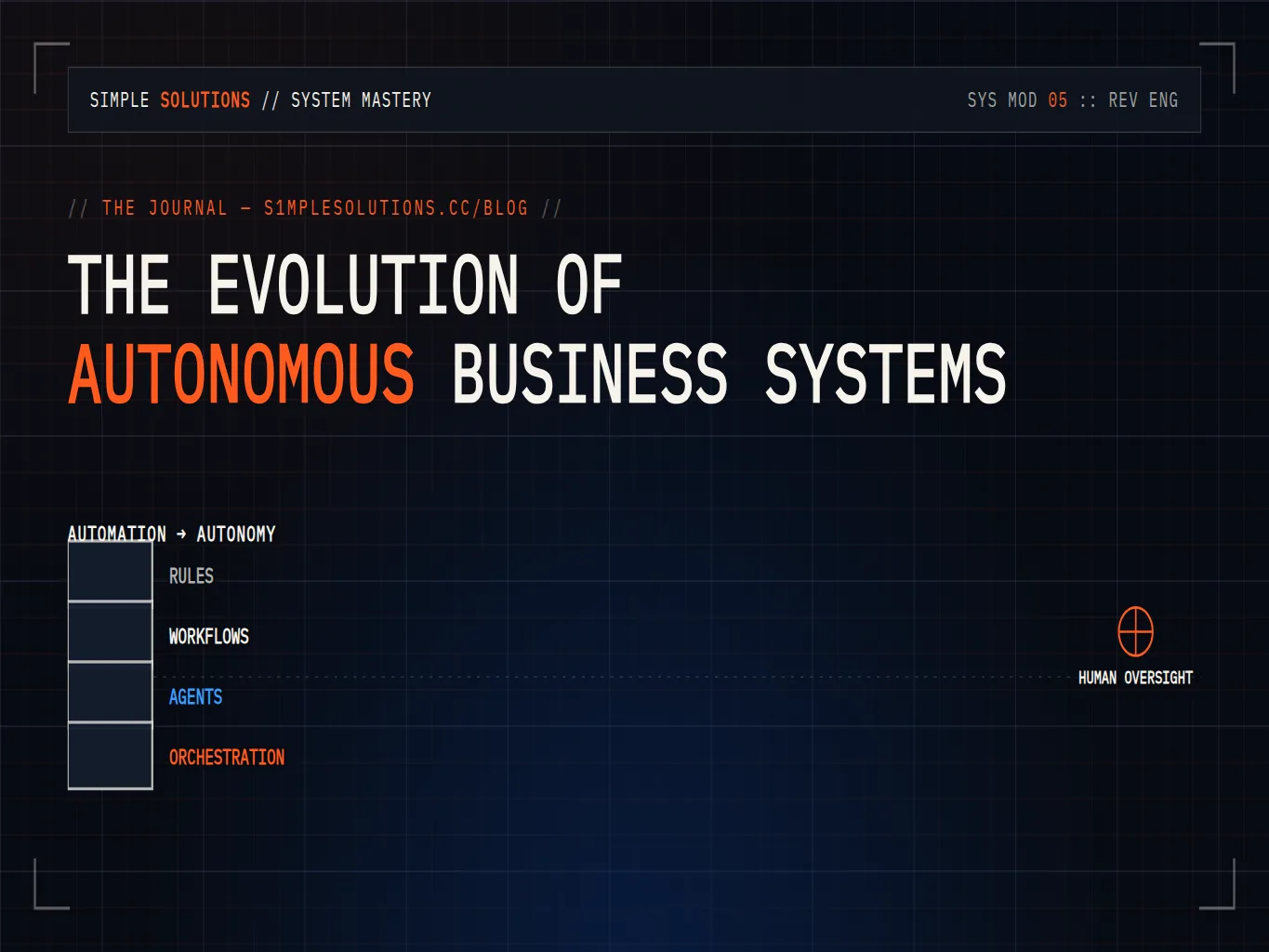
Learn how moving from simple automations to fully autonomous systems can 10x your operational efficiency.
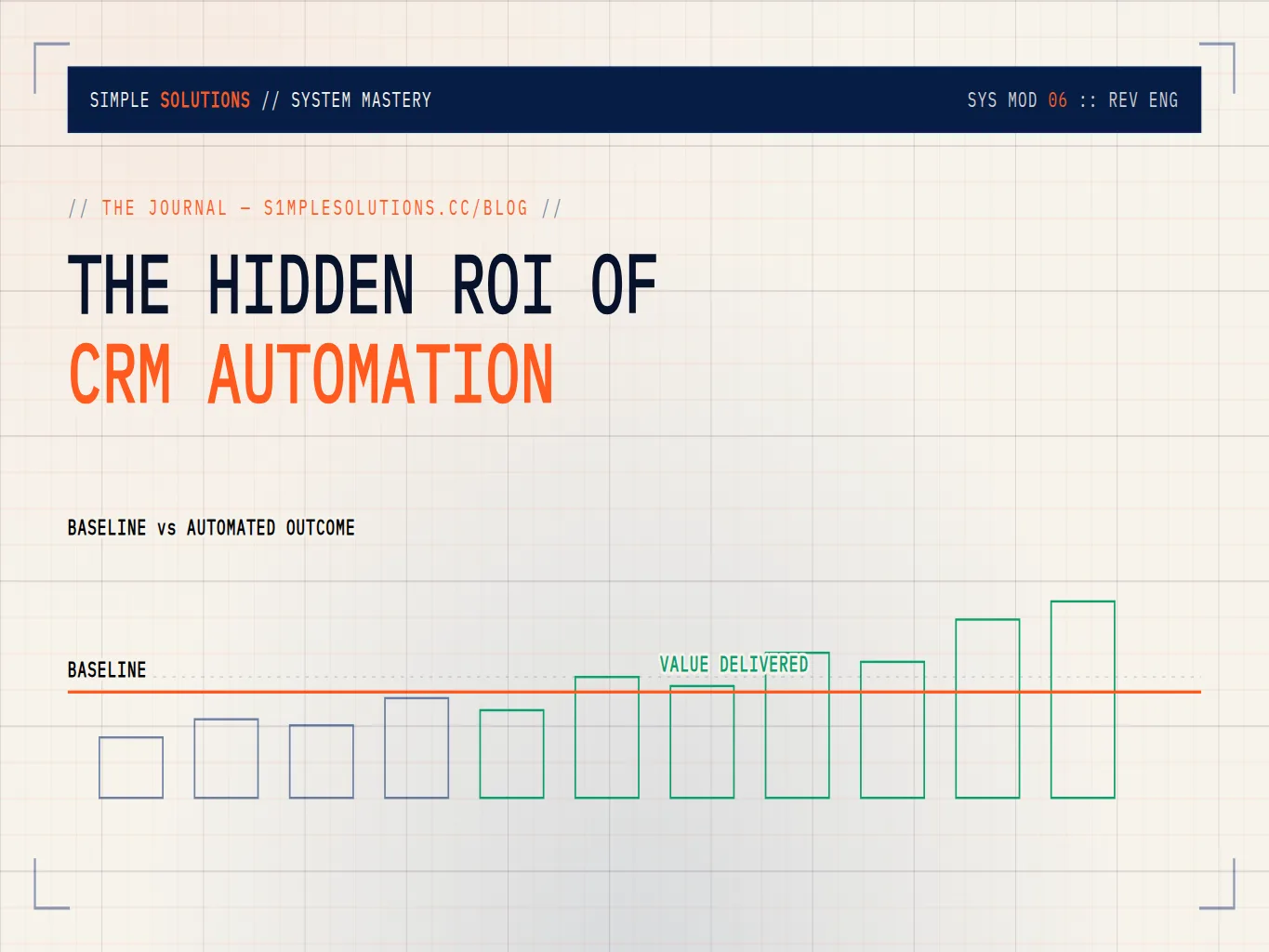
Stop letting leads slip through the cracks. Learn how automating your CRM can instantly add thousands to your bottom line.
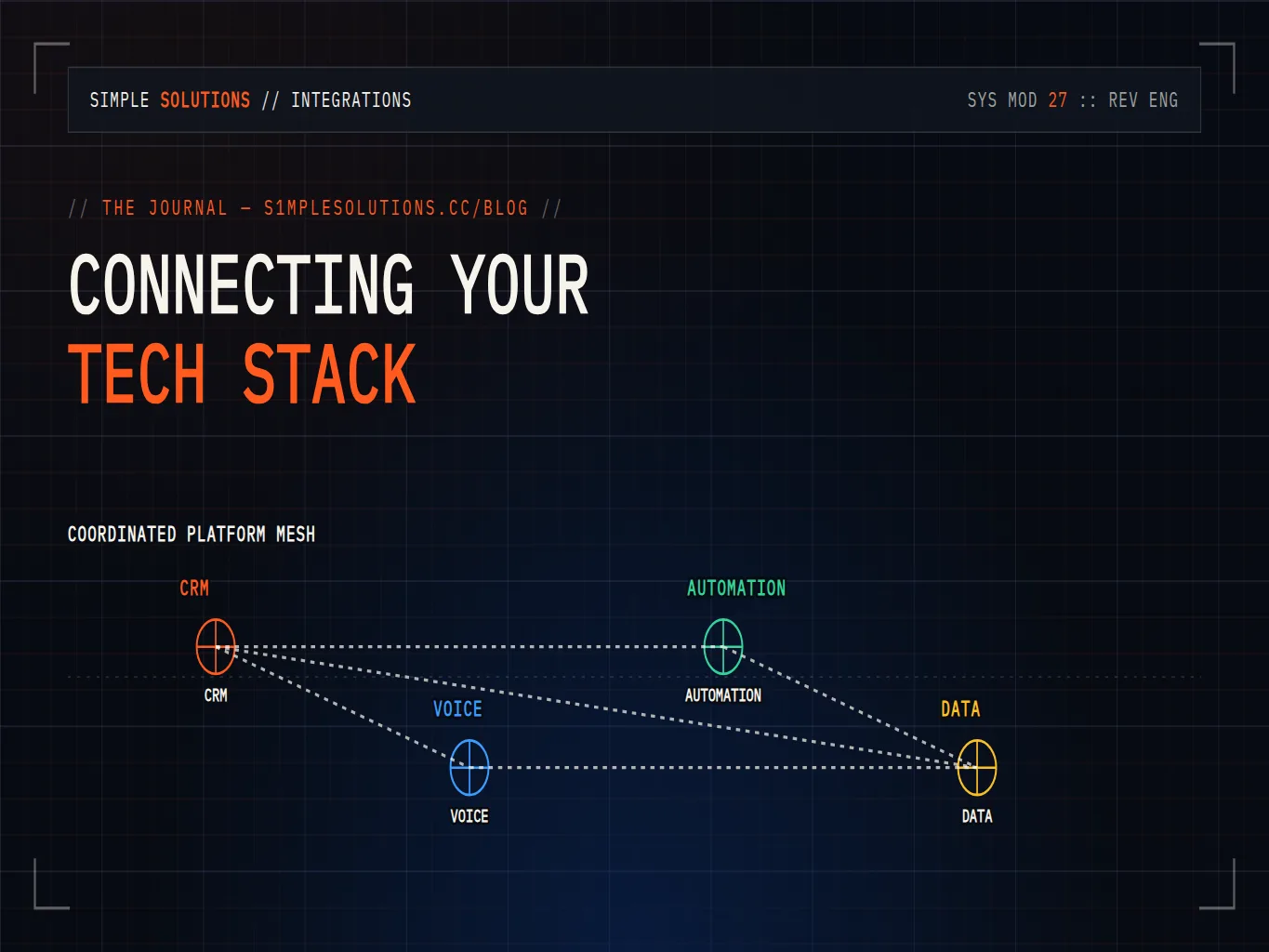
If your software doesn't talk to each other, your team is doing double the work. Here's how to fix it with seamless integrations.
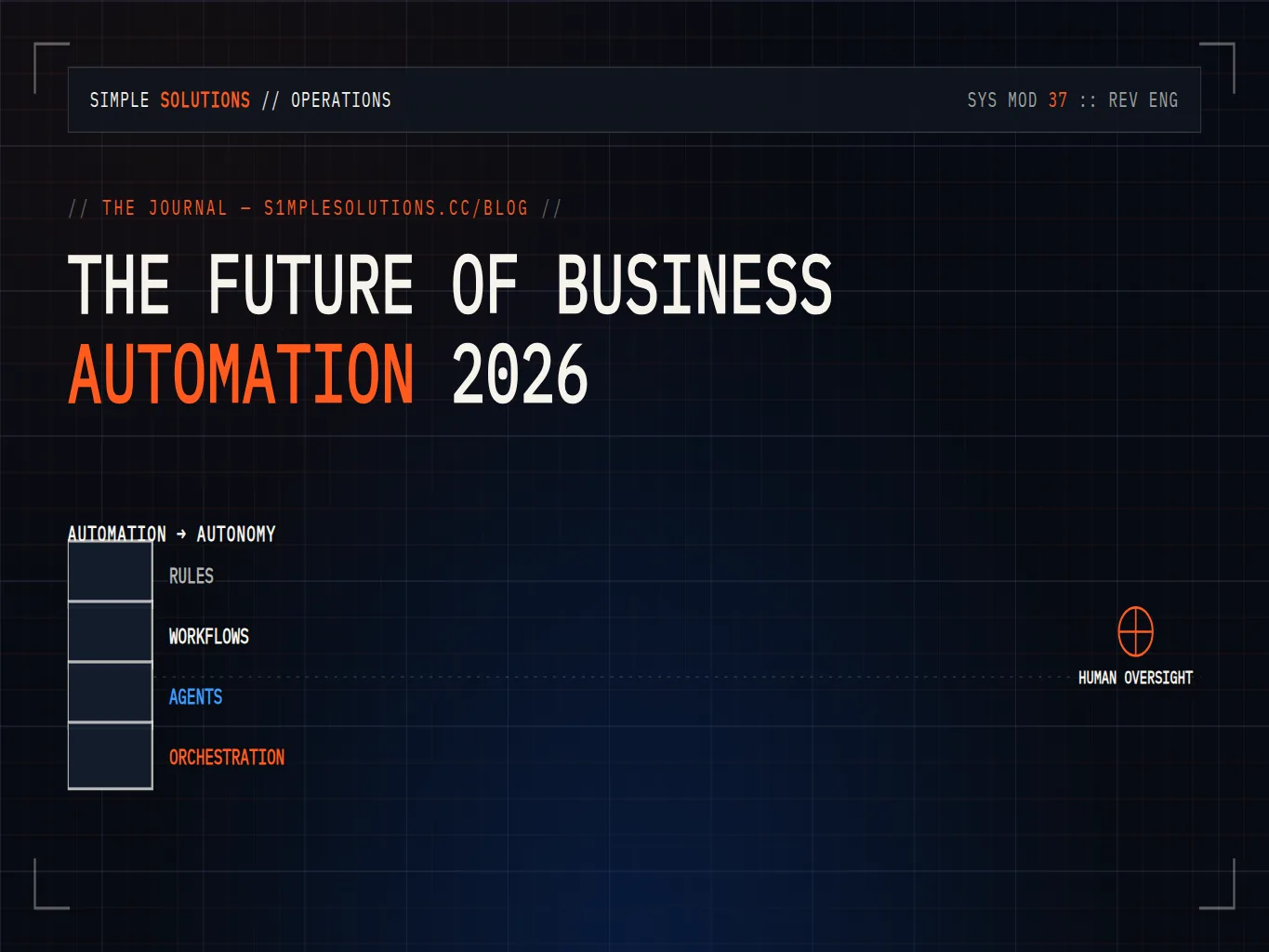
Emerging trends in process automation and the competitive advantages they unlock for operators willing to move first.
Implementing AI isn't just about adopting new tools. Learn how to build a comprehensive AI strategy that scales with your agency's growth.
Stop guessing and start knowing. Discover how to leverage data analytics and reporting to make informed decisions that drive business growth.
Discover how Voice AI is revolutionizing the way businesses handle inbound calls and customer inquiries 24/7.
Explore advanced integration strategies that go far beyond simple trigger-action workflows.
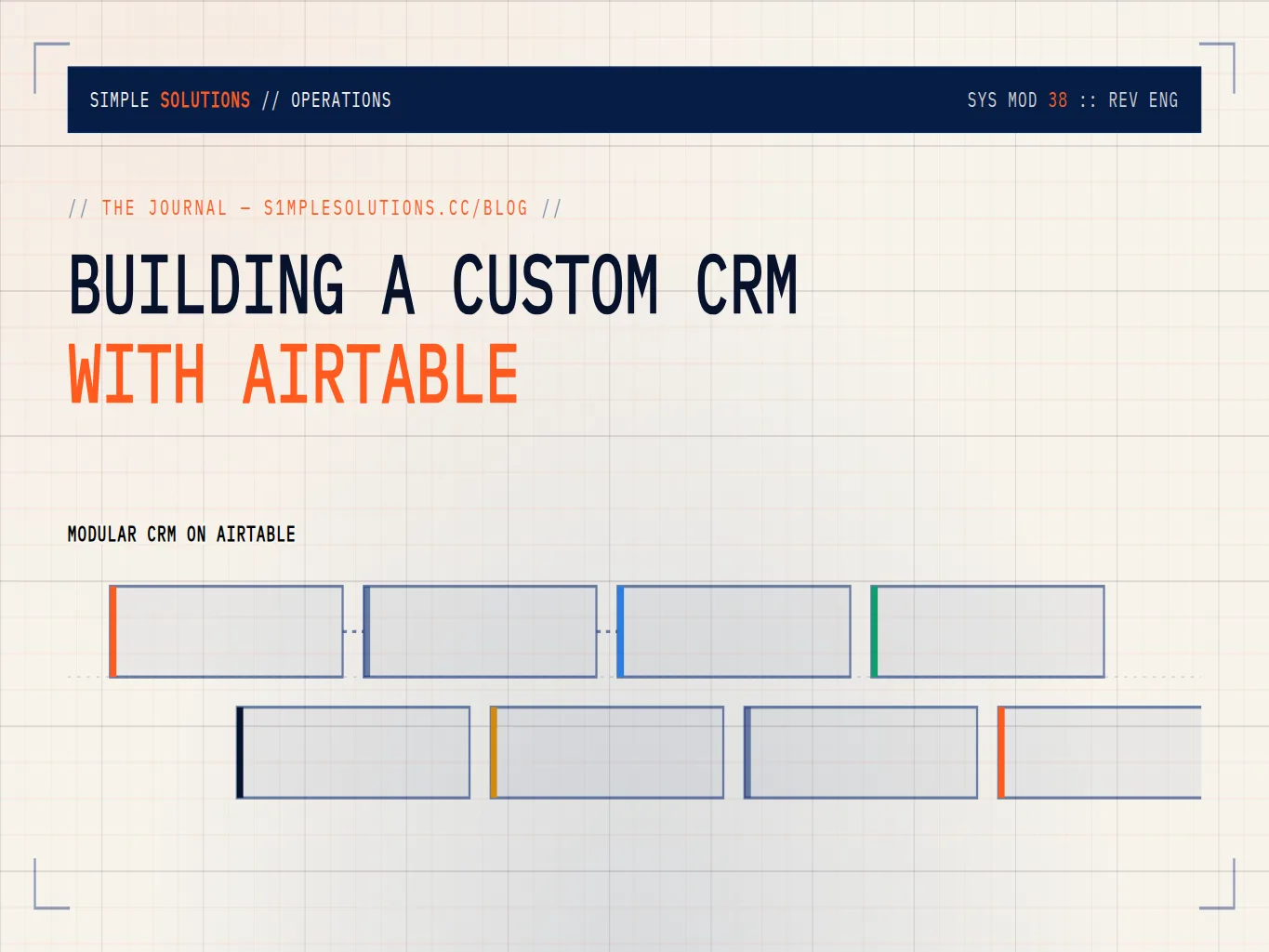
Off-the-shelf CRMs can be rigid. Here is how to build a flexible, powerful CRM using Airtable and automation.
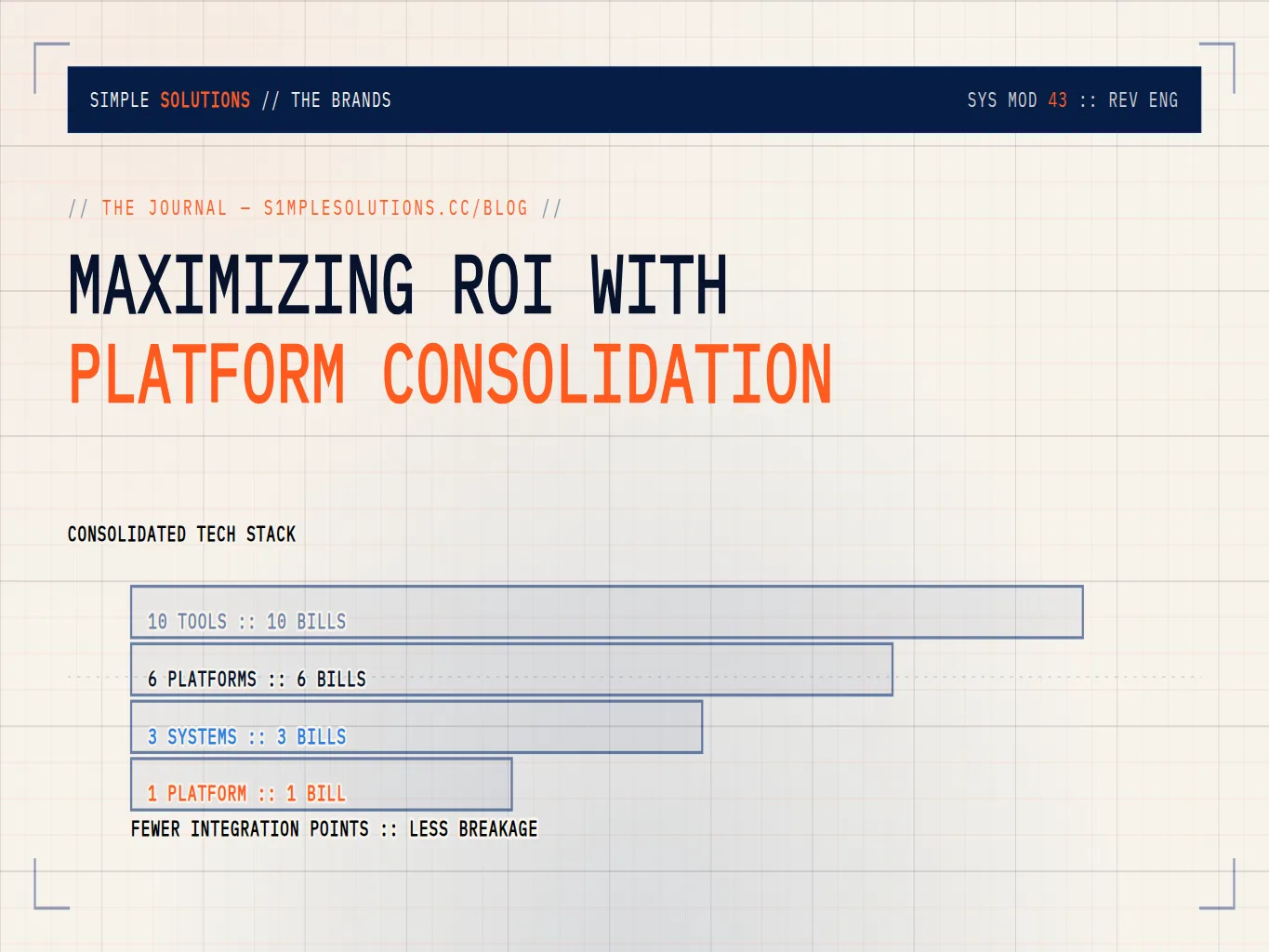
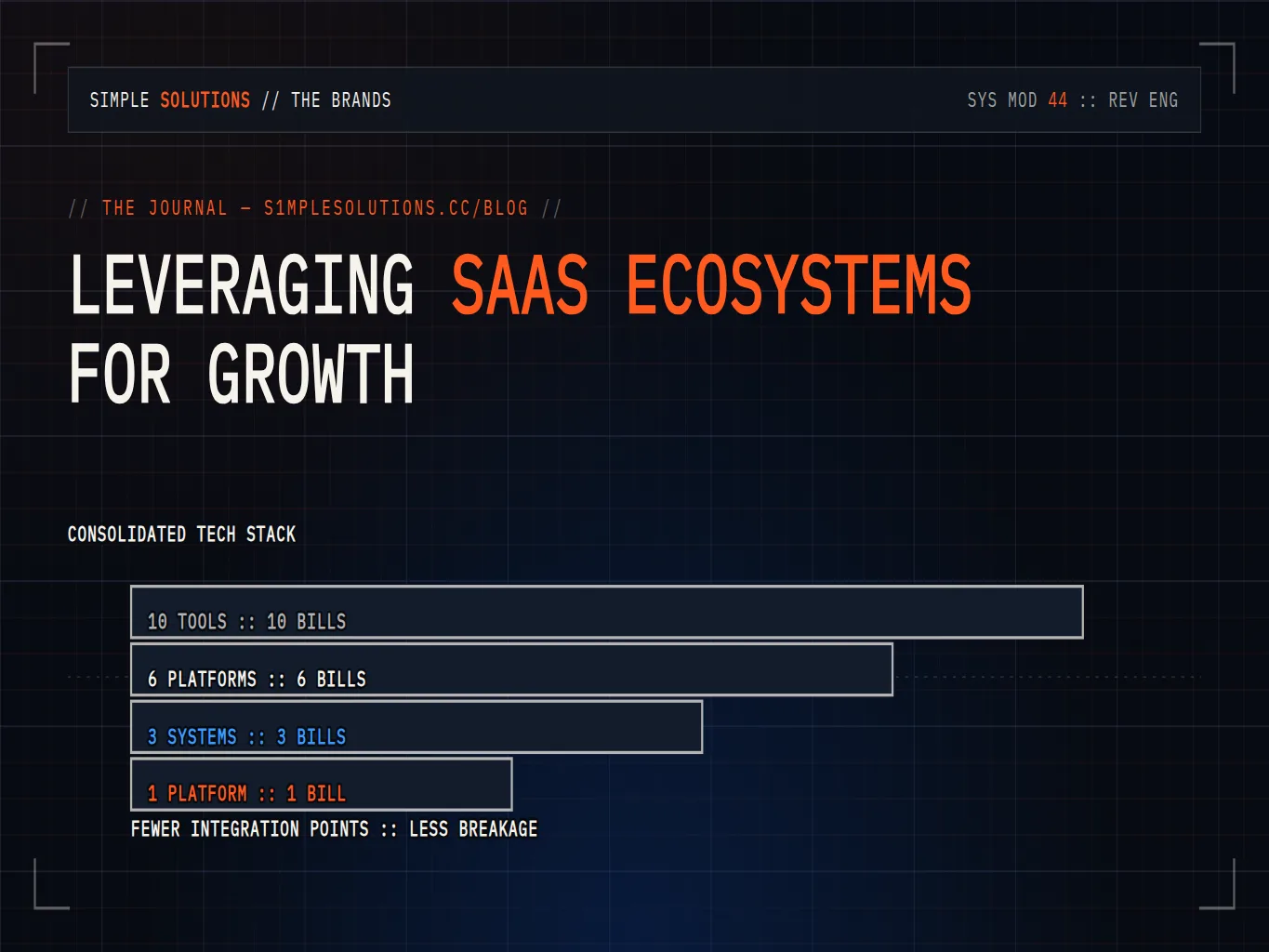
Stop paying for 10 different marketing tools. Consolidate your tech stack to save money and improve tracking.
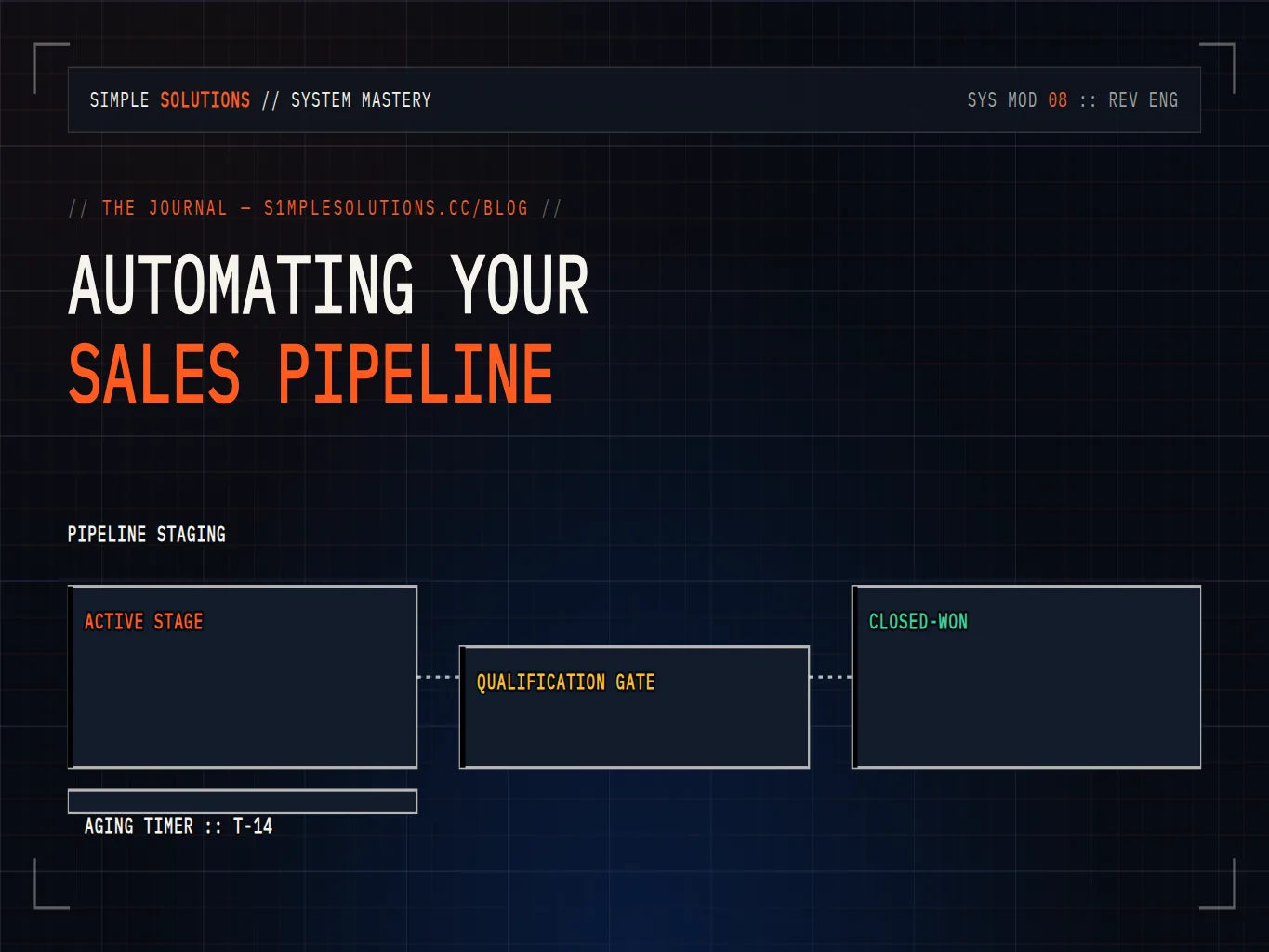
How to use automated triggers to move leads through your pipeline without manual drag-and-drop.
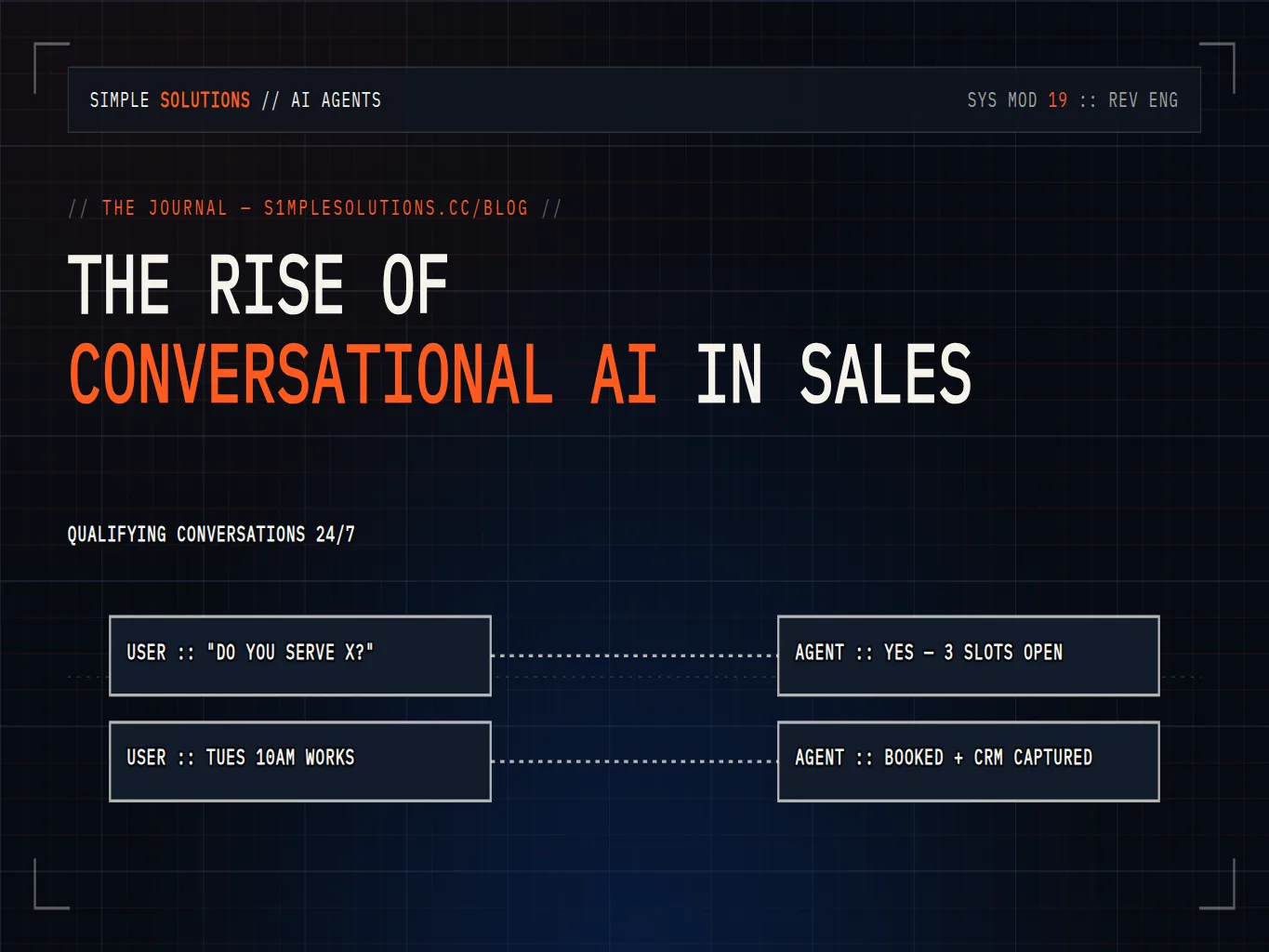
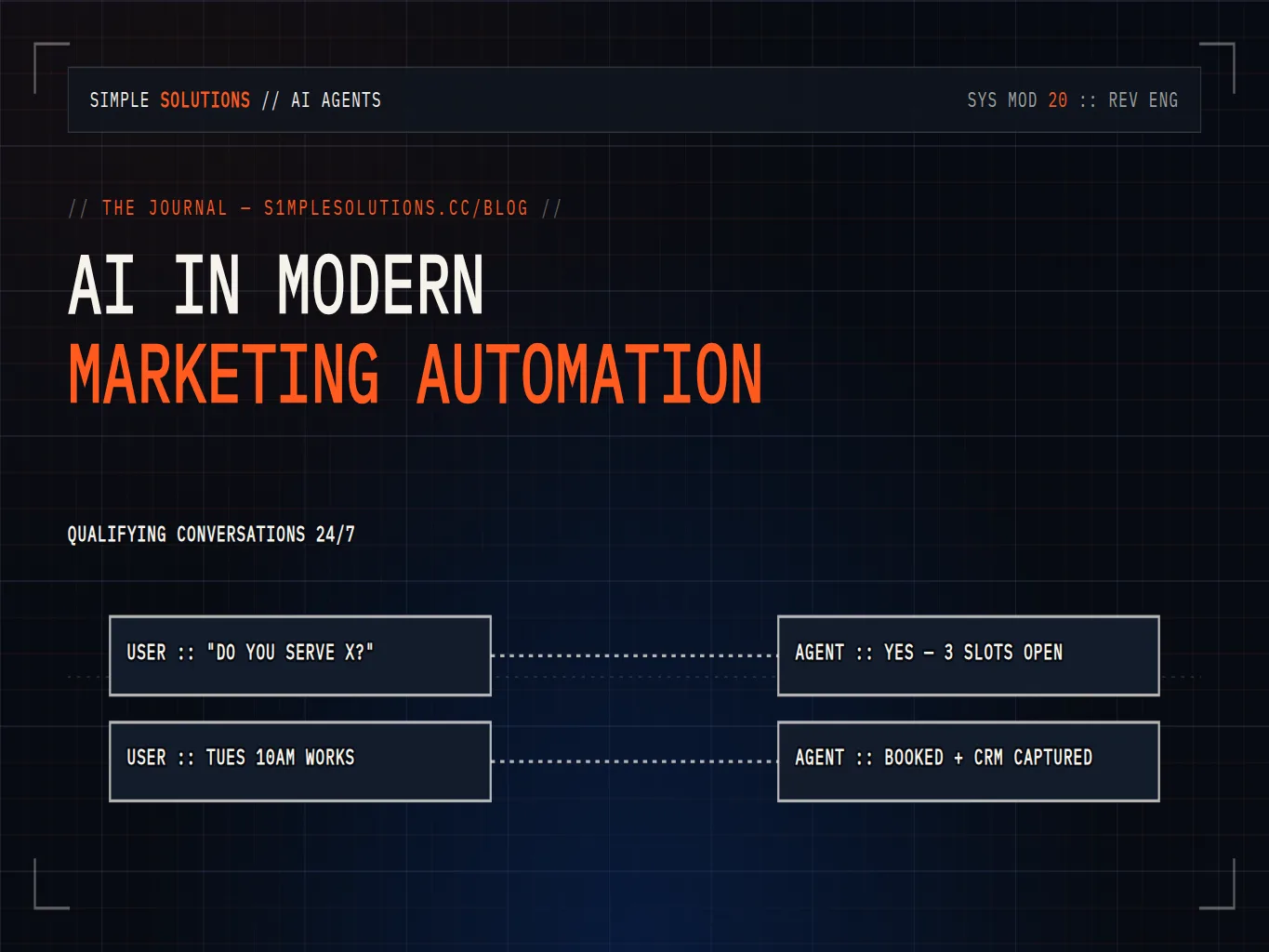
AI isn't just for support anymore. Discover how conversational AI agents are qualifying leads and booking meetings.
The technical architecture required to keep your data perfectly synchronized across your entire tech stack.
Small inefficiencies add up. Learn how micro-automations can save your team hundreds of hours a month.
How to build a scalable technology foundation that supports rapid business expansion.
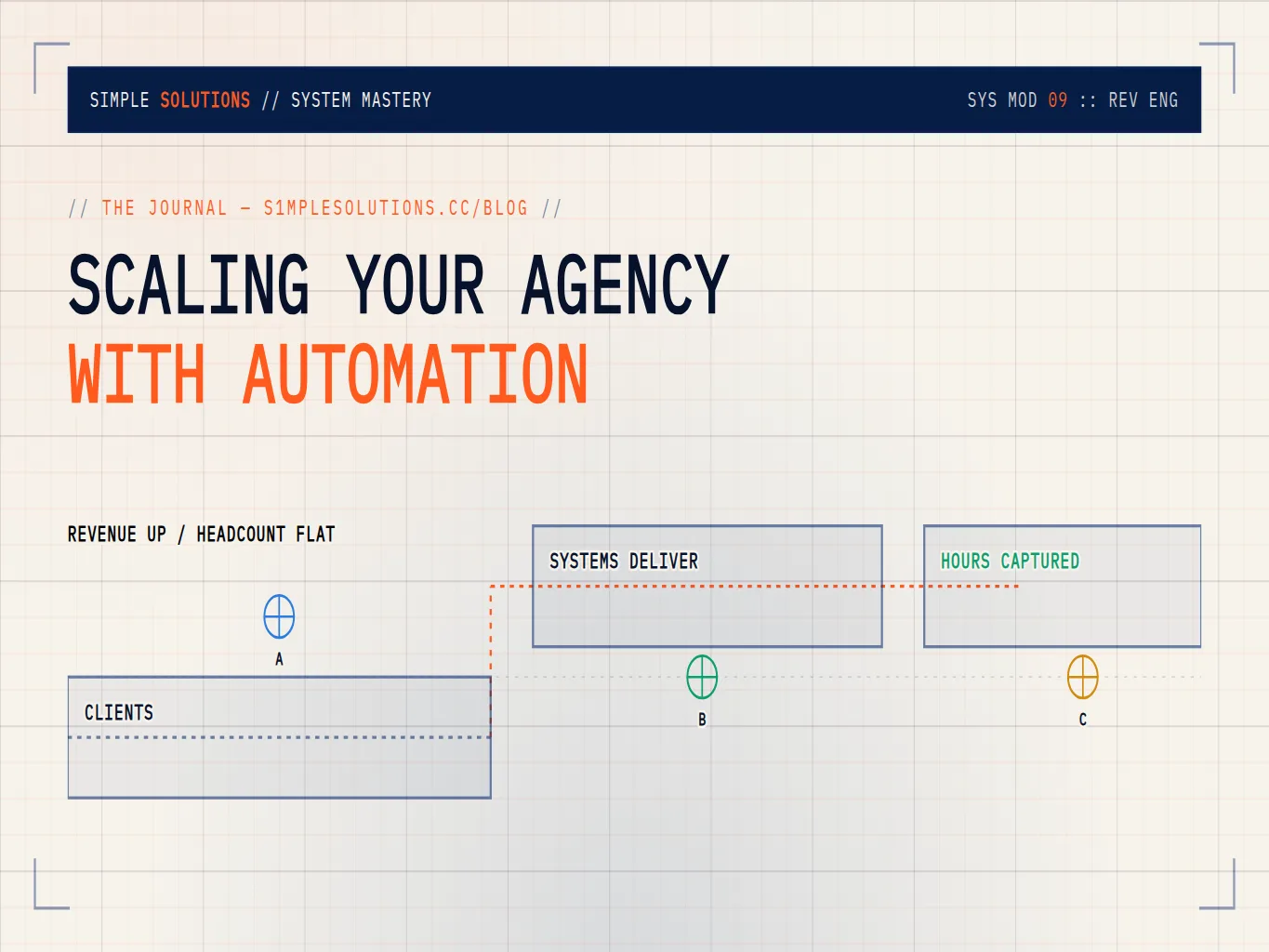
Discover the core automation strategies that allow modern agencies to scale their client base without proportionally increasing headcount.
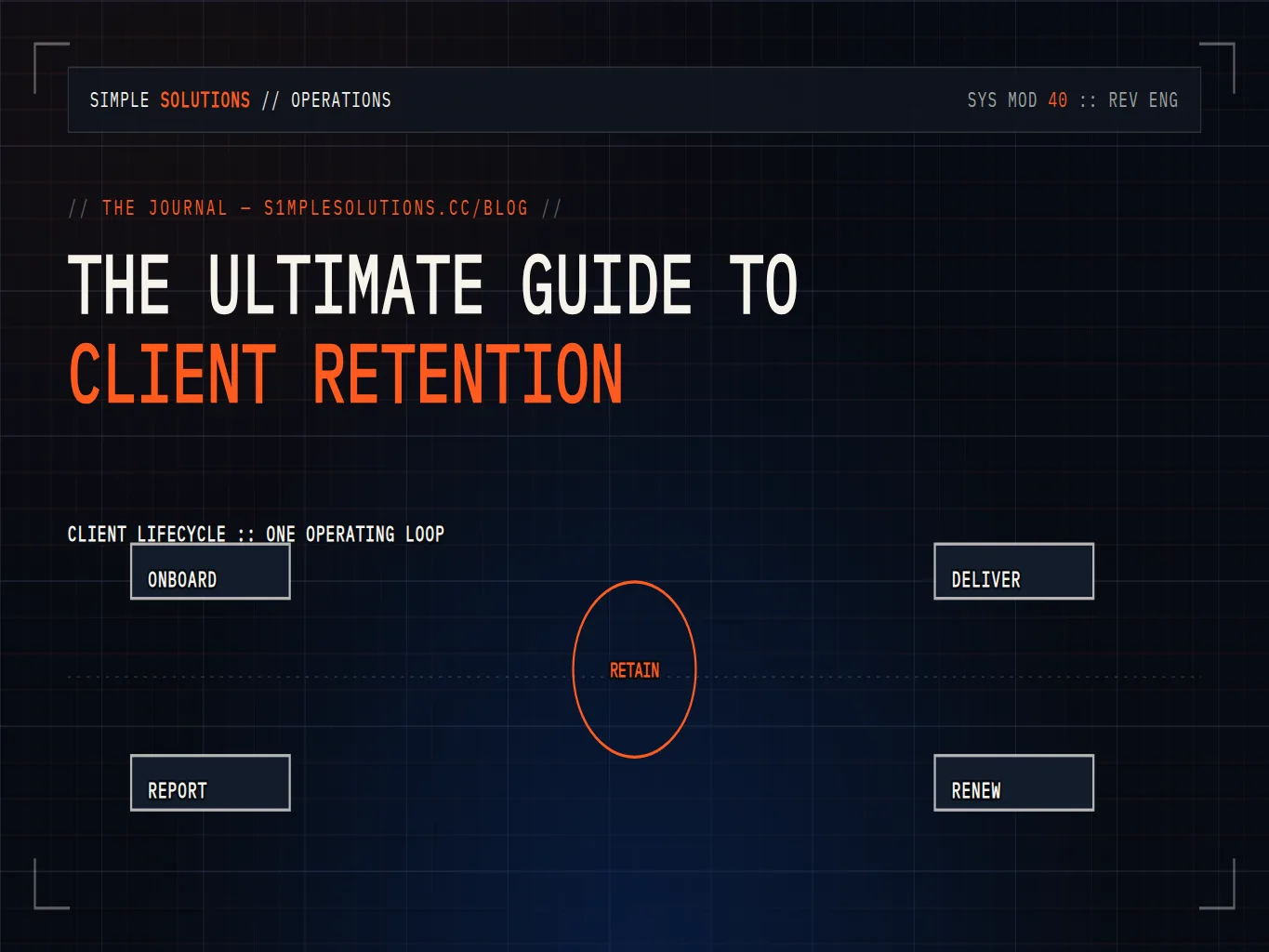
Acquiring new clients is expensive. Learn how to use automated touchpoints to keep your existing clients happy and engaged for years.
Stop letting cold leads go to waste. Build intelligent nurture sequences that convert prospects into buyers over time.
Transform your agency from a service provider into a software company by offering white-labeled solutions to your clients.
Consolidate your messaging channels into a single inbox to ensure no customer inquiry ever falls through the cracks.
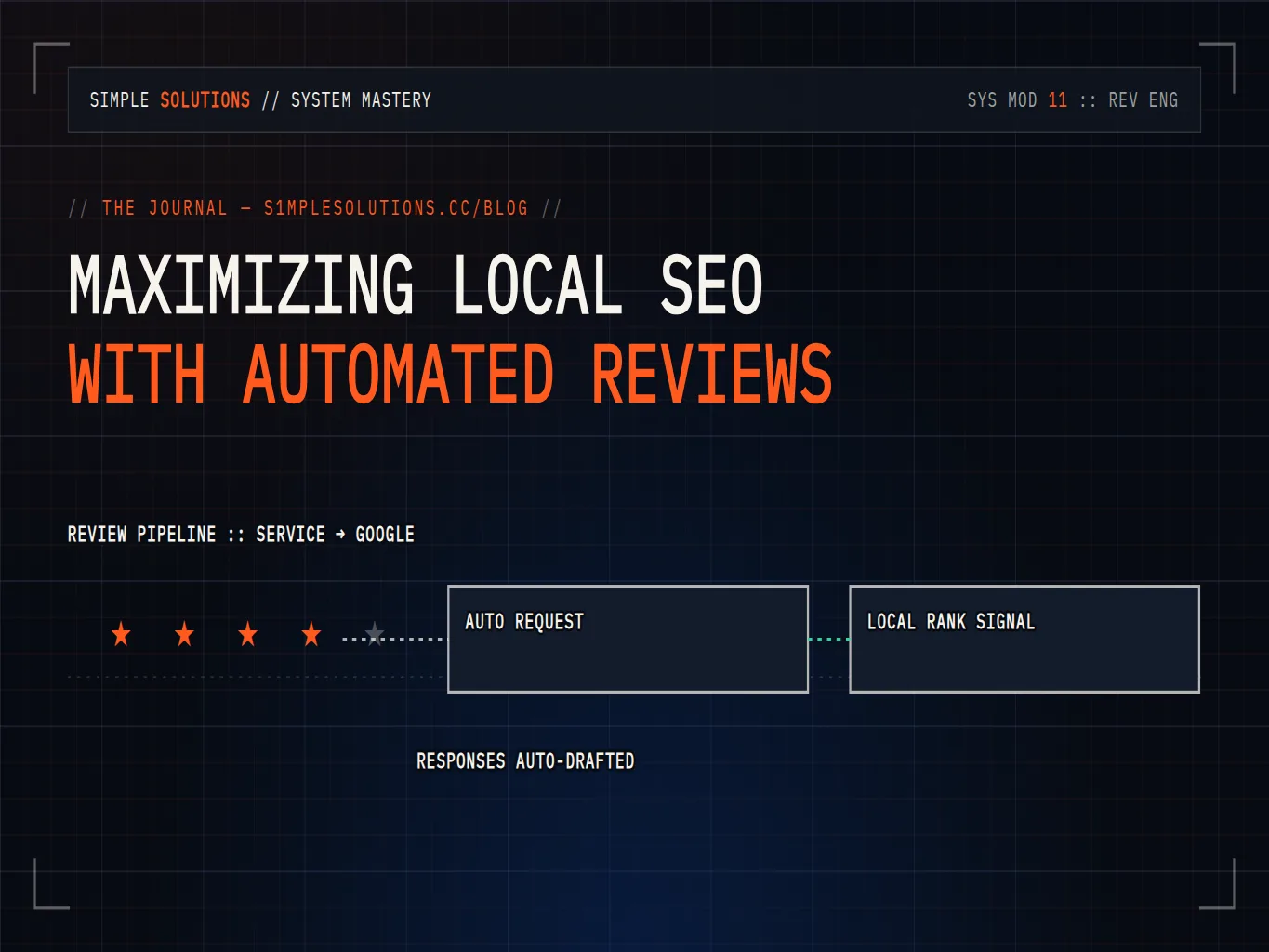
Online reviews are the lifeblood of local businesses. Learn how to automate your review generation process to dominate local search.
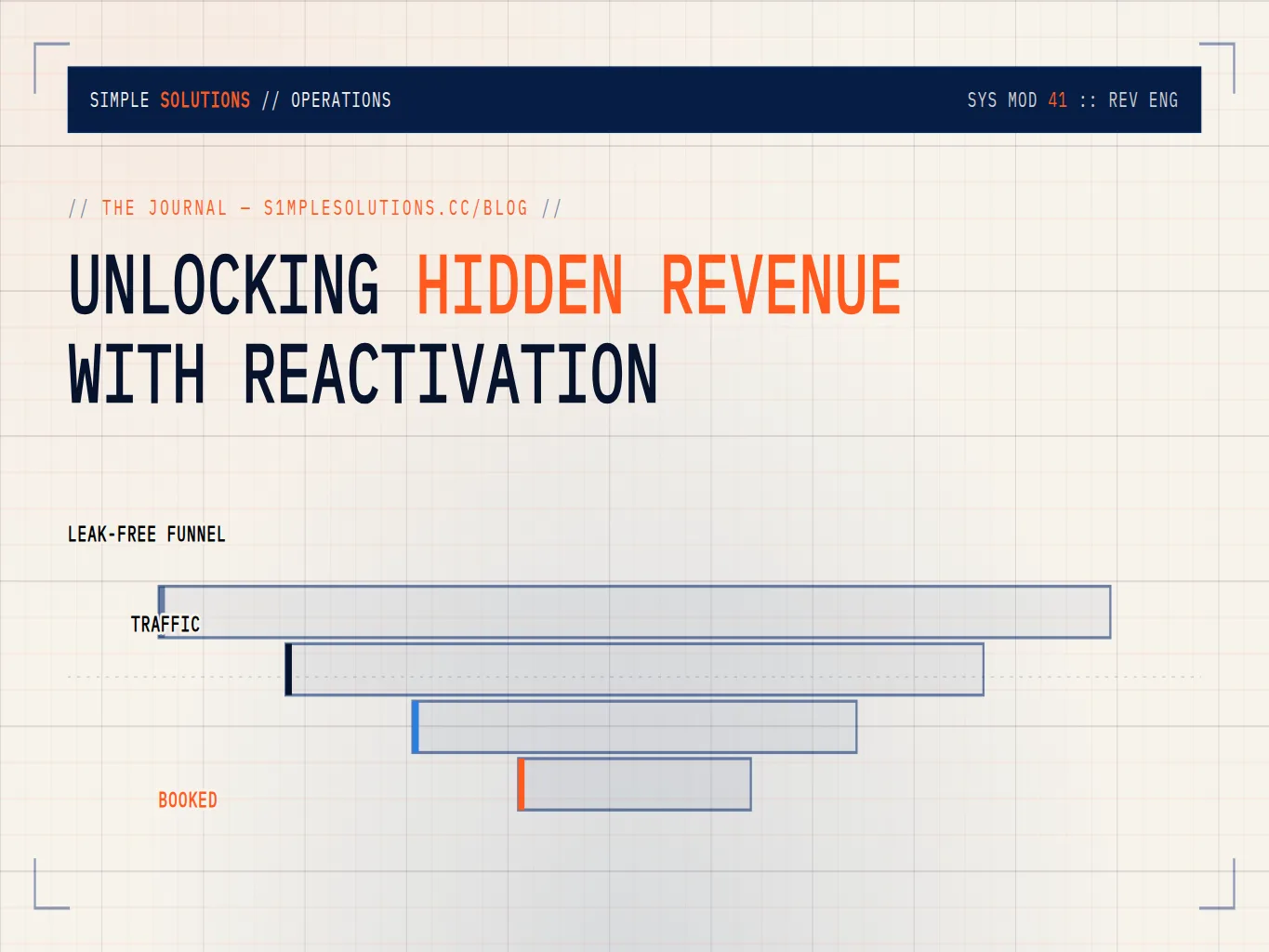
Your existing database is a goldmine. Discover how to use simple SMS and email campaigns to generate instant revenue from old leads.
A website is a brochure; a funnel is a salesperson. Learn the anatomy of a funnel that consistently turns traffic into leads and sales.
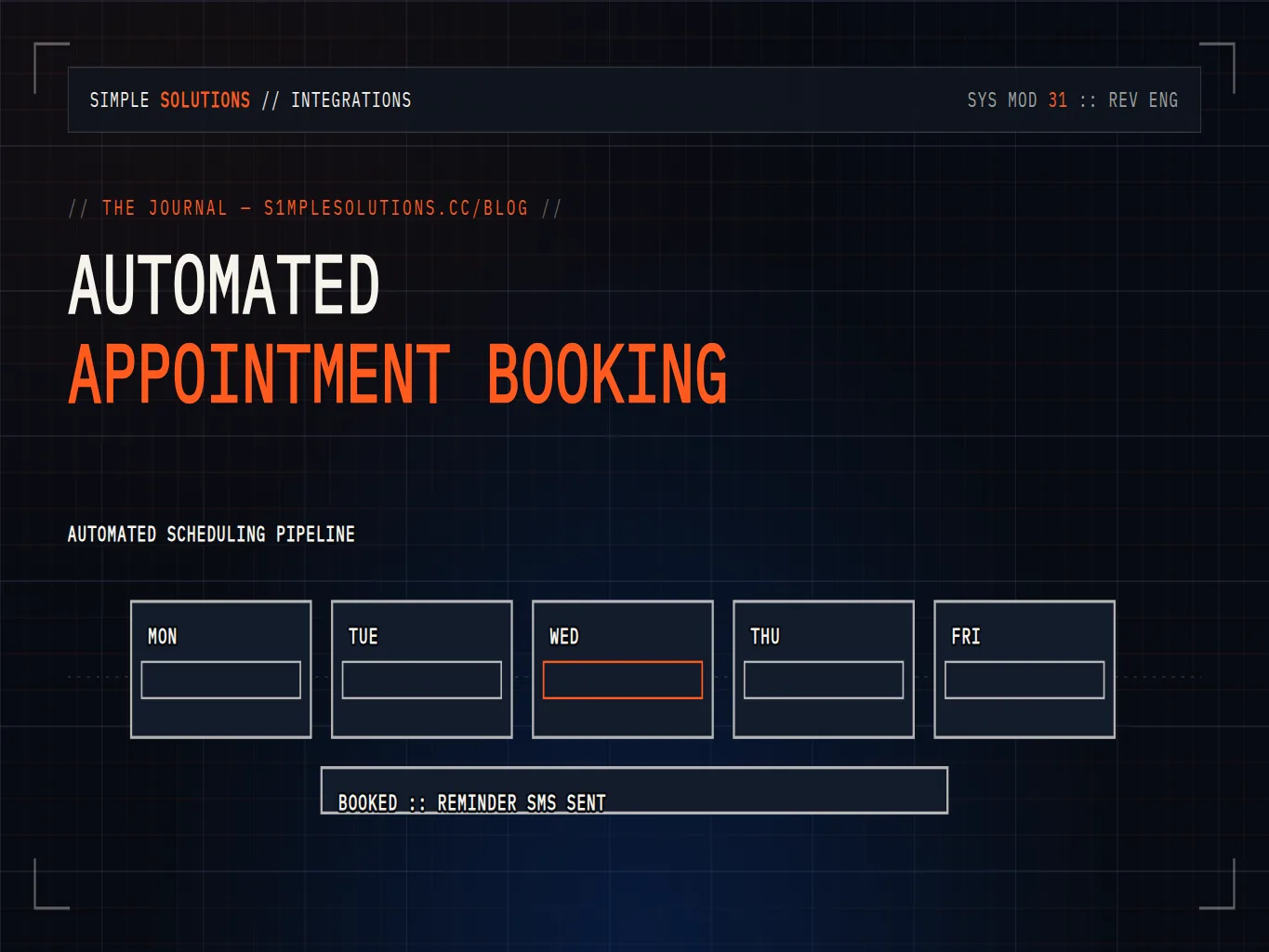
Eliminate the back-and-forth of scheduling. Discover how integrated calendars can streamline your sales process and reduce no-shows.
AI is transforming how we market. Learn how to leverage artificial intelligence to personalize campaigns and predict customer behavior.