Automation ROI is often presented as task time multiplied by task volume. That calculation can be useful, but it is not automatically realized value. Saved minutes may be absorbed by exception handling, low adoption, new review work, or unused capacity. A defensible business case separates theoretical capacity, observed operational improvement, revenue impact, and implementation cost.
Write the value hypothesis first
State what should change and why. For example: automatic intake and routing should reduce unowned enquiries, shorten response time, and increase the share receiving a complete follow-up sequence. Define the population, workflow boundary, measurement period, and expected mechanism. Avoid bundling unrelated outcomes into one claim.
Build a baseline from observed work
Measure actual volume, handling time, waiting time, error and rework rate, completion rate, response time, and business outcome before release. Sample across busy and quiet periods. Distinguish hands-on labor from elapsed time. A task may take two minutes to perform but delay the customer for a day because it waits in a queue; automation creates value through both capacity and speed, but they should be reported separately.
Include the full cost of operation
Count discovery, build, licenses, usage, training, monitoring, exception review, maintenance, and expected change work. Include human approval time introduced by the new process. Do not treat existing salaries as immediate cash savings unless cost actually leaves the business. Report released capacity as capacity, then document how the team redeploys it.
Automation creates value when behavior and outcomes change—not when a workflow is switched on.
Measure adoption and process health
Track the percentage of eligible cases entering the automation, completing without intervention, requiring review, failing, or being bypassed. A strong outcome among half the intended population may indicate integration gaps or user workarounds. Monitor data completeness and duplicate actions because apparent speed gains can hide downstream cleanup.
Connect operational changes to commercial results carefully
Use cohort or before-and-after comparisons where possible, while recording campaign mix, seasonality, staffing, pricing, and other changes. Attribute revenue only when the causal path is reasonable. Faster response may contribute to more qualified conversations, but claiming all new revenue as automation impact ignores marketing and sales execution. Present a range when uncertainty is material.
Learn the five ways ROI gets invented
Automation claims tend to cluster around five repeatable distortions, and auditors of internal business cases see the same patterns everywhere. Task-time math assumes the saved minutes disappear, when in practice the team absorbs them into the same workload; only actual reduction in staffing cost or genuinely redeployed capacity counts as savings. Headcount attribution claims an automation replaced a role while the person moves to another team; the value is then capacity, not cash, and should be reported as such. Efficiency attribution ignores adoption, so a workflow that only half the population uses claims 100 percent of the benefit. Speed-to-outcome math treats faster internal processing as revenue while ignoring whether the customer outcome actually changed. And double counting tallies the same recovery in the capacity view and again in the revenue view. The discipline that survives is to state each claimed dollar once, trace it to a mechanism, and mark capacity claims and cash claims differently. A value claim that cannot survive that table is marketing, not measurement, and mixing the two erodes trust in the business case for the automation that was real.
A worked audit: the response-time claim on trial
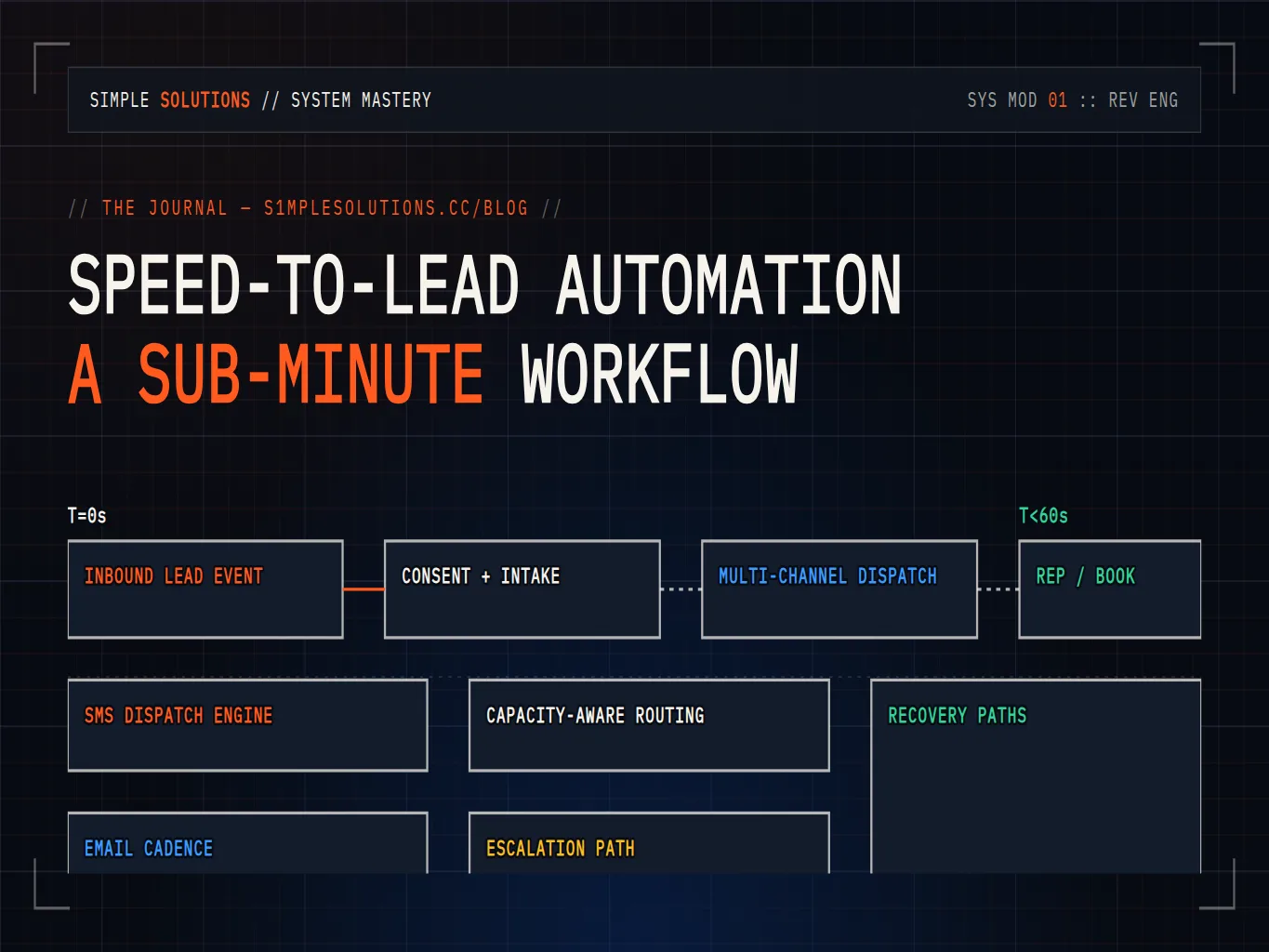
Walk through the most common claim, faster response creates revenue, with concrete numbers. A client attributed $18,000 of monthly new revenue to a speed-to-lead workflow. The audit found three layers. The baseline response time and contact rate were not recorded before launch, so the improvement could not be demonstrated against a measured starting point. The traffic mix had changed at the same time: a new campaign began delivering higher intent traffic, which alone could produce most of the observed revenue change. And the claimed figure assumed all incremental revenue, while the credible share attributable to response speed was the product of the contact-rate improvement, the conversion rate on newly reached leads, and the average deal value, which computed to roughly $3,200 per month, an order of magnitude below the claim. The honest report therefore presented $3,200 as measured impact, the remainder as correlation, and added the missing baseline tracking as a condition for the next claim. The result was a smaller number but a defensible one, and the client could now justify the workflow on evidence instead of anecdotes, which is what keeps automation budgets funded through budget season.
Create a recurring value review
Review performance after stabilization, then monthly or quarterly. Compare realized outcomes with the original hypothesis, identify exception causes, and decide whether to improve, expand, simplify, or retire the workflow. Keep a value register for active automations with owner, last review, cost, reliability, adoption, and measured outcome. This turns automation from a project portfolio into a managed operating asset.