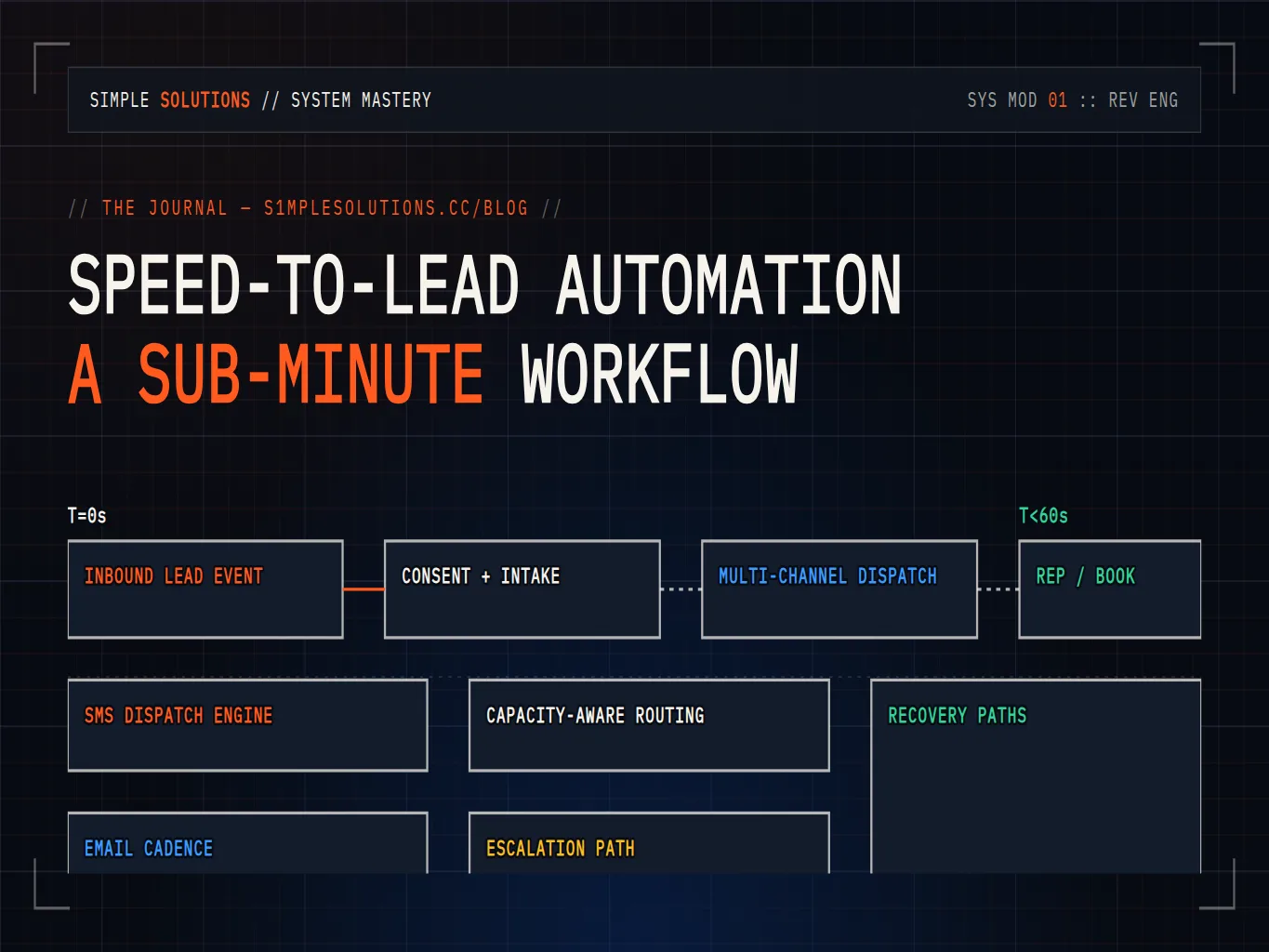
CRM automation fails most often before anyone opens the workflow builder. The failure starts when a team automates an unclear process: stages mean different things to different people, ownership changes informally, required data is missing, and follow-up depends on memory. Automation makes that ambiguity run faster. A sound strategy begins by defining the revenue process as an operating model, then using the CRM to enforce it.
Begin with the customer journey, not the software menu
Map the path from first enquiry to qualified opportunity, booked conversation, proposal, decision, onboarding, and retention. For each transition, document the customer action that proves progress. A form submission can create an enquiry, but it does not automatically prove qualification. A calendar booking can create an appointment, but the deal should not move to attended until the meeting actually happens. Event-based definitions keep the pipeline honest.
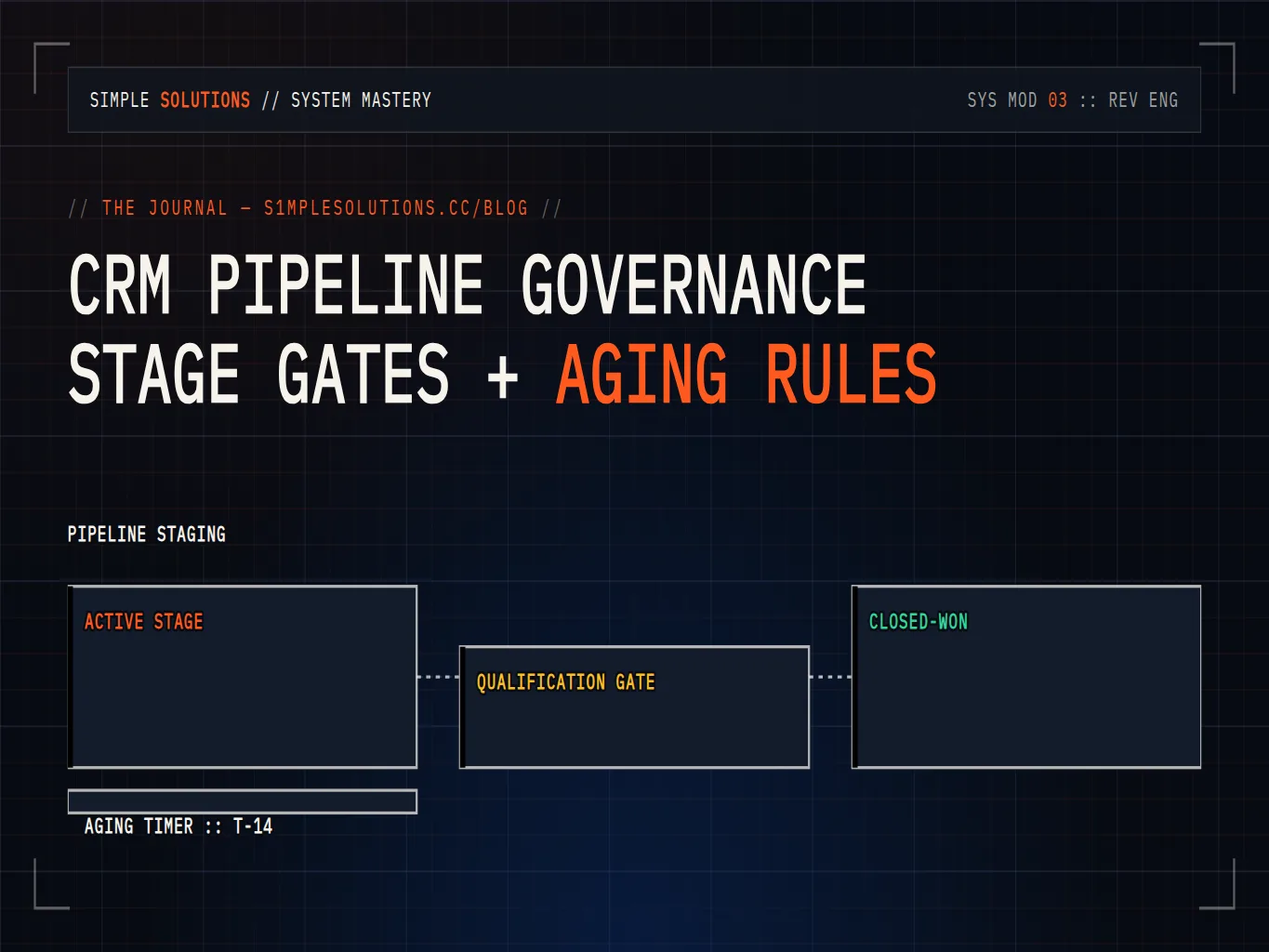
Give every stage an entry rule, exit rule, and owner
A stage is operational only when the team can answer three questions: what must be true before a record enters, what event moves it forward, and who is accountable while it is there? Add a service-level expectation as well. New enquiries might require an immediate acknowledgement and a human review within a defined window. Proposals might require a scheduled follow-up rather than an open-ended reminder. These rules become the specification for automation.
If a pipeline stage cannot be defined without using the phrase ‘when the rep feels it is ready,’ it is not ready to automate.
Separate system decisions from human decisions
The system should perform deterministic work: normalize fields, assign owners, create tasks, send approved messages, calculate time in stage, and escalate missed actions. Humans should retain decisions that depend on judgement, commercial context, or relationship risk. For example, automation can identify a high-value opportunity and assemble its context; an account executive should decide the negotiation position. This boundary prevents both robotic customer experiences and silent operational drift.
Design the minimum dependable data model
Choose a small set of fields that drive routing, reporting, or personalization. Define the allowed values, source, owner, and fallback for each field. Avoid collecting data merely because the CRM provides a place to store it. A field that never changes a decision becomes maintenance cost. Protect identity fields such as email and phone, operational fields such as lifecycle stage and owner, and attribution fields such as original source from casual overwrites.
Build in layers and prove each one
Start with capture and acknowledgement. Add qualification and routing after the inputs are reliable. Then add nurture, appointment management, pipeline control, and reporting. Test normal cases, missing data, duplicate submissions, out-of-hours enquiries, reassignment, and failure recovery. A workflow is not complete because the happy path works once; it is complete when the team can see what happened, correct a failure, and trust the next run.
Where your team sits on the automation maturity scale
Positioning the current state clarifies which layer of this framework to apply first. At the earliest level, records live in spreadsheets and shared inboxes, and nobody owns follow-up; the priority there is a single capture point and one accountable owner per enquiry, not sophisticated workflows. The next level has a CRM used as a contact store with manual stage movement; the priority is event-based stage definitions and an acknowledgement automation. The third level runs disconnected workflows that work locally but collide, with duplicated messages and inconsistent data being the typical symptom; the priority is the intake contract and idempotency described earlier. The fourth level has a governed model with documented rules, service levels, and exception queues, and it focuses on capacity and reporting. The fifth level tunes the system against outcome metrics and releases changes gradually by source. Each level requires the previous one to be dependable before its own rules add real value.
The arithmetic that justifies the build
Estimate the return before building so the project can be defended and prioritized. Three terms usually dominate. First, recovered response: if a team contacts 40 percent of enquiries today and a governed workflow raises that to 90 percent, the 50 percent of enquiries newly reached carry the average conversion rate and average deal value forward. Second, hours recovered: automation of acknowledgement, routing, reminders, and reporting typically removes several administrative hours per team member per week, valued at the loaded hourly rate of the people who stop doing that work. Third, cost of the system: platform usage, integration maintenance, and the owner who runs it. A worked example: a ten-person team that recovers 30 hours a week across the team at a loaded rate of $40 per hour saves about $5,200 a month in labor, and the same workflow reaching 50 additional enquiries a month that convert at 10 percent with a $400 average job adds $2,000 of revenue. Against a fully loaded system cost of $1,500 per month, the payback is well under a single quarter, and the labor savings alone cover the cost without counting any revenue effect.
A readiness checklist before automation begins
Six conditions predict whether automation will compound or amplify problems. Stages must each have a definition that a stranger could verify from the record. Every stage must have an owner and an expected service level, even if only informally agreed. The team must know what happens to an enquiry that nobody can work, and that exception path must exist in writing. Required data for routing and reporting must actually be captured at intake rather than reconstructed later. At least one person must be accountable for the CRM's health, including duplicate cleanup and field discipline. And a baseline of response time, follow-up coverage, and booked-to-attended rate must exist so improvement is measurable. If three or more of these conditions are missing, the strategy work in this article comes before any workflow construction, because automating an unprepared process is the fastest way to scale a bad one.
Measure the operating outcome
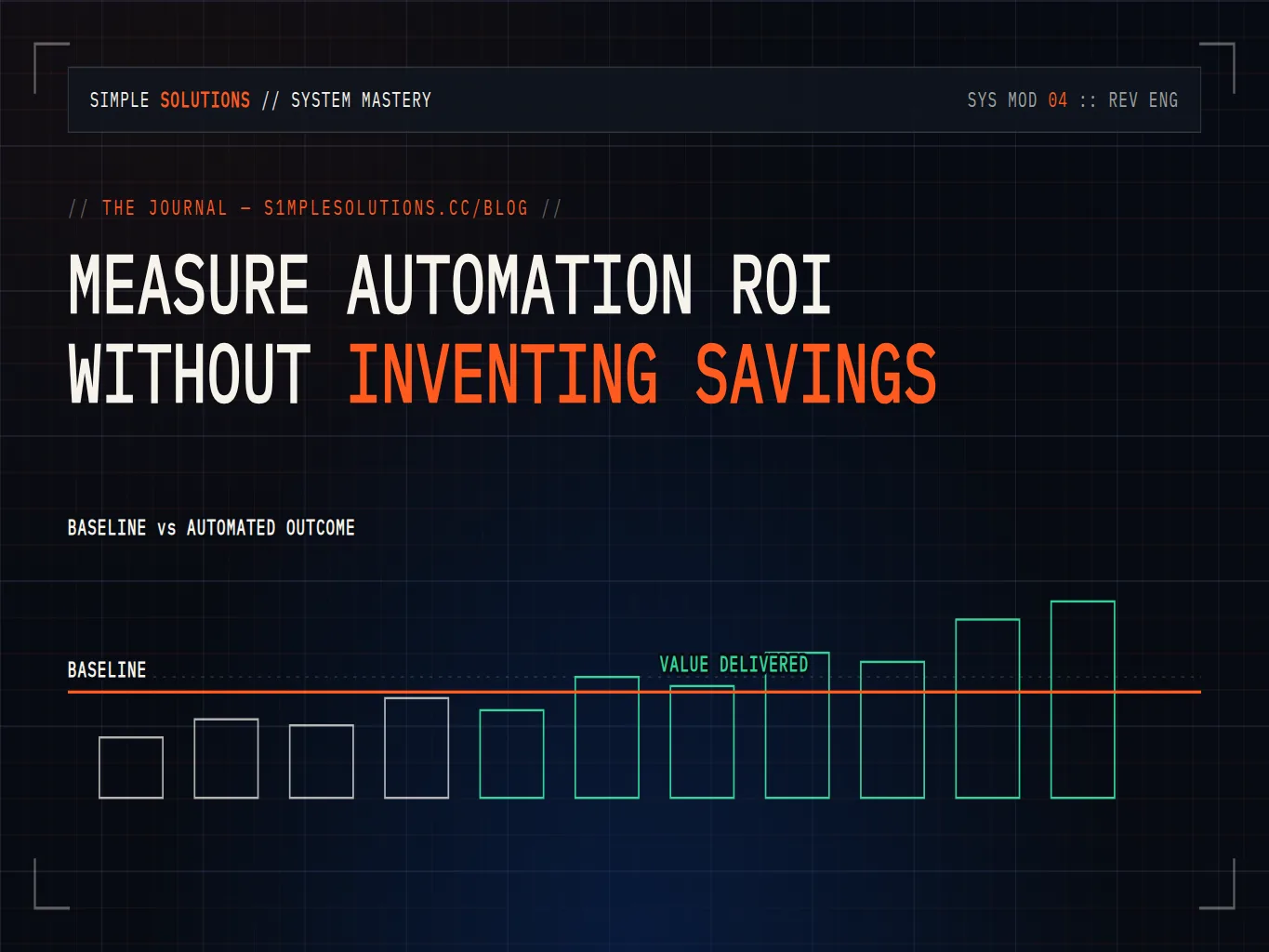
Establish a baseline before release: median response time, percentage of enquiries receiving follow-up, booked-to-attended rate, stale opportunities, and manual administration time. Review the same measures after launch. The goal is not a larger workflow count. The goal is a more consistent revenue process with fewer missed actions and clearer accountability.