A workflow run marked successful does not prove that a customer received the message, a lead was owned, or a booking exists. Define signals at the business boundary: intake accepted, owner assigned, message acknowledged, appointment confirmed, invoice reconciled, or exception resolved. Technical spans and logs help explain the path, but the alert should reflect the operational state the team is responsible for.
Choose a stable event vocabulary
Use consistent names for accepted, started, waiting, succeeded, rejected, retried, dead-lettered, and reconciled states. Include entity ID, tenant, workflow version, source event, owner, and correlation ID. Keep identifiers stable across retries so one failure does not look like many unrelated incidents. Avoid putting all context into an unstructured message; structured fields let dashboards and runbooks find the right work.
Set alerts around actionability
An alert should tell an owner what needs attention, why it matters, and which runbook applies. Prefer thresholds tied to age, backlog, missing ownership, repeated failure, or divergence from a source of truth. Do not alert every transient provider timeout if the queue is recovering within policy. Alert when the system exceeds the recovery budget or when a customer-facing consequence is likely.
Write runbooks for the first five minutes
A useful runbook starts with scope: which workflow, source, tenant, and time window are affected. It provides a safe diagnostic query, known failure modes, the kill switch or pause action, and criteria for retry, replay, or manual repair. Include what not to do, especially broad replays that can duplicate external side effects. Link the runbook from the alert so the operator does not have to search a wiki under pressure.
Make recovery idempotent and visible
A retry should target the failed side effect, not restart every earlier step. Store attempt counts, provider request IDs, and result classifications. When a manual repair is needed, record the operator, reason, before state, after state, and evidence. A green dashboard that hides a manual fix is misleading; recovery work is part of the system’s real reliability profile and should be reviewable.
Assign ownership before escalation
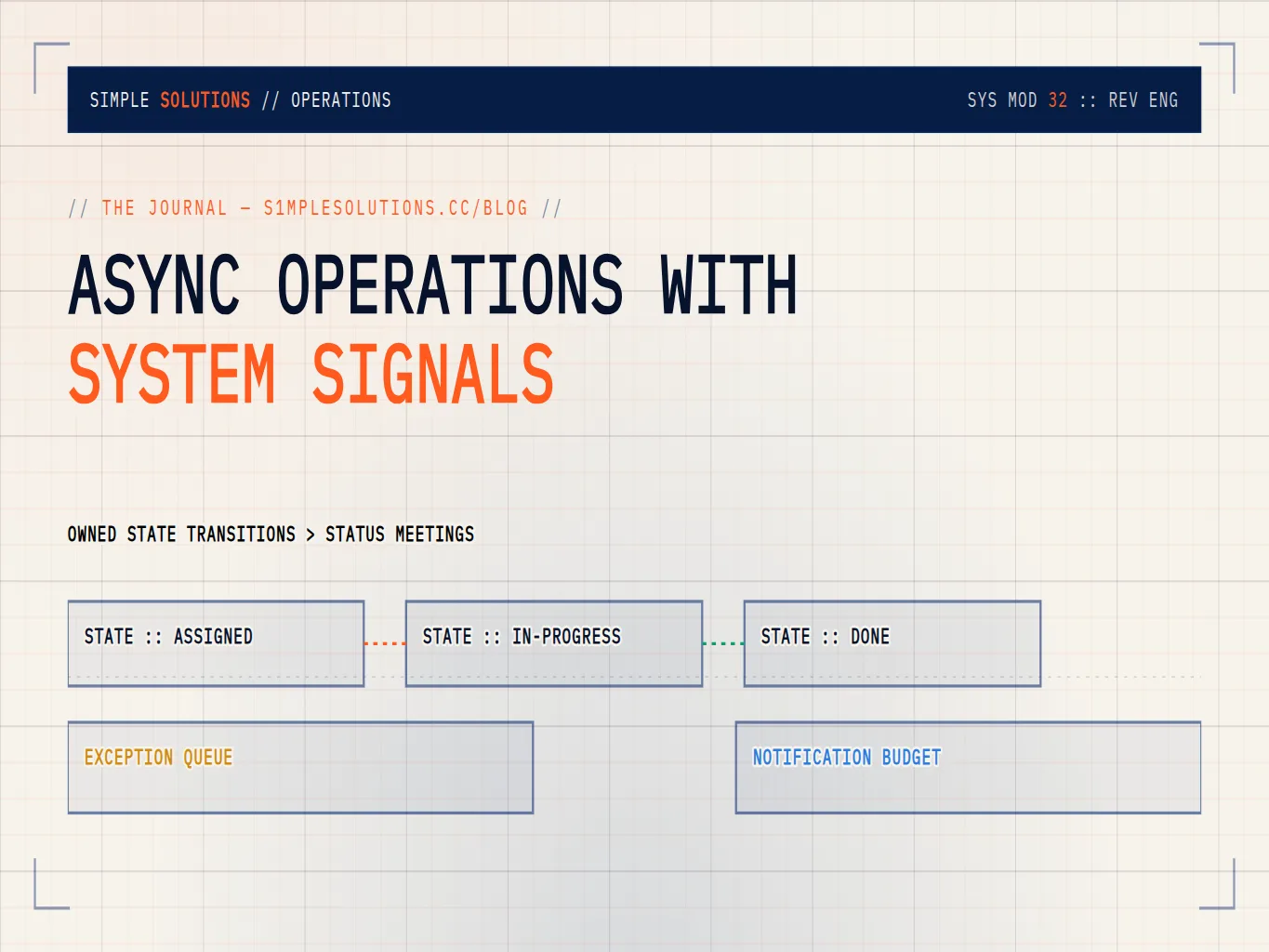
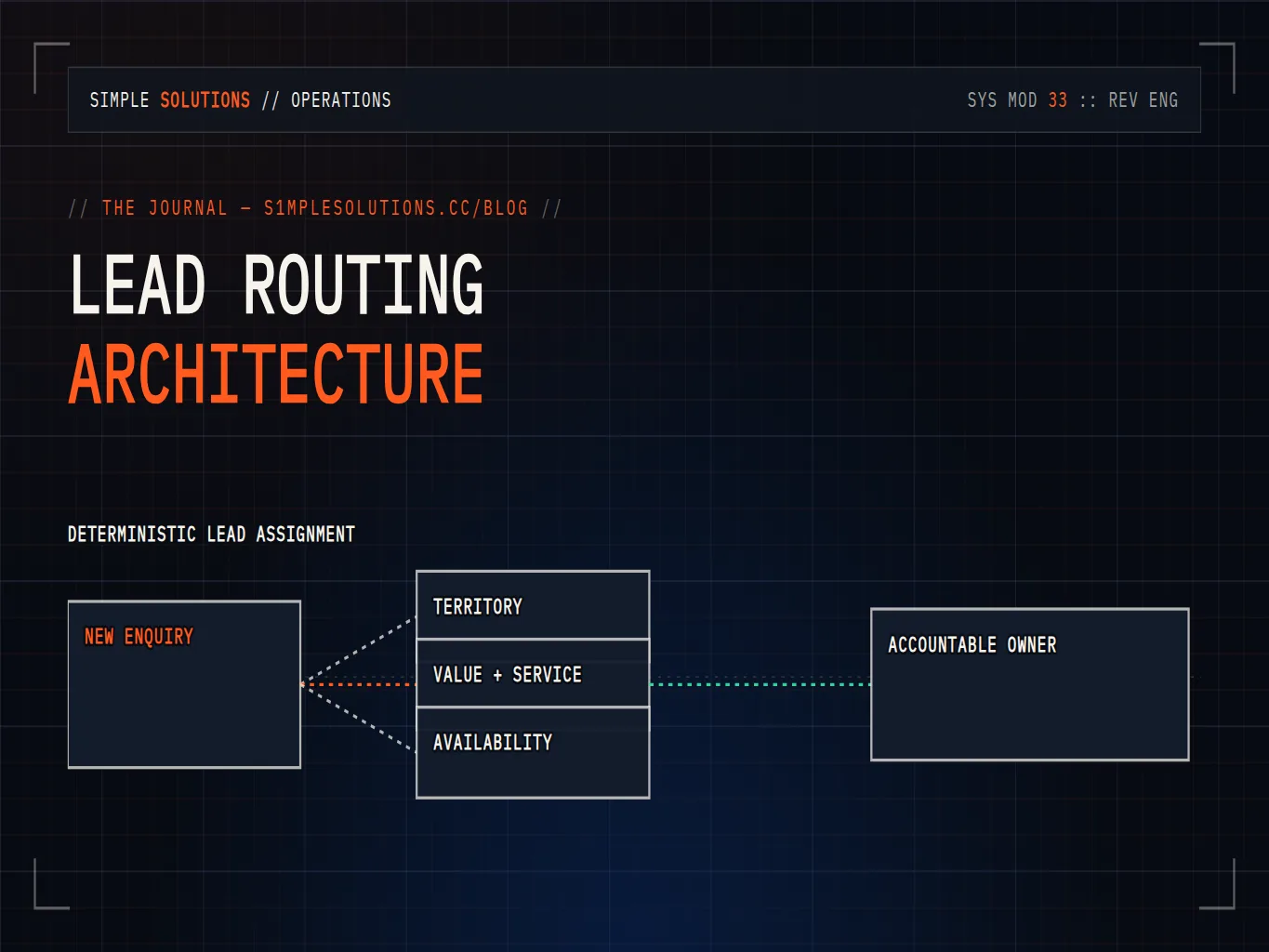
Every signal needs a current owner or queue, a severity, and an escalation window. Route by workflow and business consequence rather than broadcasting to a large channel. If the owner is unavailable, the system should preserve the queue and escalate to a named backup. Measure acknowledgement, time to mitigation, time to reconciliation, and repeat incidents. Ownership turns observability from a technical display into an operating control.
Exercise the runbook with failure drills
Inject a provider timeout, malformed payload, stuck queue, duplicate event, policy outage, and partial success. Ask an operator who did not write the automation to follow the runbook. Capture where the instructions were ambiguous or the evidence was missing. Update alerts, dashboards, and recovery tooling from those drills. The standard is not perfect prediction; it is fast, bounded, and safe recovery when the prediction fails.
Create the operating review loop
Observability improves when signals are reviewed as a recurring operating discipline rather than only during incidents. Hold a short weekly review of the oldest exceptions, repeated failures, manual repairs, alert noise, and workflows whose business outcome is no longer measured. Select one recurring failure and improve either the automation, the provider contract, the alert, or the runbook. Keep an incident timeline that distinguishes detection, acknowledgement, mitigation, reconciliation, and prevention. When a provider changes behavior, add a fixture and update the runbook before the next release. Review alert recipients and escalation windows after team changes so signals do not route to abandoned channels. For customer-facing workflows, sample successful runs as well as failures; silent success assumptions can hide incorrect recipients or missing ownership. Publish a small reliability scorecard with backlog age, retry recovery, dead-letter volume, and unresolved business outcomes. The purpose is not to instrument every line of code. It is to give the people operating the system enough evidence to make a bounded decision quickly, recover without duplication, and improve the process after the immediate pressure has passed.
Keep the signal budget small
Review whether each alert leads to an operator action. Remove duplicate alerts, combine symptoms that share a recovery path, and add context where responders repeatedly open another dashboard. A smaller signal budget improves attention and makes a real customer-impacting backlog stand out. Keep low-priority diagnostics available without paging the owner for every transient event.