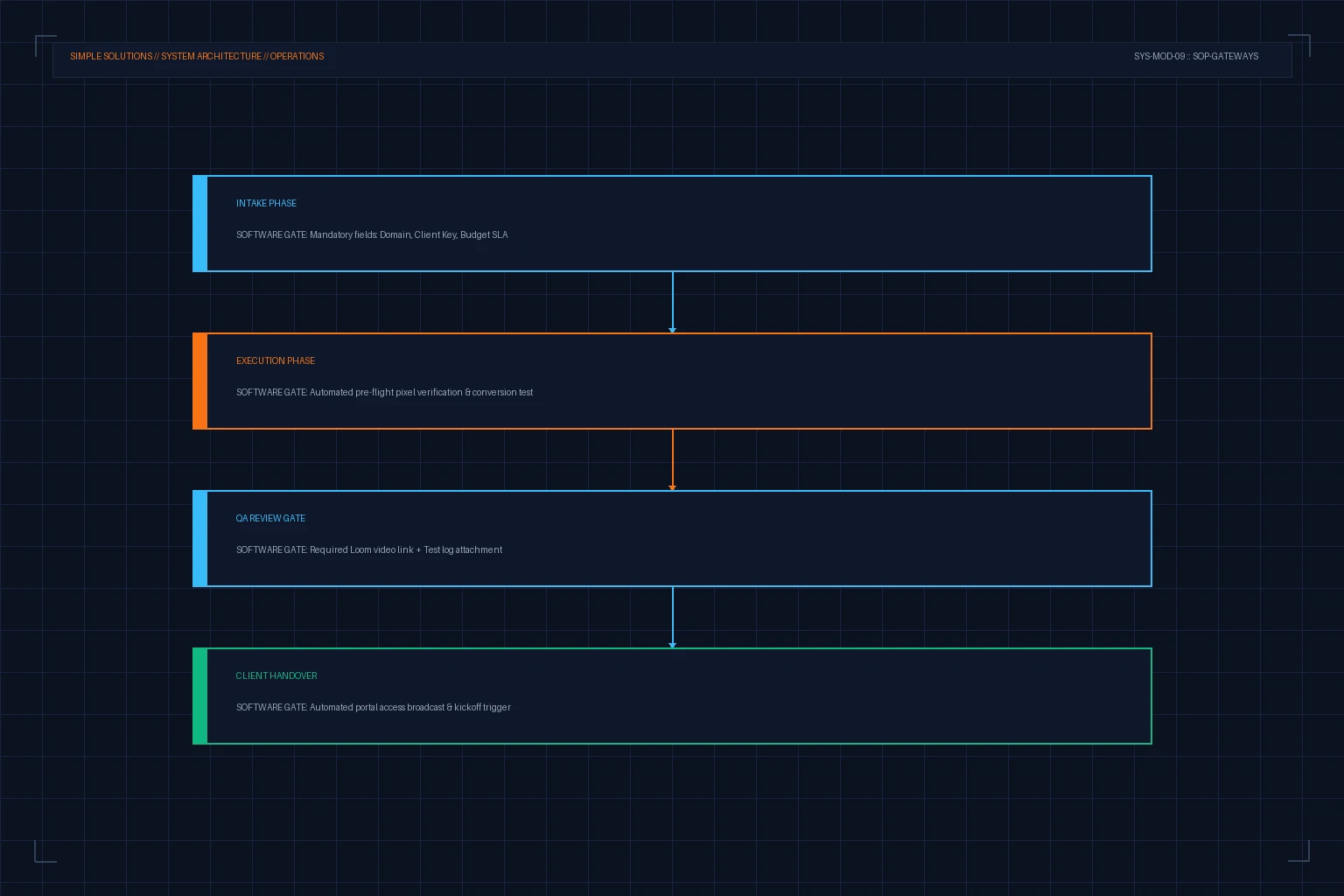
An SOP explains the intended method; a workflow gate controls a specific transition. They are complementary, not interchangeable. Encoding every instruction as a hard block creates brittle software and encourages workarounds. The useful target is narrower: enforce the evidence and safety checks whose absence creates material downstream risk, while preserving a visible exception path for legitimate cases.
Classify each SOP step before automating it
Mark each step as guidance, required data, deterministic validation, approval, or expert judgement. Guidance belongs near the work. Required data can become a field rule. Deterministic validation can run automatically. Approval needs an identified authority. Expert judgement should remain a recorded human decision. This classification prevents a checkbox from pretending to verify work that only a reviewer can assess.
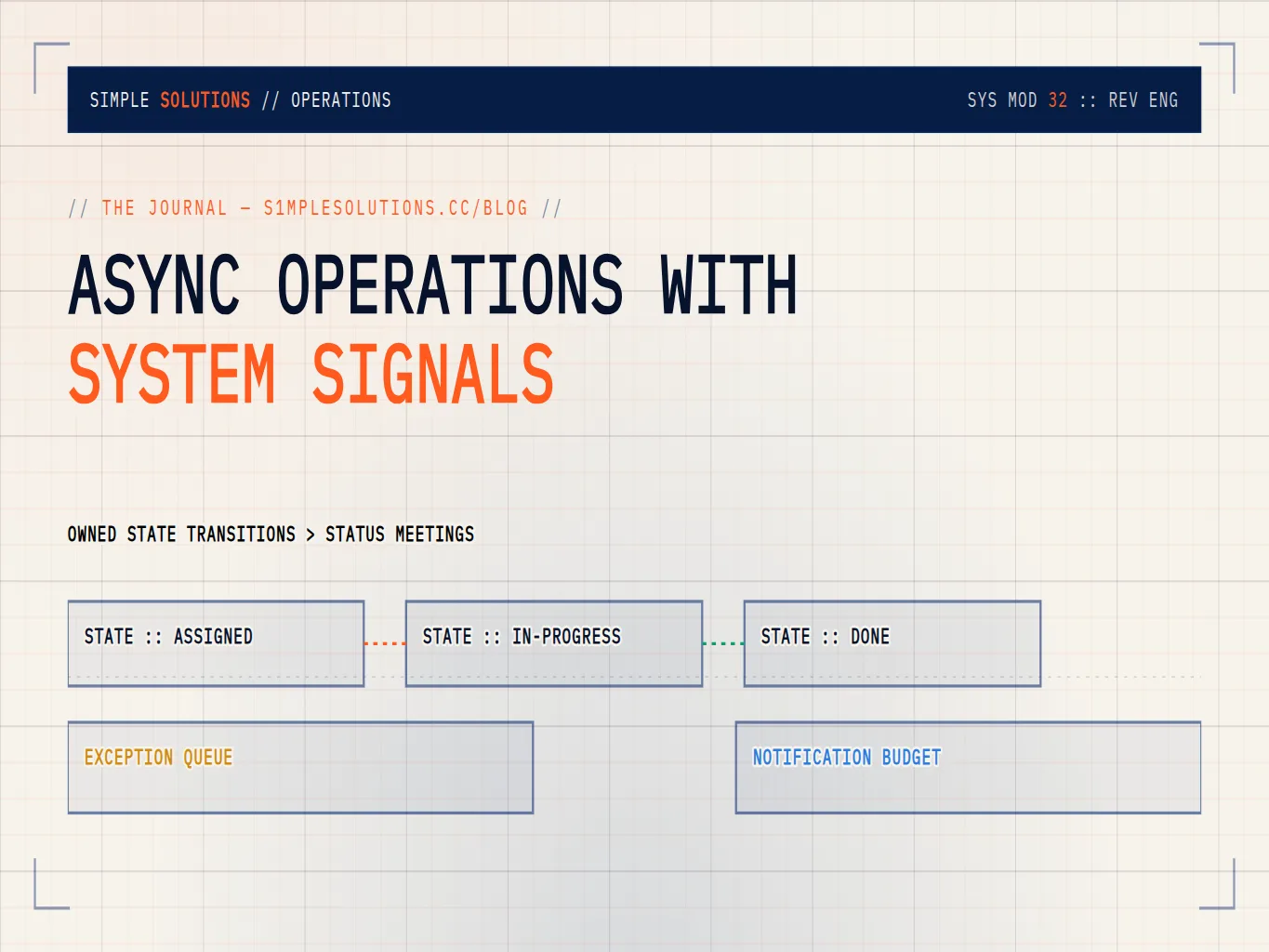
Attach gates to state transitions
Define the transition, actor, preconditions, evidence, and resulting state. For a move from implementation to review, the gate might require an artifact URL, test environment, change summary, named reviewer, and automated test result. If the work-management platform cannot enforce the rule natively, place the transition behind an integration or purpose-built action rather than claiming a form field alone is a control.
A gate is credible when it checks evidence the system can actually observe and records who accepted any exception.
Make evidence durable and attributable
Store links, test results, approvals, actor, timestamp, SOP version, and correlation ID with the work record. Validate that referenced artifacts exist and belong to the correct tenant or project. Avoid evidence fields that accept meaningless placeholders. Where a screenshot or video is useful but not machine-verifiable, treat it as review evidence rather than an automatic pass condition.
Design controlled overrides before enforcement
Some exceptions are valid: an incident may require an emergency change, a client may waive a deliverable, or a dependency may make the normal sequence impossible. Require an allowed reason, approving role, expiry or review date, and compensating action. Keep overrides visible in the exception queue and report repeated use by gate, team, and cause.
Fail safely when the validator is unavailable
Choose fail-open or fail-closed by consequence. A safety, payment, privacy, or deployment gate may need to block when validation cannot run. A low-risk documentation check may allow progress while creating a follow-up exception. Preserve the attempted evidence and error so an operator can distinguish non-compliance from a broken validator.
Keep the interface focused without hiding context
Show the current actor the fields, evidence, and actions needed for the transition, plus the reason for each blocking rule. Preserve access to upstream decisions and downstream impact when useful. A role-specific interface should reduce accidental input, not conceal the policy or make debugging impossible.
Release gates in audit mode and measure behavior
First log would-block events without preventing work. Review false positives, missing evidence, platform limitations, and genuine risk with the people performing the process. Then enforce the highest-value gates gradually. Track block rate, override rate, time to resolution, repeated missing fields, validator failure, downstream defects, and rework. Version the SOP and gate together so a record can be evaluated against the rule that existed when it moved.