An AI receptionist is not complete when it can hold a natural conversation. It is complete when it performs a bounded front-desk job reliably: answer common questions, identify intent, collect the right contact details, qualify within approved rules, schedule against real availability, update the CRM, and escalate when the conversation moves outside its authority.
Define the job before writing the script
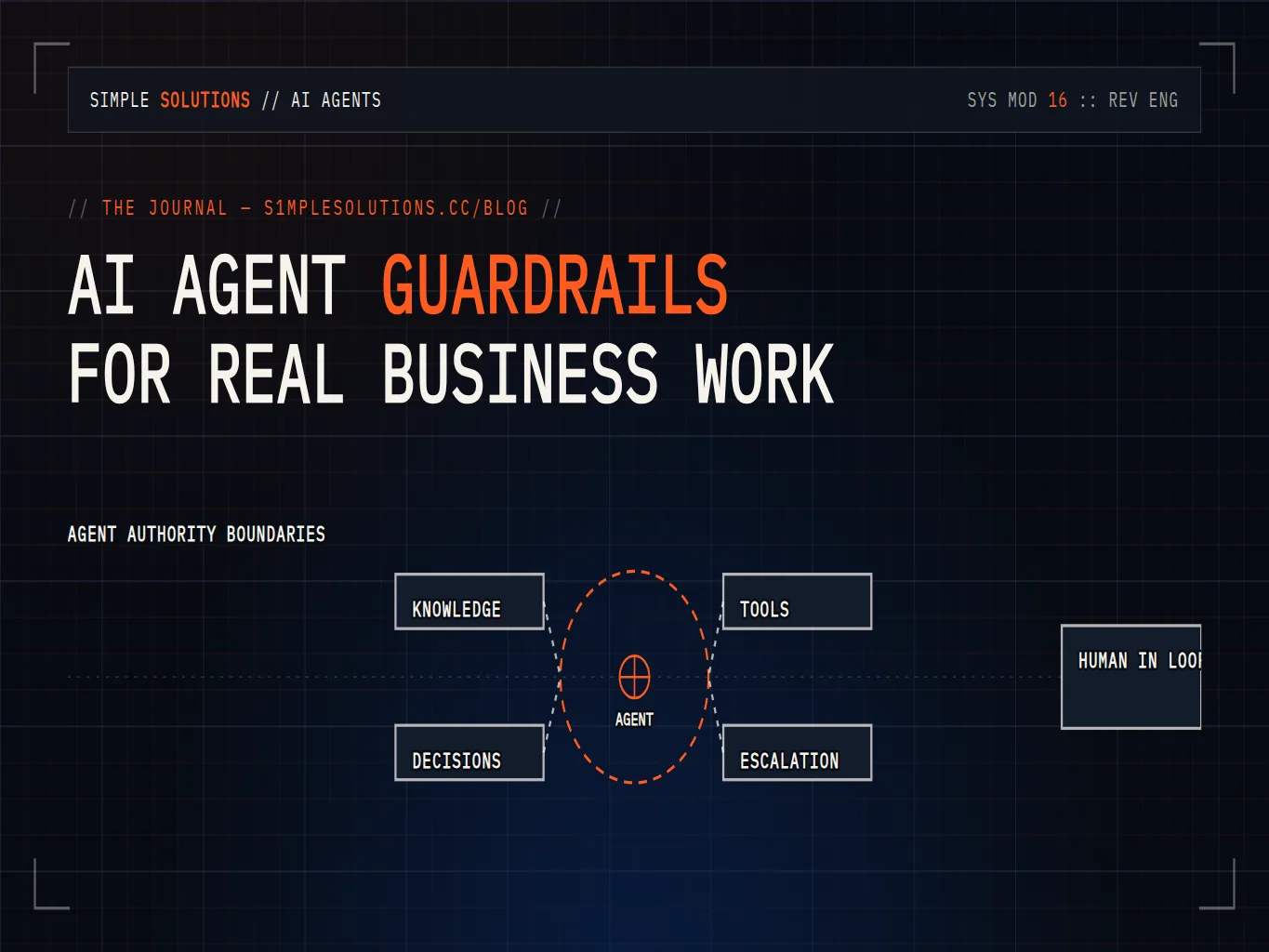
List the call types the agent should handle, such as new enquiries, existing-customer questions, appointment changes, after-hours messages, and urgent requests. For each type, define the successful outcome and the situations that require a human. Exclude sensitive or commercially consequential actions unless the agent has an approved tool and explicit policy for them. A narrow agent with clear completion rules outperforms an impressive demo with no operational boundary.
Build an approved knowledge source
Create a maintained source for services, locations, hours, eligibility, preparation instructions, cancellation rules, and frequently asked questions. Give each answer an owner and review date. Do not expect the agent to reconcile contradictory website pages and old documents during a live call. When an answer is unavailable or confidence is low, the correct behavior is to collect context and escalate—not improvise.
Design conversation states, not a rigid monologue
A useful call flow has states: greeting and disclosure, intent detection, identity capture, question handling, qualification, scheduling, confirmation, and handoff. The caller may move between states, interrupt, or correct an answer. Define which facts must be reconfirmed before any action, especially spelling, phone, email, location, service, time zone, and appointment time. Keep prompts short enough to sound conversational while ensuring required data is captured.
The best AI receptionist is not the one that speaks the longest. It is the one that reaches a correct, recorded outcome with the least customer effort.
Connect tools through controlled actions
Give the agent narrowly scoped tools: look up approved information, search availability, create or update a contact, book or reschedule an appointment, send confirmation, and transfer the call. Validate arguments before execution and return a clear result after every tool call. Prevent duplicate bookings with a unique conversation or request key. Log the requested action, tool response, CRM record, and final outcome so an operator can reconstruct the call.
Make human handoff part of the product
Handoff triggers should cover explicit requests for a person, low confidence, repeated misunderstanding, complaints, policy exceptions, emergencies, and high-value or sensitive conversations. Transfer the summary and captured fields with the call so the customer does not restart. When nobody is available, create a prioritized callback task with the reason and promised response window.
Launch through staged evaluation
Test scripted scenarios, messy real speech, background noise, accents, interruptions, invalid data, no availability, tool failures, and hostile prompts. Start with after-hours or overflow traffic, review transcripts and outcomes daily, then expand. Track containment, correct booking, transfer success, unresolved intent, duplicate actions, and customer abandonment. Conversation quality matters, but operational accuracy determines whether the system is ready.