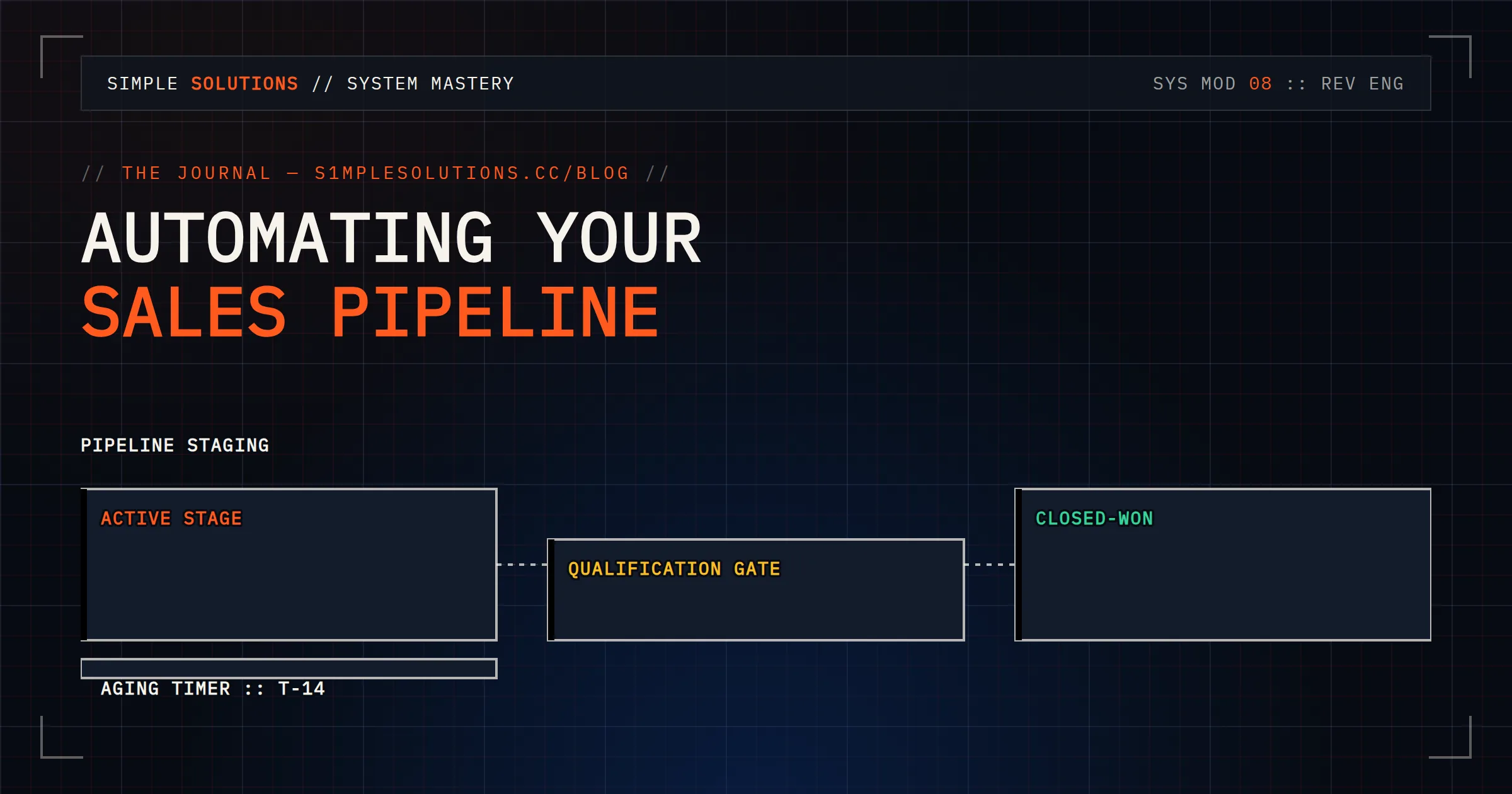
If a sales rep has to remember to move a deal forward, the deal isn't in a pipeline — it's in a memory. Automation turns a manual board into a real engine.
Triggers, Not Reminders
When a meeting is booked, the deal moves. When a proposal is sent, the deal moves. When the quote is signed, the deal moves. The rep approves transitions; the system performs them.
Stage-Specific Tasks
Each stage should auto-spawn the right next task: "send recap," "schedule follow-up," "loop in legal." No more "what should I do next" tabs.
Health, Not Just Activity
Track stale deals, time-in-stage, and reply gaps automatically. The pipeline should tell you which deals are dying before the rep does.
Design stages around buyer events, not rep optimism
The most common pipeline mistake is stages that describe how the rep feels rather than what the buyer did. Stages such as warm, promising, and working it are sentiment, and sentiment cannot trigger automation. The discipline is to anchor each stage to an observable buyer event: enquiry qualified, discovery meeting held, proposal delivered and acknowledged, decision-maker engaged, procurement started. Each anchor does two jobs at once. It gives the automation system a factual condition to trigger transitions and spawned tasks, and it gives leadership a pipeline where the value number means something, because every dollar in stage three genuinely passed through a meeting. A practical test for any stage design is whether a new rep, reading only the stage definition, could verify from the record alone whether the deal belongs there. If they cannot, the stage will drift within weeks of going live, and the forecasts built on it will drift with it.
Write the transition rules, including the exceptions
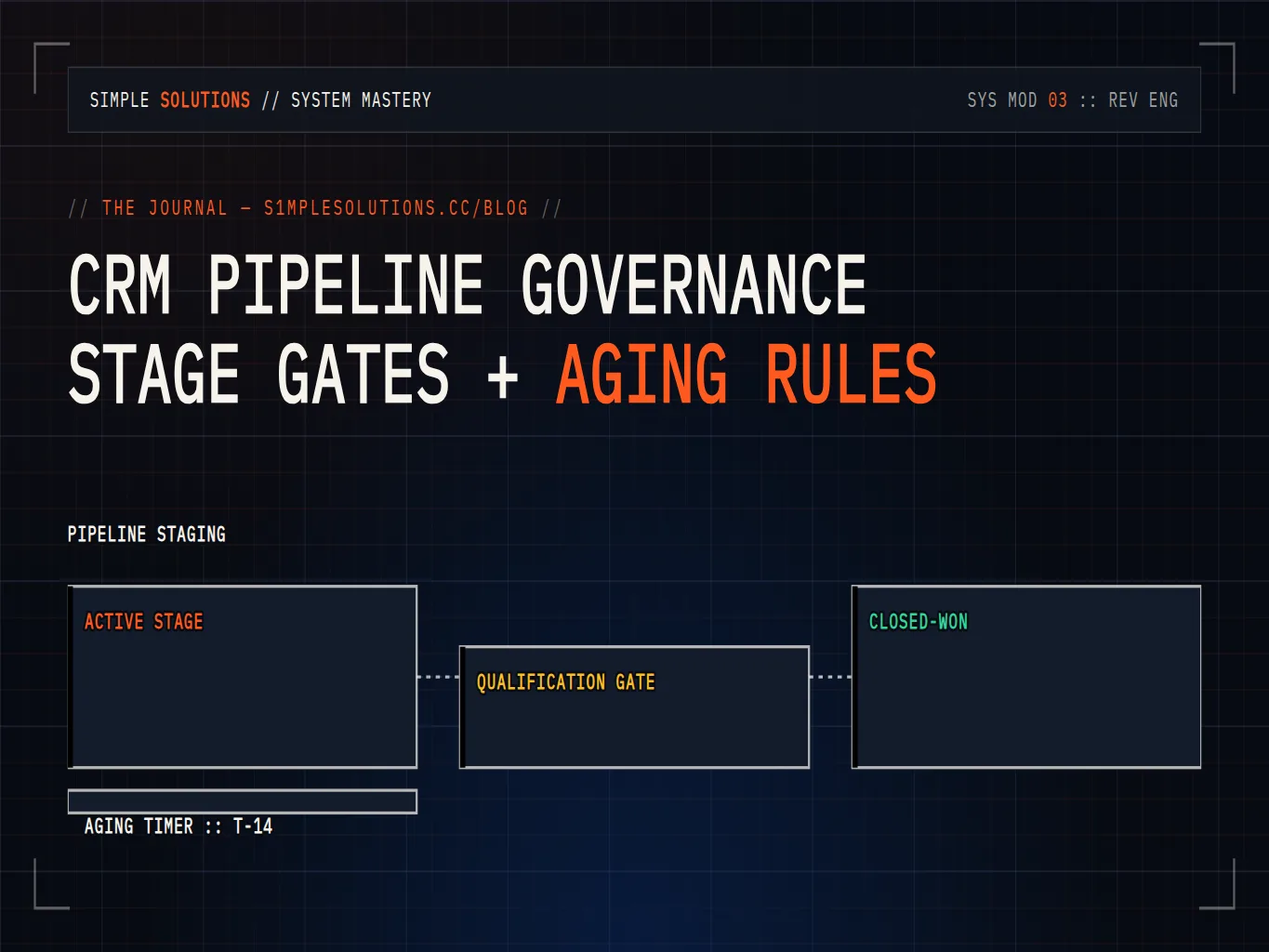
Automatic transitions need rules in both directions. Forward transitions fire on the buyer event plus a data check: a proposal stage entry requires an actual delivered proposal record with a value and date, not a rep clicking a button. Backward and recycle transitions matter just as much: a deal that stalls past its time-in-stage threshold automatically returns to nurture or to a review queue instead of quietly aging in place, because a pipeline's middle is where optimism accumulates. Skip transitions need explicit justification, such as a deal moving straight from discovery to negotiation on a renewal, and any skip should be rare enough that the system flags it for review rather than accepting it silently. The exceptions are the honest part of the design: some deals genuinely break the standard motion, and a rule set with no exception path produces workarounds, while one with a documented exception path and an owner produces auditability.
Four metrics decide whether the pipeline is automatable
Forecast accuracy starts earlier than the forecast meeting, and four metrics catch pipeline rot before it reaches the revenue number. Stage conversion measures what share of deals leaving a stage reach the next, revealing where the motion actually loses deals instead of where the team believes it does. Time-in-stage against the observed distribution flags the deals pretending to progress. Forward velocity measures the monthly movement of value through the pipeline, and a pipeline that shows rising value with flat velocity is being decorated, not built. Forecast accuracy itself, the ratio of committed predictions to actual closes, closes the loop, because an automation system that moves deals on events but cannot explain its misses is optimizing the record rather than the revenue. The practical rhythm is weekly: these four numbers take minutes to compute from the CRM's own event history, and teams that review them weekly find their forecast disputes shift from arguing about the number to fixing the process that produced it.