Implementing reliable calendar availability sync starts with a clear model of ownership for availability. In this article we cover calendar availability sync design decisions, practical locking strategies, time zone handling, cancellation events, and reconciliation between CRM records and external calendar tools so you can reduce double-bookings and debug conflicts systematically.
Set the availability ownership model (calendar availability sync)
Decide early which system is the canonical source for availability and encode that decision in your data model and API contracts. This is an implementation decision, not a UI choice: every write path must tag which system owns the record, the version or sequence number, and the timestamp. Failure modes include competing writes and drift; mitigate these by refusing writes that contradict the declared owner without a reconciliation token.
Canonical owner recommendations
For many service businesses the booking/dispatch service should own availability because it coordinates capacity, buffers, and business rules; for teams that use an external calendar as the operational source, the calendar can be the owner. Implement ownership as a small enum on availability objects plus an owner-specific write API that requires an ownership token; verify ownership at write time and return clear 409 Conflict with a recovery plan when ownership differs.
Booking locks and reservation windows
Prevent races by using reservation locks when a customer begins booking. Use short-lived pessimistic locks for the interactive flow (store lock key in Redis with TTL) and optimistic concurrency control for API-to-API operations (compare-and-swap on a version field). Implement automatic expiry and a heartbeat for long flows; failure modes include expired locks and orphaned locks after client crashes, so provide a recovery endpoint to release or reassert a lock with proper audit.
Time zones and DST handling
Store all times in UTC and persist the event time zone and canonical IANA zone identifier separately so conversions are deterministic. When generating candidate slots, convert using the target IANA zone and be explicit about DST transitions. Verification should include unit tests across DST boundaries and integration tests that check round-trip conversions to the user interface; common failures are double-booking on the day DST shifts or off-by-one-hour displays.
Event-driven updates: webhooks and polling
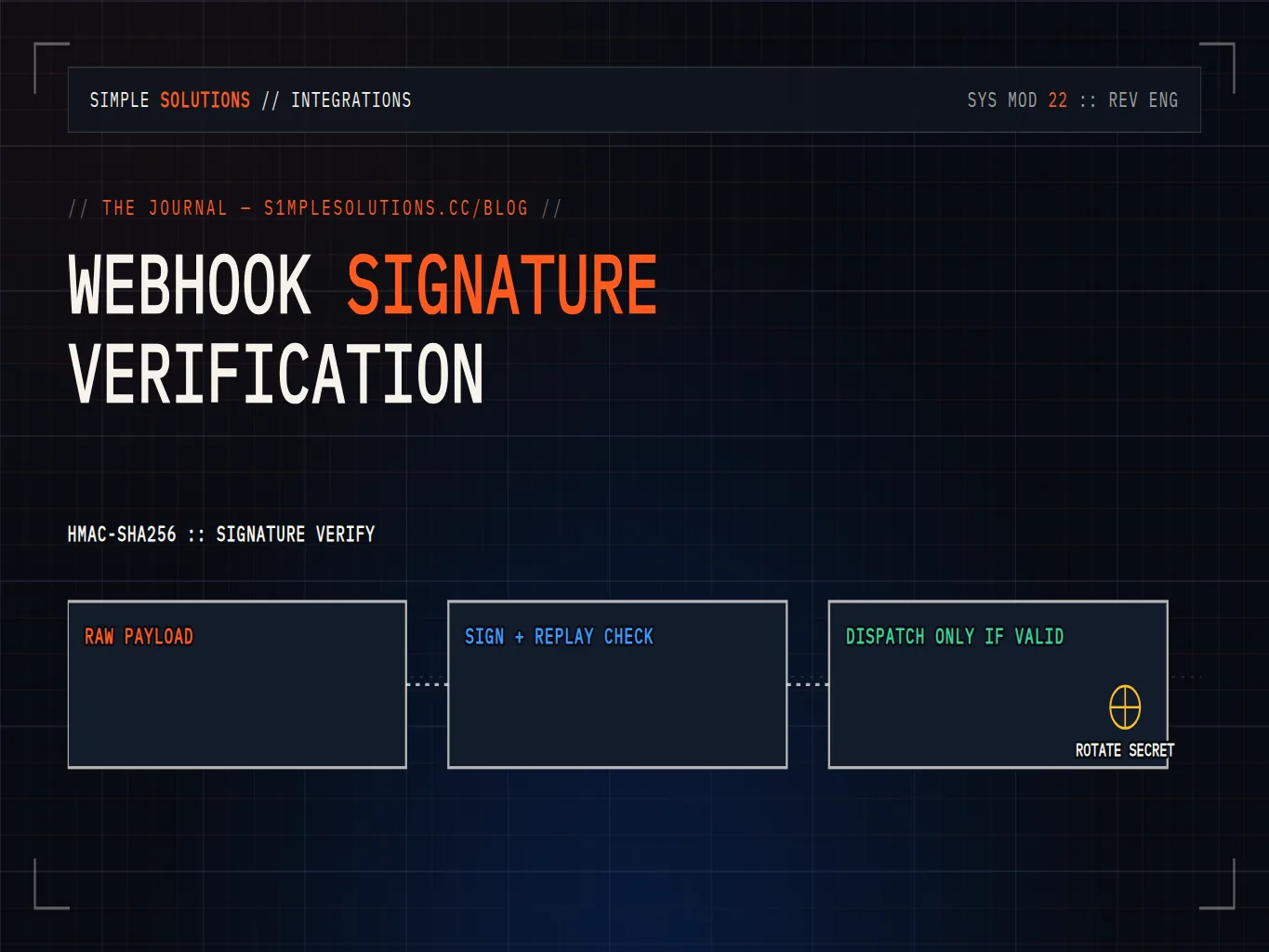
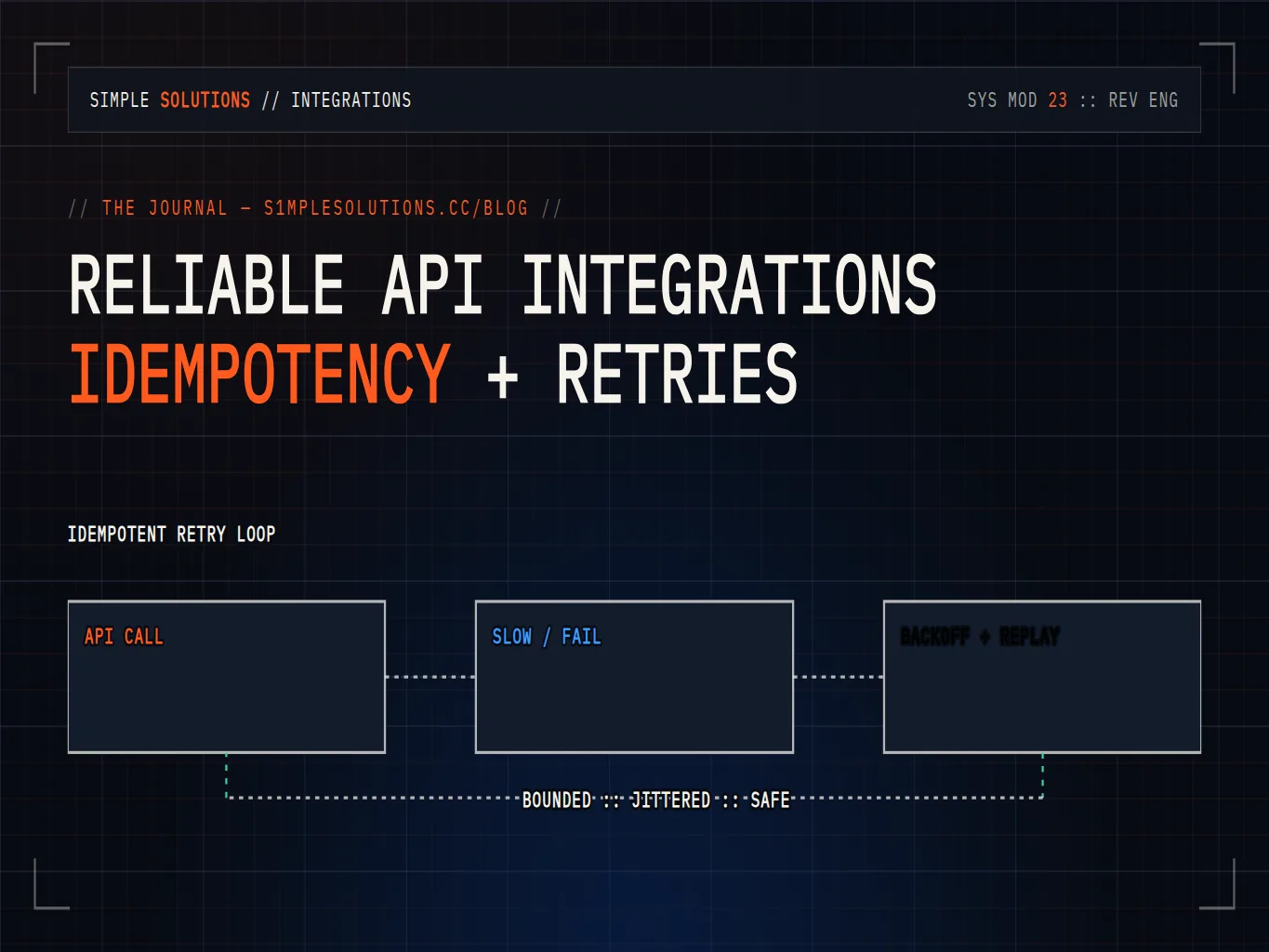
Prefer webhooks for real-time updates from calendar providers, but plan for missed deliveries with a polling fallback. Implement webhook idempotency by requiring providers to include a stable event ID and store recent IDs for de-duplication. Use exponential backoff and jitter for retries and surface webhook failures to monitoring. The W3C webhooks report recommends design patterns for retries and verification; treat webhook endpoints as first-class APIs with auth and rate limits.
Handling cancellations and partial failures
Model cancellation as a first-class operation with its own state machine: requested, confirmed, compensated. On cancellation events from external calendars or CRMs, verify the event signature, check ownership, and run a compensating transaction that releases locks and notifies affected systems. Partial failures can leave bookings in limbo; implement a reconciliation job that identifies bookings stuck in intermediate states and escalates to a human workflow if automated compensation fails.
Reconciliation and eventual consistency
Accept that distributed calendar systems are eventually consistent; implement a periodic reconciliation process that diffs canonical availability against external calendars and applies a policy (e.g., canonical wins, or most recent write wins). Use operation logs or change tokens when available to make deltas efficient. Verification should include running reconciliations in dry-run mode and producing a report of changes before committing, and failure modes include repeated flip-flopping where two systems alternately override one another.
API practices, auth, and idempotency
Follow HTTP semantics for safe and idempotent operations: use correct methods and status codes for retries and interpretations of success or failure. Implement OAuth 2.0 for external API auth and short-lived tokens for webhooks where possible. Use idempotency keys for create operations to make retries safe and document expected responses per RFC 9110 and RFC 6749; common failures include retry storms and ambiguous partial success.
Monitoring, observability, and alerting
Instrument the system with metrics for lock acquisition failures, webhook delivery rate, reconciliation diffs, and cancellation success rates. Correlate logs across components with a trace ID so you can follow a booking from UI to calendar provider and back. Verification often reveals missed edge cases such as missing timezone metadata or failed webhook signature verification; turn these into actionable alerts rather than silent retries.
Testing strategy and chaos scenarios
Test end-to-end with injected faults: expired locks, delayed webhooks, calendar API rate limits, and DST boundary conversions. Use integration test harnesses against sandbox calendar APIs and run periodic chaos tests in staging to ensure reconciliation and compensation logic behave under stress. Failure modes discovered in tests should feed back into SLOs and incident playbooks.
Make availability ownership explicit, automate resolution for common conflicts, and treat reconciliation as a feature—not an afterthought.
Operationalize the architecture by mapping endpoints and flows in runbooks: ownership write paths, lock endpoints, webhook handlers, reconciliation jobs, and escalation paths. Verify correctness by simulating multi-system races in staging and reviewing reconciliation reports before enabling auto-fixes in production. This reduces double-booking incidents and provides a clear path to diagnose and repair conflicts when they occur.