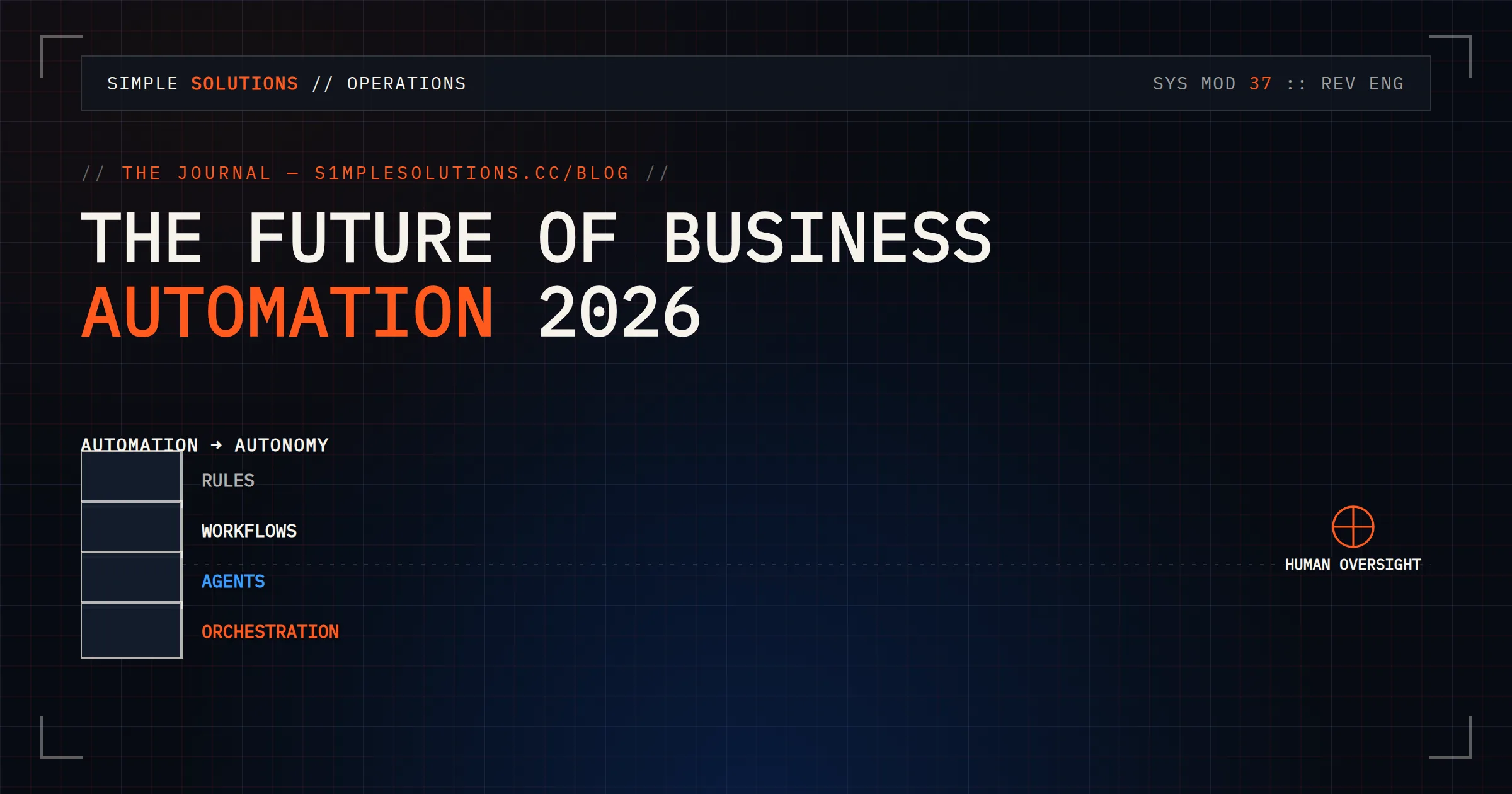
The next phase of automation is not "more zaps." It is fewer rules, more reasoning. Models that can interpret intent, take action across systems, and explain their work back to a human in plain English.
Three Trends That Matter
First, multi-agent orchestration: systems where one agent dispatches work to specialist agents. Second, ambient capture: meetings, emails, and calls automatically becoming structured data. Third, native voice — phone calls handled by AI that sounds indistinguishable from a great front-desk operator.
The Competitive Gap
Operators who adopt these primitives in 2026 will compound a year of productivity advantage by 2027. The gap is not technical anymore — it is organizational. The early movers are not smarter; they just decided.
Your Move
Pick one workflow your team hates. Automate it with an agent (not a Zap) this quarter. Measure the hours back. Re-invest those hours in the next workflow. Repeat for four quarters and you have a different company.